In a move that has startled defense analysts on both sides of the Atlantic, Canada has been granted full participation in the European Union’s Security Action for Europe (SAFE) framework—a powerful defense financing and procurement system from which the United States, the UK, and Australia remain excluded. Finalized in late 2024 but only now coming into focus, the decision places Canada at the center of Europe’s rearmament drive, backed by tens of billions of euros in EU-guaranteed loans. More than a procurement deal, Canada’s admission signals a quiet but consequential realignment in global defense politics—one built on reliability, industrial capacity, and long-term trust.

For decades, Canada’s defense posture followed a familiar script: NATO membership, deep integration with U.S. supply chains, and limited influence over how major defense systems were financed or prioritized. Europe, meanwhile, largely kept its most sensitive defense mechanisms within the bloc.
That boundary has now been breached.
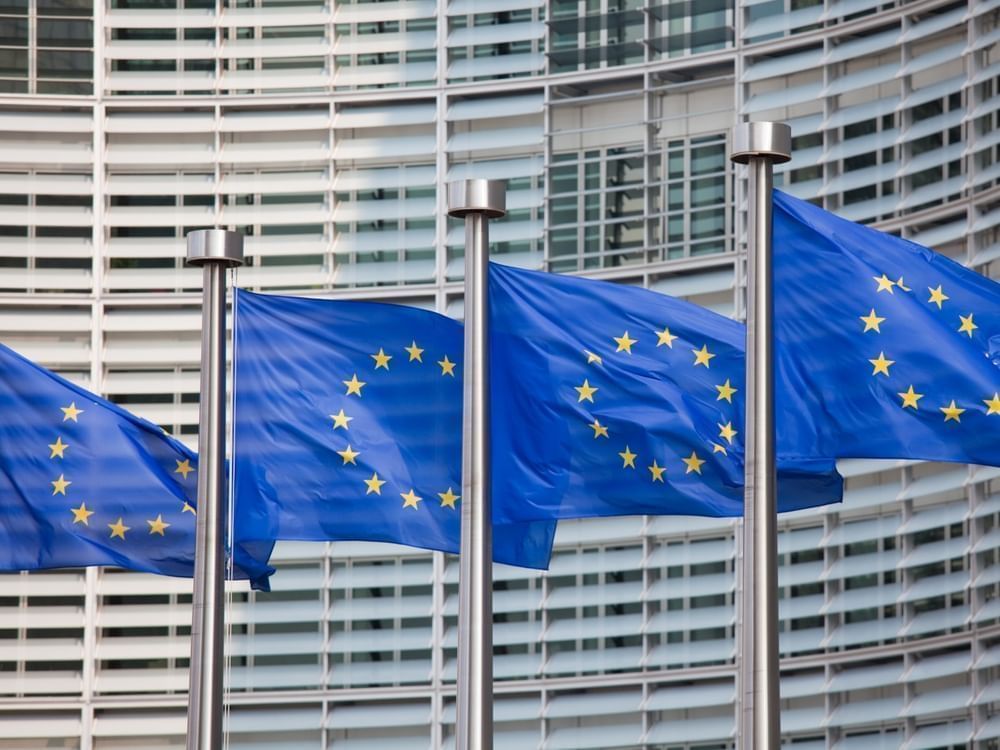
Canada’s full participation in the EU’s Security Action for Europe (SAFE) marks an unprecedented break with tradition. SAFE is not a symbolic partnership or consultative forum. It is the financial engine behind Europe’s push to rapidly scale military production as geopolitical tensions rise and the continent confronts hard questions about deterrence, autonomy, and industrial resilience.
Until now, SAFE was closed to non-European countries. Even close allies—Britain, despite Brexit-era defense ties, and Australia, despite deep Indo-Pacific cooperation—were left outside. Canada’s inclusion therefore raises an unavoidable question: why Ottawa?
European officials point first to predictability. In an era when defense contracts stretch across decades, Europe is prioritizing partners that can commit without sudden reversals. Canada’s political stability, consistent export controls, and low risk of trade weaponization stood out sharply against the turbulence of U.S. domestic politics, where election cycles increasingly shape foreign and industrial policy.
The timing matters. SAFE was created to solve a core problem facing Europe’s defense sector: fragmented national budgets that slow production and discourage long-term investment. By leveraging the EU’s collective borrowing power—estimated at roughly €50 billion in guaranteed loans in the current phase—SAFE allows governments to place large, multi-year orders without the usual political and fiscal bottlenecks.
For manufacturers, that certainty is transformative. Production lines can scale. Capital can be deployed. Supply chains can be locked in.
Canada enters this system not as a junior participant, but as a contributor with leverage. Ottawa negotiated terms that allow Canadian firms to take on substantial roles in SAFE-funded projects, including leadership on specific platforms. In practical terms, that means Canadian companies can anchor key elements of Europe’s defense build-out, particularly in areas where Canada already excels: secure communications, autonomous systems, sensors, and advanced integration technologies.

This matters to Europe for another reason—diversification. European defense planners have grown increasingly wary of over-reliance on single suppliers or single countries, especially as global supply chains fracture under political pressure. Canada offers a rare combination: advanced industrial capacity without the geopolitical volatility that now shadows larger powers.
The scale of what is at stake is enormous. European defense spending is projected to exceed €1 trillion over the next decade. SAFE is designed to channel a significant portion of that spending into coordinated, high-volume procurement. For Canada, participation means access not just to contracts, but to influence—over standards, timelines, and future capability priorities.
It also subtly reshapes Canada’s own strategic position. While Ottawa remains committed to NATO, embedding itself within Europe’s defense financing architecture reduces its historical dependence on U.S. suppliers and U.S.-centric procurement systems. In effect, Canada is hedging—not against the alliance, but against uncertainty within it.
There are, of course, risks. SAFE still operates within the EU’s complex political ecosystem, where national interests can slow or distort collective action. Some projects may face delays. Others may be reshaped by internal bargaining. Yet Canada’s reputation for delivery, and the exceptional terms it secured, position it well to navigate those frictions.

What is perhaps most striking is how quietly this all happened. There were no public demands from Ottawa, no grand speeches about strategic autonomy. Canada did not force its way in; it was invited. That invitation, according to European officials, was earned through years of consistent behavior rather than diplomatic theatrics.
The implications extend beyond defense. Once embedded in European financing and procurement systems, spillover effects are inevitable—into energy security, advanced manufacturing, and emerging technologies. Systems built together tend to bind partners together.
In a world increasingly shaped by who can deliver, not just who can promise, Canada’s entry into SAFE marks a subtle but powerful shift. It suggests that influence in the next phase of global security will belong less to the loudest voices—and more to the most reliable ones.
For Ottawa, the message is clear: Canada is no longer just aligning with power. It is quietly becoming part of how power is built.