What began as trade tension has evolved into a strategic reckoning. As the global race for critical minerals accelerates, Canada has moved decisively to secure control over resources essential to electric vehicles, defense systems, and clean energy. The result is a profound shift in power: Ottawa is no longer a passive supplier, and the United States is discovering that access to Canadian minerals is no longer automatic. This is not retaliation — it is recalibration.
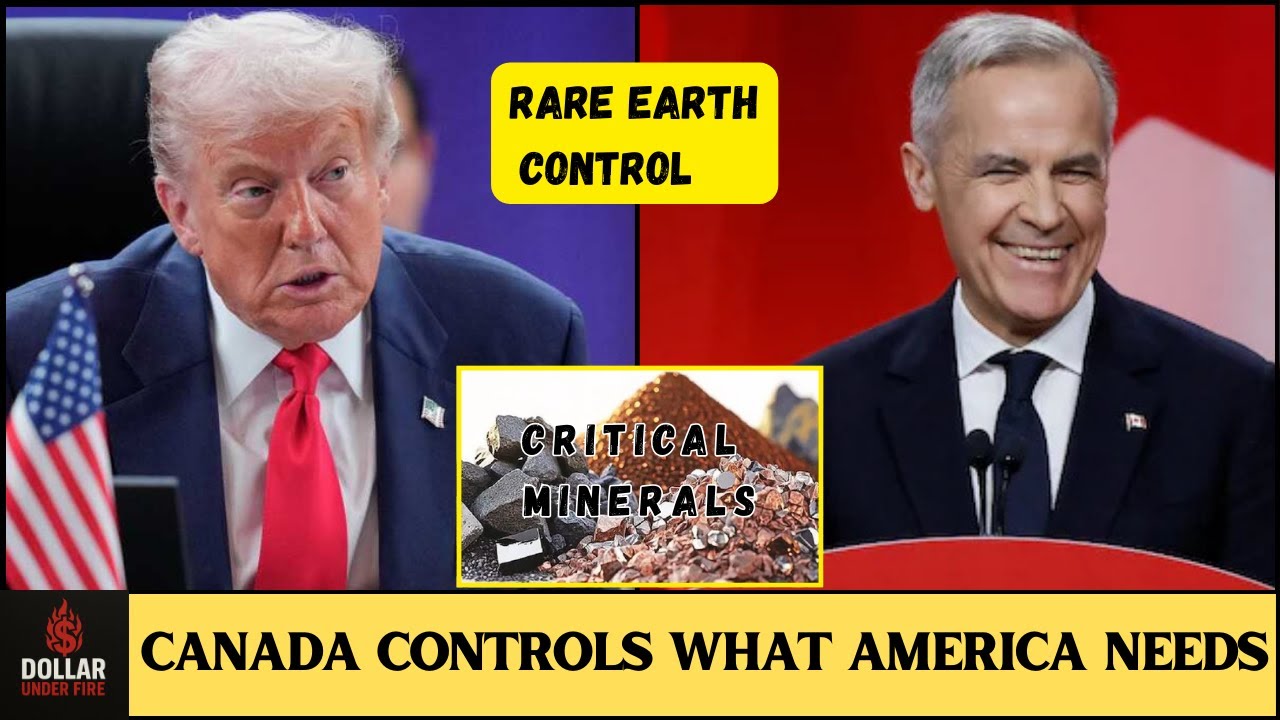
For years, Canada’s vast mineral wealth was treated as a given in Washington. Lithium, cobalt, nickel, and rare earth elements flowed south as part of a deeply integrated North American economy. Geography, history, and habit created an assumption: Canada would always be there.
That assumption is now breaking.
In a dramatic reordering of global mineral supply chains, Canada has transformed its natural resources into strategic leverage — and the United States is feeling the consequences. What looks on the surface like industrial policy is, in fact, a geopolitical pivot that places Ottawa at the center of the next era of economic and military power.
The minerals at stake are not abstract. Lithium powers electric vehicles. Nickel and cobalt are critical for advanced batteries. Rare earth elements are indispensable to missile guidance systems, radar, and artificial intelligence infrastructure. Control over these materials is no longer just about growth — it is about national security.
While U.S. officials have repeatedly downplayed Canada’s importance, the reality is unavoidable: Canada sits atop some of the world’s most stable and accessible reserves of these critical inputs. And Ottawa has decided to stop treating them as routine exports.
The turning point came amid escalating pressure from Washington during the Trump years. Threats, tariffs, and hostile rhetoric forced Canadian policymakers to confront a strategic blind spot. Dependence on a volatile partner, they concluded, was a vulnerability. Minerals that power modern economies could not remain exposed to political whim.
The response was not loud. It was methodical.
At the heart of Canada’s new posture lies Northern Ontario’s Ring of Fire, a mineral-rich region containing vast deposits of nickel, chromite, and other strategic materials. Long delayed by regulatory hurdles and infrastructure gaps, the project has suddenly gained urgency. Investment has accelerated. Timelines have tightened. What was once a future opportunity is now framed as a national imperative.
At the same time, Ottawa has moved to assert control.
Foreign investment rules have been tightened, particularly in sectors tied to critical minerals. The message is clear: ownership and influence over these resources is no longer a casual affair. Canada is also prioritizing domestic processing and refining, breaking a long-standing pattern in which raw materials were exported while value was captured elsewhere.
This shift fundamentally alters Canada’s position in the global supply chain. By controlling not just extraction but processing, Ottawa gains leverage over pricing, contracts, and partners.
And it is choosing those partners carefully.
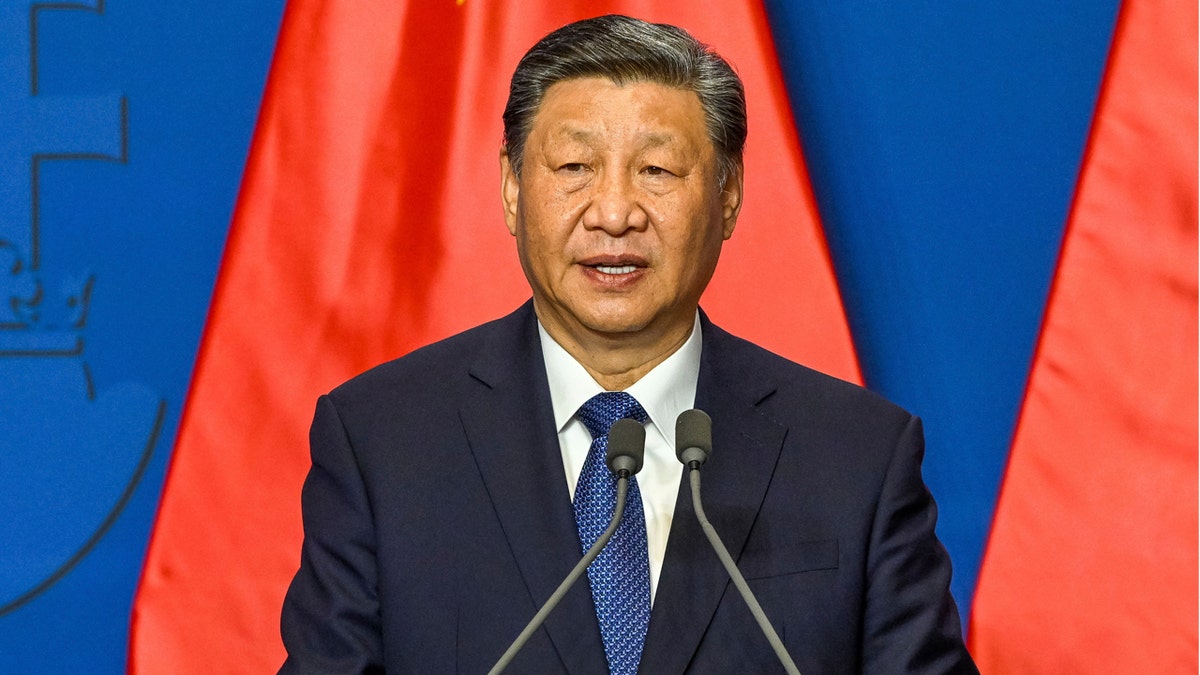
As Europe and parts of Asia scramble to reduce dependence on Chinese supply chains, Canada has emerged as a preferred alternative. Long-term contracts are being signed that lock in stability and predictability — and, crucially, reduce availability for others. These agreements are not easily reversed. Once supply chains are realigned, they tend to harden.
The United States, meanwhile, is being pushed into riskier terrain.
In its search for alternative sources, Washington is exploring partnerships in politically unstable regions, often with weaker environmental standards and ethical concerns. The contrast is stark: while Canada offers reliability, proximity, and rule-of-law stability, U.S. policymakers are being forced to weigh increasingly unattractive options.
The Pentagon has already acknowledged the reality.
Despite public rhetoric, the U.S. Department of Defense has quietly invested in Canadian mining projects, recognizing that American defense systems remain deeply dependent on Canadian minerals. This contradiction — hostile politics paired with strategic reliance — underscores the depth of Washington’s miscalculation.
Canada, by contrast, is operating from a position of clarity.
Ottawa’s strategy is not about punishment. It is about sovereignty. By redefining minerals as strategic assets rather than commodities, Canada is ensuring that future production aligns with its national interests. Access is now tied to respect, stability, and long-term partnership.
The broader implications are profound.

Canada is no longer simply upstream in the supply chain. It is shaping the terms of global competition in industries that will define the next half-century. Electric vehicles, clean energy, advanced weapons systems, and AI infrastructure all depend on materials Canada controls.
For the United States, the lesson is uncomfortable but unavoidable. Influence assumed is influence lost. Geography alone does not guarantee access. In an era where minerals are power, relationships must be managed — not taken for granted.
The storehouse is full.
The minerals are there.
But in this new reality, access is no longer guaranteed — and Canada is the one holding the keys.