Boeing’s decision to diversify major aerospace operations beyond U.S. borders is more than a corporate adjustment—it is a signal flare for American industry. Pressured by tariffs, supply-chain volatility, and global competition, the aerospace giant is rethinking where its most valuable work should live. The shift threatens to weaken decades of U.S. manufacturing dominance, unsettle labor markets, and reshape North America’s industrial balance. As high-value aerospace jobs begin drifting north, policymakers are being forced to confront a hard question: have political trade strategies pushed one of America’s crown-jewel industries to look elsewhere for stability?

For generations, Boeing stood as an anchor of American industrial power. Entire cities were built around its factories. Skilled workers passed aerospace jobs from one generation to the next. The company embodied the belief that advanced manufacturing was not just an economic asset, but a national one.
That certainty is now eroding.
Boeing’s recent move to diversify aerospace operations outside the United States reflects a deeper transformation underway in American manufacturing. While not framed as an abandonment of U.S. production, the decision signals a strategic recalibration—one driven less by innovation and more by survival in an increasingly unstable policy environment.
At the heart of the shift lies a paradox. Trade policies intended to protect American workers have instead injected uncertainty into long-term planning. Tariffs raised costs. Supply chains grew fragile. Political volatility made forecasting nearly impossible. For a company that plans in decades, not election cycles, that uncertainty has become a liability.
What once looked like protection has begun to feel like pressure.
Boeing’s leadership is responding accordingly. By relocating or outsourcing high-value aerospace work, the company is seeking predictability—stable costs, reliable regulations, and access to skilled labor without political turbulence. This is not a short-term maneuver. It is a long-term hedge against instability.
And once that hedge is planted, it rarely comes back.
Canada has emerged as a natural beneficiary of this shift. For years, it quietly invested in aerospace training, regulatory consistency, and industrial coordination. While Washington engaged in confrontational trade politics, Ottawa focused on predictability. The contrast matters. Aerospace manufacturing thrives on certainty: fixed timelines, stable rules, and uninterrupted supply chains.
Analysts warn that when aerospace work migrates, it creates gravity. Engineers follow projects. Suppliers relocate. Research clusters form. Over time, what begins as diversification can harden into displacement.
Labor unions see the danger clearly. They recognize this pattern from other industries—steel, autos, electronics—where job losses didn’t arrive with a single announcement, but through a slow drip of “strategic decisions.” The fear is not sudden layoffs, but gradual hollowing-out.
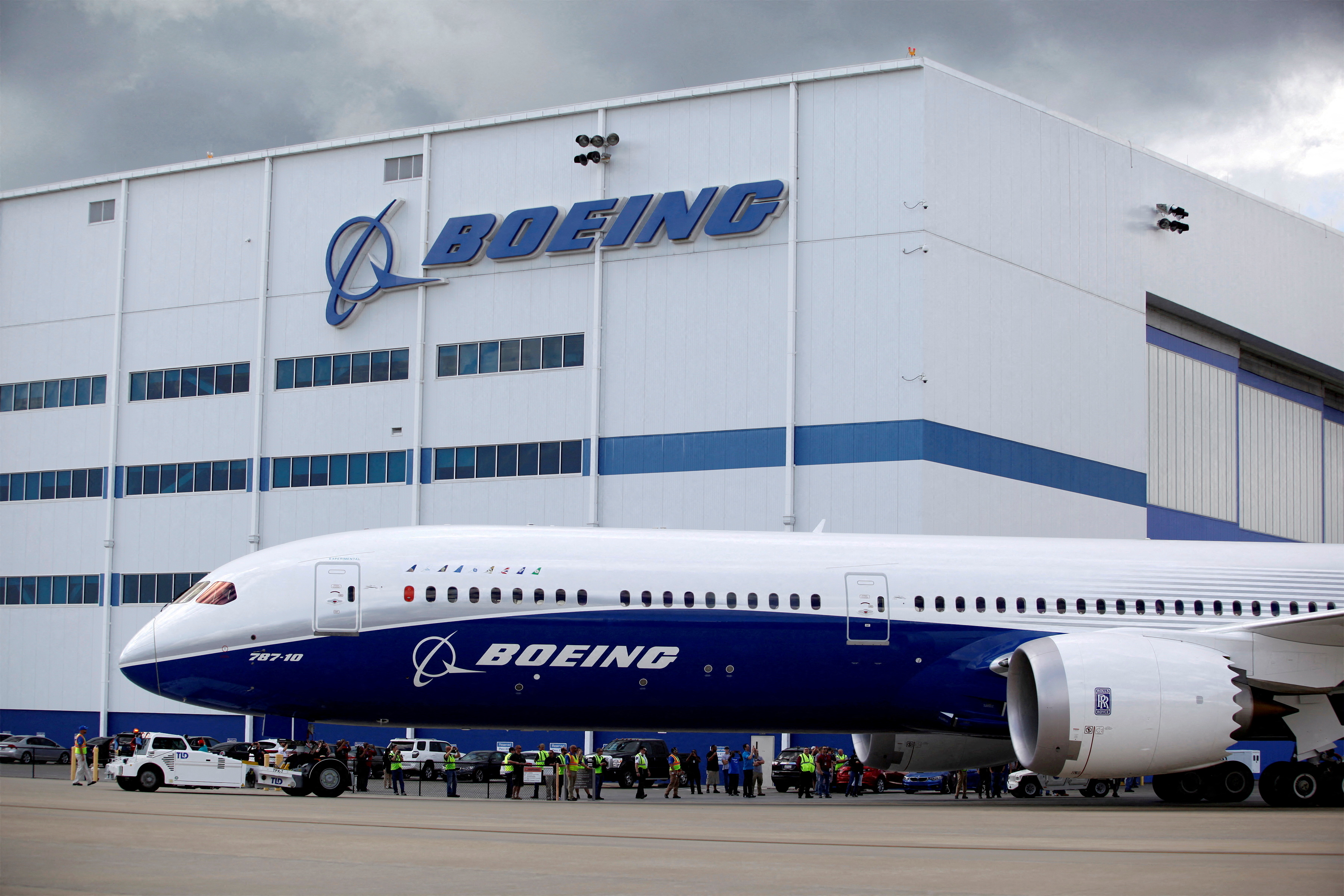
In Boeing towns, that anxiety is already taking hold. Workers are delaying major purchases. Local businesses are cautious. Communities built on aerospace employment sense that something fundamental is shifting, even if the numbers haven’t yet collapsed.
The broader implications extend beyond Boeing.
Global competitors are watching closely. When the flagship of American aerospace begins seeking refuge from domestic volatility, it sends a message: U.S. manufacturing is no longer immune to political risk. That perception alone can redirect future investment decisions.
This is the real danger—not a single contract moving abroad, but the slow erosion of confidence.
Policymakers now face an uncomfortable reckoning. Industrial strength depends not just on tariffs or slogans, but on trust—trust that rules will be consistent, supply chains protected, and long-term investments respected. When policy becomes unpredictable, even loyal companies adapt.
Boeing’s shift underscores a hard truth of the global economy: capital is mobile, expertise follows opportunity, and loyalty competes with stability. Companies may wrap themselves in national identity, but they operate in international reality.

None of this means American aerospace is doomed. The U.S. still holds unparalleled talent, infrastructure, and innovation capacity. But those advantages must be nurtured, not strained. Industrial leadership is not inherited—it is maintained through reliability.
The lesson from Boeing’s move is not ideological; it is practical. In an interconnected world, manufacturing power flows toward environments that offer clarity and continuity. If the U.S. wants to retain its industrial edge, it must create conditions where long-term planning feels safe again.
Otherwise, Boeing’s diversification may prove to be more than a strategy. It may be the opening chapter of a broader reordering of North American manufacturing—one that unfolds quietly, but leaves lasting consequences.