In the rugged expanse of Colorado’s wilderness, a woman dangled between two trees, her lifeblood threatened by a town seeking judgment. Hattie Bellamy, widow of the esteemed Judge Charles Bellamy, hung there, ropes biting into her wrists, as onlookers gathered—not to save her but to witness her disgrace. The sun scorched the earth, and the wind howled, echoing the cries of a woman who had sought the unvarnished truth.
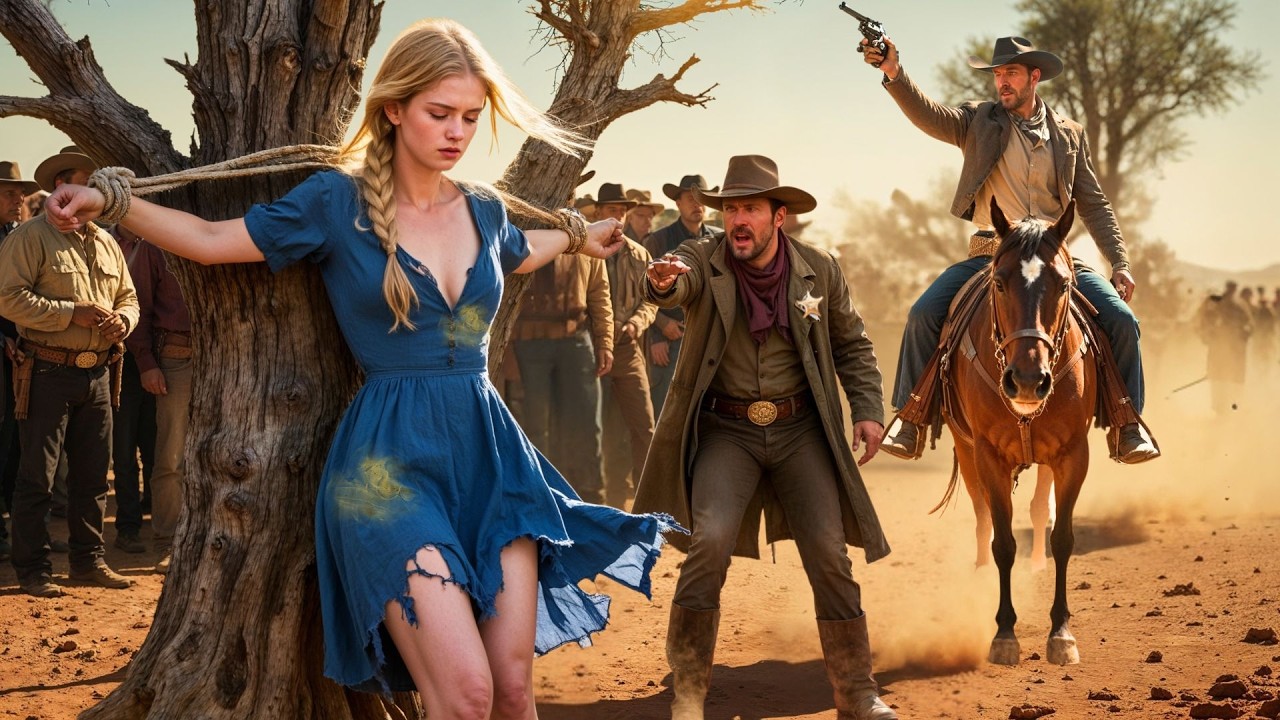 Hattie had dared to uncover secrets tangled in corruption and deceit, whispered in the dark alleys of local law. Now, tongues wagged among those who had come to taunt rather than to help. Memes of betrayal twisted through the crowd. “She stole evidence,” muttered one man. “This is a lesson for wives who forget their place,” grumbled another. Among them stood Elijah Blake, the deputy marshal, whom she had once called family. The tension grew thick, a noose made not only of rope but of silence.
In that oppressive moment, as pain racked her body and despair tightened its grip, the echo of gunfire shattered the air. A shot rang out, and one of the ropes snapped as if the universe itself had intervened. Hattie fell into the dust, unconscious, a fragile remnant of the woman she had been.
From the ridge, he came—a figure carved from the shadows, dressed in a weathered duster with purpose behind his steady gaze. Sawyer Grady, a freight runner with a past stained by grief, moved through the dust like a specter. “Touch her again,” he commanded, voice low and seething, “and die.” The crowd murmured, a ripple of uncertainty casting doubt even among those with guns.
Elijah’s authority faltered as Sawyer approached Hattie’s limp form, lifting her as though she were the most precious thing in the world. Stranded between right and wrong, the townsfolk watched, frozen, as he carried her away from their cruel spectacle. He rode out of their lives, not looking back, clutching the remnants of Hattie’s hope in his arms.
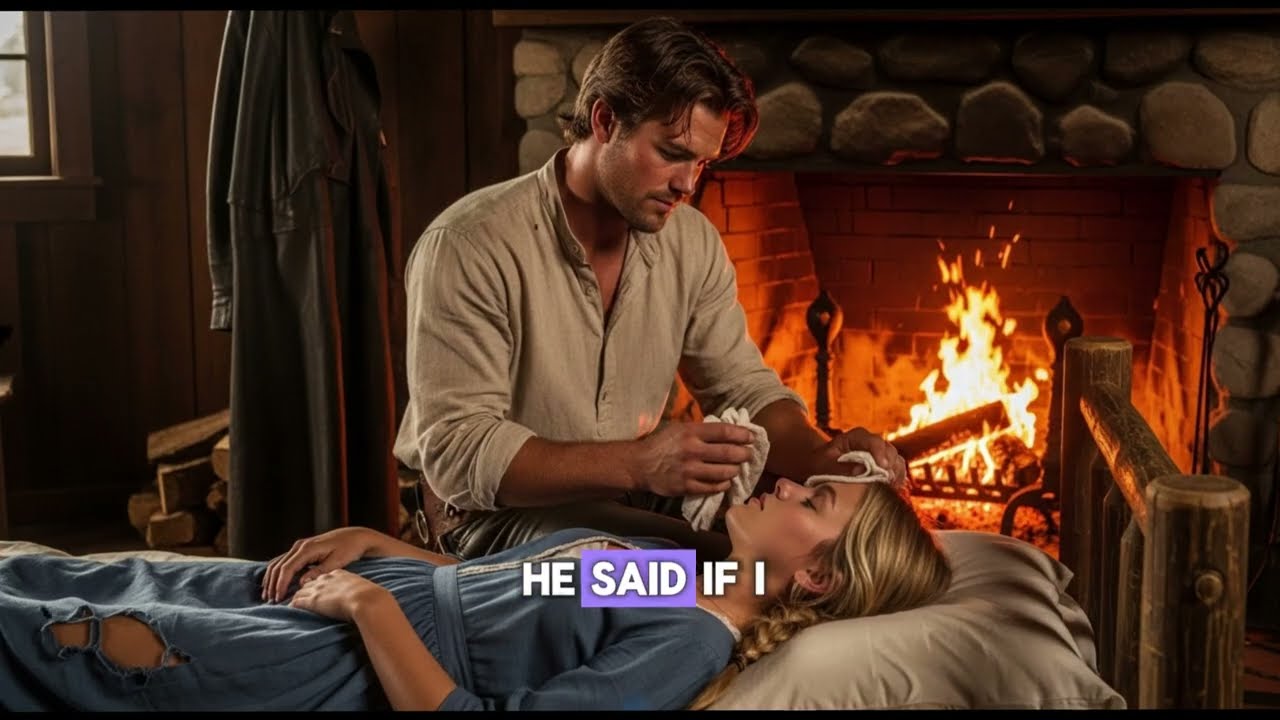
 Inside a small mountain cabin, the fire crackled, casting warmth across the weary space. Hattie stirred to the smells of broth and wood smoke. Sawyer moved about the room, tending to her as she struggled against the memories of horror she had endured. She was scared, tired, and unsure, fragments of herself jumbled in confusion.
“Who are you?” she managed, her voice a mere whisper. Sawyer responded with a story of his own—a sister lost to the same fate of injustice. It was a moment laden with grief that connected them, two souls battered by their pasts, standing on the precipice of something new.
Days turned into nights as they began to unearth the truth—Hattie’s truth, a black ledger hidden away, full of names and bribes, the heart of a town rotting from within. She clutched that ledger tightly, a trembling whispered promise to expose the darkness. Each night, as Sawyer taught her to shoot, courage bloomed where fear had once taken root.
Together, they became more than mere survivors; their bond transformed into a beacon of resistance against those who sought to silence Hattie forever. With every bullet shot into the trees, every plan they laid, they carved an undeniable resolve into the fabric of their fractured world.
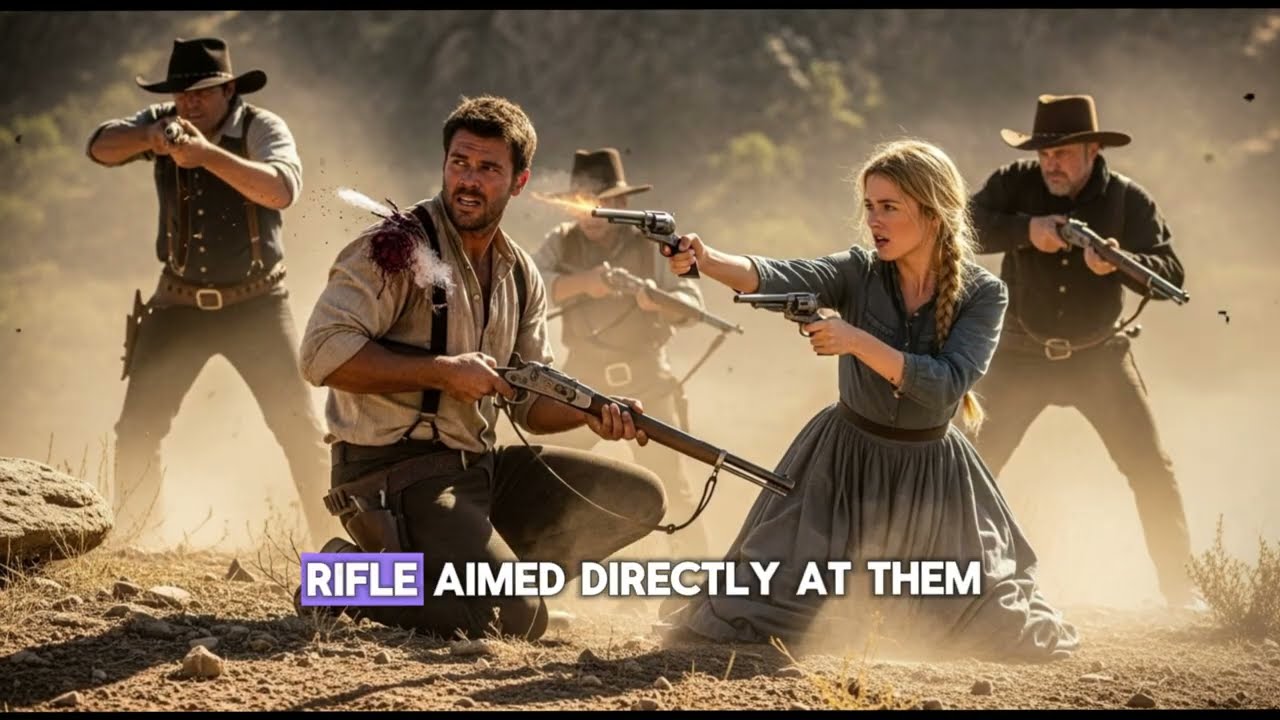
But the shadows of the town loomed large, and soon, danger returned with a vengeance. Riders hunted them, gunmen hell-bent on keeping the truth buried. In a desperate bid to escape, they fled into the treeline, Hattie’s newfound strength clashing against the remnants of her fear.
Their journey brought them back to the heart of Clearbrook, where an assembly awaited. Hattie, standing tall upon a platform, faced her tormentors once more but this time, she was armed with truth, and her voice would not be stifled. The crowd gathered in murmurs, unease trembling through them as she unfolded the ledger, revealing corruption that snaked through the town like a weed choking the life from all that was good.
“Hattie, you’re lying,” the mayor bellowed, but his defiance fell flat against the weight of the truth. As the crowd bore witness to a reckoning long overdue, their hearts began to shift. No longer were they just voyeurs of brutality; they were participants in justice. Elijah Blake, the man who had once sought to silence Hattie, found himself unarmed, stripped of the power that had once defined him.
 When justice was no longer a rope around a woman’s neck but a powerful voice lifted against tyranny, the tide turned. The deep-rooted strength in Hattie awakened a spirit in others—those standing in shadows came forth. Old fears melted away, replaced by hope as the town grasped at the reality hanging in the air, the truth finally unshackled, running free.
In the quiet aftermath, Hattie Bellamy emerged not simply as a survivor but as a force—a beacon of resilience within her community. As Clearbrook began to heal, her presence became a symbol of justice reborn. And beside her, Sawyer stood, a steadfast companion who understood the wounds of the past yet looked forward to a future rich with promise. Together, they built a life where justice persisted, not through violence but through the strength of shared stories and connection.
The two trees that once hung Hattie now stood as witnesses to her courage, nourished by the truth rather than the silence that nearly claimed her. Beneath the canopy of a Colorado sky, they laid the foundation for anew—not with fear or rope, but with bonds forged in the fires of empathy, compassion, and the courage to stand firm against the tide of ignorance.
There, at the Bellamy Grady Ranch, a new chapter began—a story filled with love, understanding, and deep, abiding justice. As the wind whispered through the pines, it carried the promise of a bright tomorrow, reminding all that sometimes it’s not the scariest among us who protect us but those who dare to expose the truth, no matter the cost.
In the end, it is truth—bound tightly in black leather—that sets us all free.