Without declarations, sanctions, or open confrontation, the United States is experiencing a subtle but consequential shift in its global standing. By 2025, America had become the only major destination where foreign visitor spending continued to fall, even as tourism rebounded elsewhere. Investment flows softened, allies grew cautious, and trust—once automatic—became conditional. From Canada and Europe to Asia, governments, travelers, and corporations are quietly recalibrating their reliance on Washington. This is not a revolt against U.S. power, but something potentially more dangerous: a global adjustment that no longer assumes American leadership as the default.

For decades, the United States functioned as the gravitational center of the global system. Tourists came in record numbers. Capital flowed toward American markets. Political leadership, even when contested, was assumed. That era may not be ending with a bang—but it is undeniably fading with a whisper.
By 2025, travel data revealed a striking anomaly: while Europe, Asia, and the Middle East saw foreign tourism surge past pre-pandemic levels, the U.S. continued to slide. Analysts initially blamed high airfares, currency volatility, and lingering post-COVID distortions. But as months passed, it became clear this was not a temporary dip—it was a sentiment shift.
Rising costs and tighter visa policies played a role, but perception mattered more. The U.S. began to feel less predictable, less welcoming, and less stable. That perception spread fastest among America’s closest partners.
Canada offered the earliest warning sign. For nine consecutive months, travel from Canada to the U.S. declined—a remarkable trend given the depth of cross-border integration. Canadians, long accustomed to weekend shopping trips and winter escapes south, began choosing Mexico, the Caribbean, and domestic alternatives instead. Border towns reported some of their weakest tourism seasons in years, and even aggressive marketing campaigns failed to reverse the momentum.
This wasn’t driven by anger. It was driven by comfort—or the loss of it.
Europe followed a similar trajectory. After a controversial United Nations vote on Ukraine, European leaders publicly questioned the reliability of American leadership. Quietly, behavior shifted. Fewer Europeans traveled to the U.S., while more Americans relocated to Europe for work, study, and long-term residence. The data suggested something deeper than politics: a recalibration of trust.
In Asia, the pattern was even more pronounced. Long-haul travel to the U.S. declined, while regional tourism surged. Countries like Japan and South Korea intensified efforts to promote intra-Asian destinations. International students, once overwhelmingly drawn to American universities, increasingly chose Canada, Australia, and the United Kingdom instead. Cost mattered—but so did predictability. For families making decade-long decisions, uncertainty became a dealbreaker.
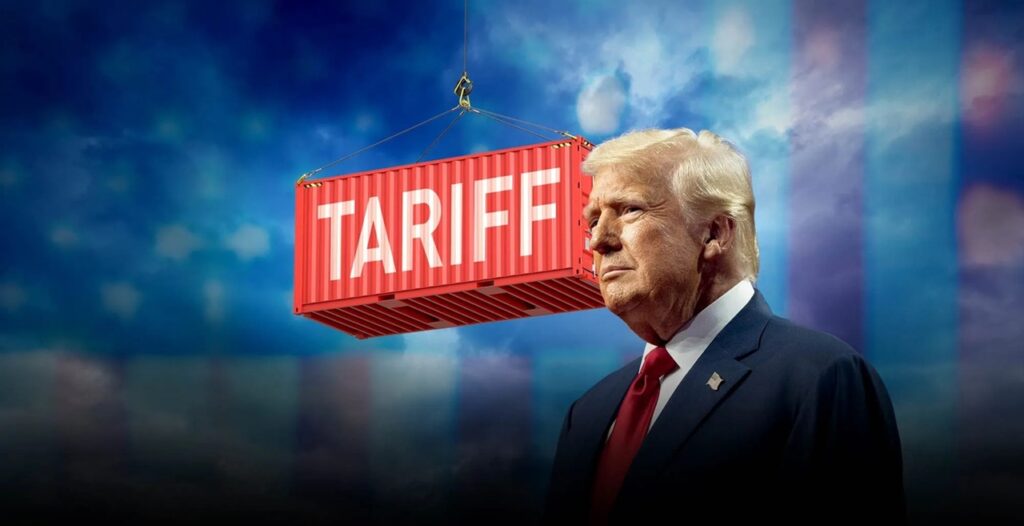
Trade policy accelerated the shift. New U.S. tariffs, often targeting allies rather than rivals, triggered disbelief in European capitals. Officials warned that such moves risked destabilizing the global economy at a fragile moment. Multinational companies responded not with protest, but with planning—rethinking supply chains, diversifying exposure, and reducing dependence on U.S.-centric systems.
What emerged was not a coordinated pushback against Washington, but a quiet global reorganization. Governments and businesses began building alternatives—not to challenge American power directly, but to insulate themselves from its unpredictability.
This distinction matters. The world is not rejecting the United States. It is hedging against it.
In previous eras, global uncertainty pushed nations closer to Washington. Today, it is pushing them outward—toward regional partnerships, diversified trade routes, and decentralized leadership. The result is a multipolar system not defined by ideology, but by risk management.
For the U.S., the implications are profound. Influence no longer flows automatically from size or history. In a world where stability is scarce, credibility has become currency—and it is earned slowly, lost quickly.
The question is not whether America still matters. It does. The question is whether it can adapt to a world that no longer waits for Washington to set the tone.
Leadership in this new order will require consistency over spectacle, restraint over reflex, and trust rebuilt through action rather than rhetoric. The world has already learned how to function without constant American direction. Whether it chooses to return to that dependence may depend less on power—and more on predictability.
And that is a challenge no superpower can afford to ignore.