For decades, Washington treated Canada as a permanent economic satellite—reliable, aligned, and ultimately compliant. That assumption is now breaking down. Faced with renewed tariff threats and economic pressure from the United States, Canada has quietly but decisively pivoted away from dependence on its southern neighbor. Rather than retaliate, Ottawa chose diversification, resilience, and strategic autonomy. The shift is already reshaping North American trade dynamics and sending a message far beyond the continent: loyalty rooted in dependence is fragile, and in a volatile global economy, sovereignty belongs to those who can choose—not those who must comply.

For most of the postwar era, the U.S.–Canada economic relationship rested on an unspoken premise: proximity equals alignment. Washington assumed that Canada, bound by geography and deeply integrated supply chains, would naturally fall in line with American priorities—on China, trade enforcement, and global economic policy.
That assumption was never formally agreed upon. And now, it is quietly unraveling.
The turning point came when the United States signaled its willingness to impose a sweeping 25% tariff on vehicles and auto parts. For Canada, this was not a symbolic threat. Nearly half a million Canadian jobs depend directly on an auto supply chain that crosses the U.S. border multiple times before a single vehicle reaches a showroom. The tariff proposal exposed a stark reality: Canada’s economic stability could be jeopardized by decisions made in Washington with little warning and less consultation.
Rather than respond with public outrage or retaliatory tariffs, Ottawa chose restraint—and strategy.

Under the guidance of Mark Carney, Canada began treating dependency itself as the core risk. The problem was not one tariff or one administration, but the structural vulnerability of relying too heavily on a single market that increasingly viewed trade as leverage rather than partnership.
This recalibration marked a fundamental shift. Canada did not “turn against” the United States. It simply stopped organizing its economy around American predictability.
As Washington escalated pressure, alternative paths opened. China’s proposal to lift tariffs on Canadian canola in exchange for reconsideration of restrictions on Chinese electric vehicles forced Ottawa to confront a hard truth: economic logic and political alignment do not always point in the same direction. For Canada’s agricultural sector—already strained by global disruptions—the offer represented relief, stability, and leverage.
The response was telling. Rather than dismissing the proposal outright, Canada evaluated it through a pragmatic lens. The goal was not allegiance, but balance.
This logic soon extended across multiple sectors. Canada deepened ties in steel and aluminum markets, accelerated clean energy partnerships, and pursued trade frameworks that reduced exposure to any single political center. The strategy was quiet but cumulative, reshaping Canada’s economic map without dramatic declarations.
Meanwhile, the consequences of tariff-driven policy began surfacing inside the United States. Higher input costs rippled through manufacturing hubs. Job losses mounted in politically sensitive states. Allies began to question whether the U.S. approach was rooted in long-term cooperation—or short-term coercion.
Japan and South Korea took notice. So did Europe.
By autumn, the contrast was unmistakable. While U.S. trade rhetoric continued to emphasize pressure and loyalty, Canada’s posture had shifted toward autonomy. This was not defiance—it was insulation.
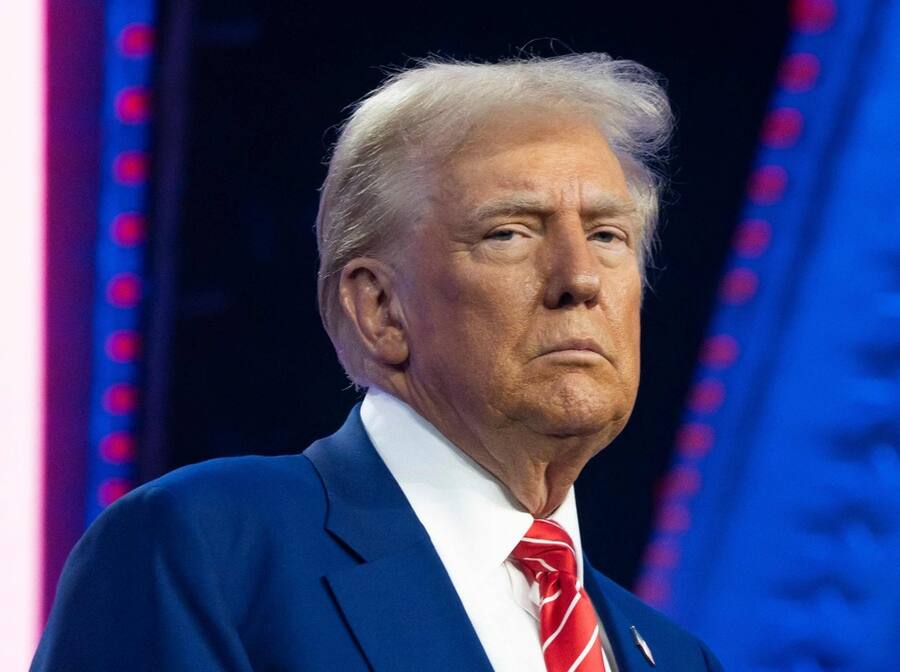
The new dynamic became evident during high-level exchanges. When President Trump pointed to factory investments and tariff relief as bargaining tools, Carney’s response was notably calm. There was no rush, no public concession. The message was implicit but clear: Canada no longer negotiates from necessity.
This moment reflects a broader transformation in global trade. Countries are increasingly unwilling to anchor their economic futures to a single power—especially one that treats interdependence as a weapon. Canada’s recalibration is not an anomaly; it is a preview.
The old hierarchy—where economic proximity guaranteed political alignment—is eroding. In its place is a more fluid system, where middle powers seek resilience through diversification rather than submission.
Canada’s lesson is deceptively simple: sovereignty in the 21st century is not about isolation, but optionality. The ability to choose partners, absorb shocks, and say no without collapse has become the new currency of power.
For Washington, the implications are uncomfortable. Influence built on assumption is fragile. And loyalty extracted through pressure rarely survives the pressure itself.
Canada has not abandoned the United States. But it has abandoned the idea that its future must orbit American policy choices.
As global trade continues to fragment and realign, this quiet pivot may prove more consequential than any tariff announcement. The real question now is whether Washington will recognize the shift—or continue operating in a world that no longer exists.