An unprecedented decision by Ottawa is grinding one of the world’s busiest trade corridors to a halt. Canada has ordered manual inspections of every commercial truck entering from the United States, triggering massive delays, stalled supply chains, and economic shockwaves across North America. What appears on the surface to be a border security measure is rapidly revealing something deeper: the fragility of a “just-in-time” economy, the power embedded in border policy, and the political realities behind so-called frictionless trade.
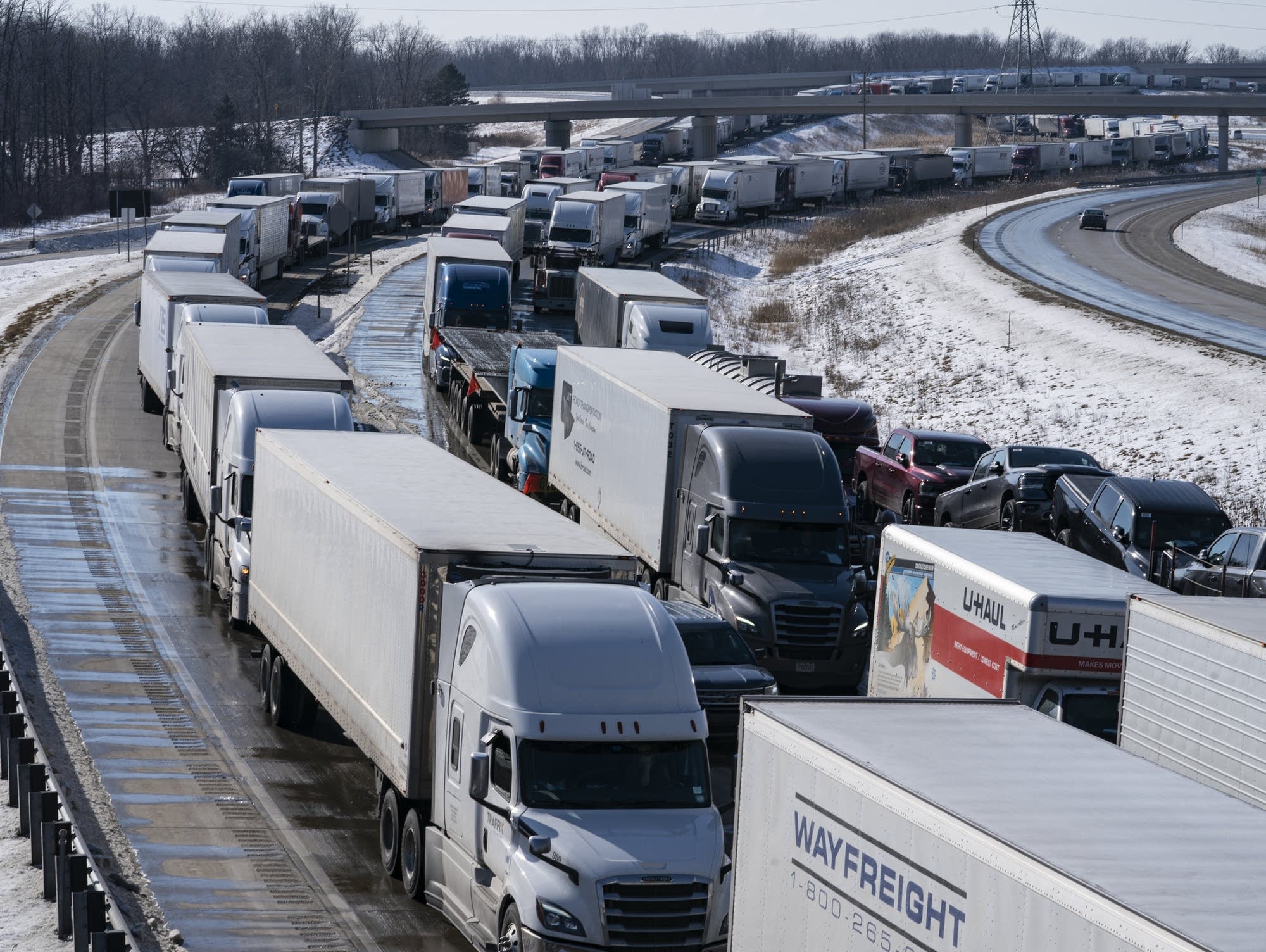
For decades, the U.S.–Canada border stood as a symbol of seamless commerce — fast, efficient, and largely invisible to consumers. That illusion has now collapsed. Canada’s directive to manually inspect every U.S. commercial truck has transformed border crossings into choke points, exposing structural weaknesses long hidden beneath the promise of speed and efficiency.
Miles-long lines of idling trucks now stretch toward key crossings. Drivers wait for hours, often unpaid. Warehouses back up. Factories brace for shortages. While the images are dramatic, they only hint at the deeper economic consequences unfolding behind the scenes.
More Than Security — A Statement of Power
Canadian officials insist the intensified inspections are necessary to reinforce border integrity and eliminate uncertainty around illicit flows. But trade experts argue this move goes far beyond technical enforcement. In a moment of heightened political and economic tension, the policy functions as a demonstration of state power.
The message is unmistakable: borders are not symbolic lines drawn for convenience. They are tools of leverage — and when exercised, they can reshape entire economic systems overnight.
The “Just-in-Time” Illusion Cracks
Modern North American trade depends on just-in-time logistics, a system designed to minimize inventory and maximize efficiency. Parts arrive exactly when needed. Warehouses remain lean. Costs stay low.
But that same efficiency comes at a price: fragility.
Once inspections slow even marginally, the system begins to fail. Assembly lines stall due to missing components. Perishable goods spoil in transit. Manufacturing schedules unravel. The very design that once boosted profits now magnifies disruption.

Who Pays the Price?
The immediate victims are not multinational corporations with deep reserves. Instead, the burden falls on truck drivers, small suppliers, factory workers, and consumers. Delays translate into lost wages, canceled orders, and rising prices.
Large corporations may absorb the shock or shift supply routes. Smaller operators often cannot. What begins as a border delay quickly becomes a local economic crisis.
What the Headlines Miss
Media coverage has focused on the spectacle — backed-up trucks, uniformed officers, tense crossings. But the deeper story lies in what this disruption reveals about the system itself.
For years, corporations lobbied for reduced inspections and accelerated customs processes in the name of efficiency. Oversight was framed as friction. Speed was framed as progress. The result was an economic model optimized for profit, not resilience.
Canada’s decision has abruptly exposed that imbalance.
Borders as Political Pressure Points
This moment challenges the long-held belief that markets operate independently of politics. They do not. Trade flows exist at the discretion of policy, enforcement, and power.
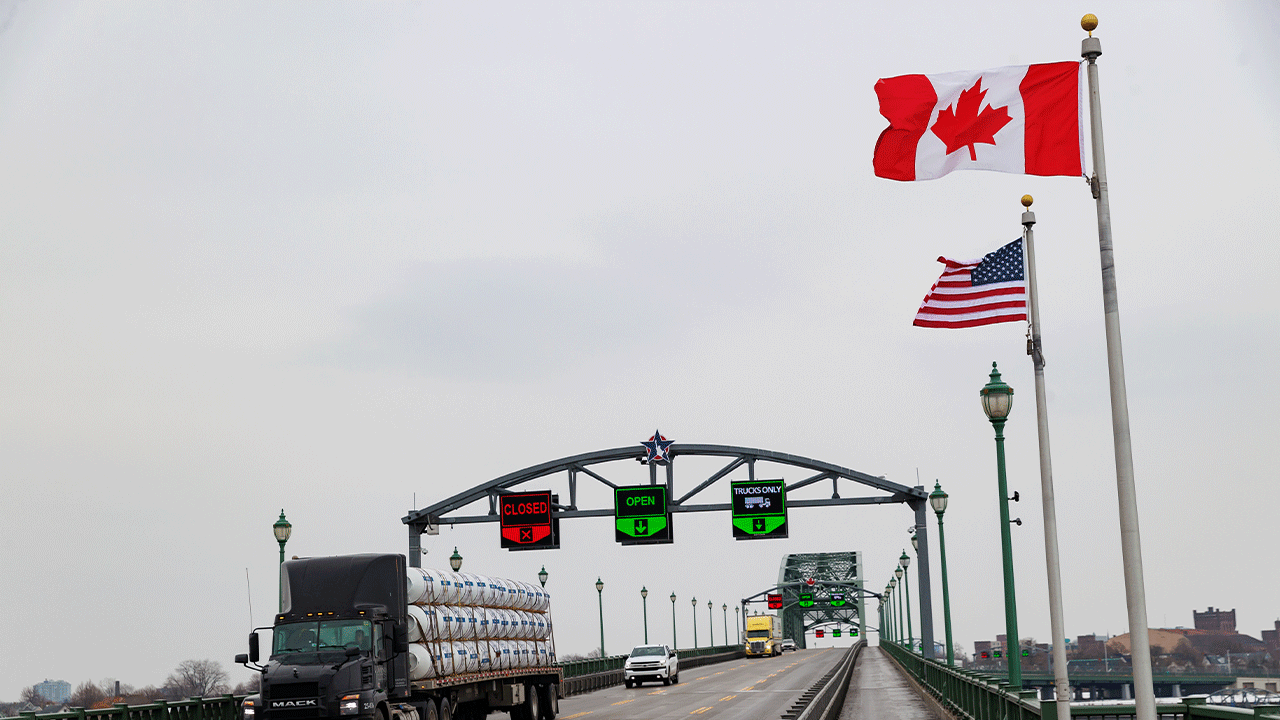
The border — once treated as a technical formality — has reemerged as a political pressure point capable of shaking supply chains, labor markets, and consumer prices across an entire continent.
A Reckoning for North American Trade
Whether the inspections last days or months, their impact will linger. They force an uncomfortable but necessary question:
Can an economy built on maximum speed and minimal oversight truly be sustainable?
This disruption is not an accident. It is the consequence of deliberate design choices made over decades. And as Canada tightens control at the border, those choices — and their human costs — are coming sharply into focus.
What unfolds next may determine not only the future of U.S.–Canada trade, but how much resilience North America is willing to trade for efficiency in an increasingly politicized global economy.