A quiet defense rethink raises major questions about sovereignty, Arctic security, and long-term military independence
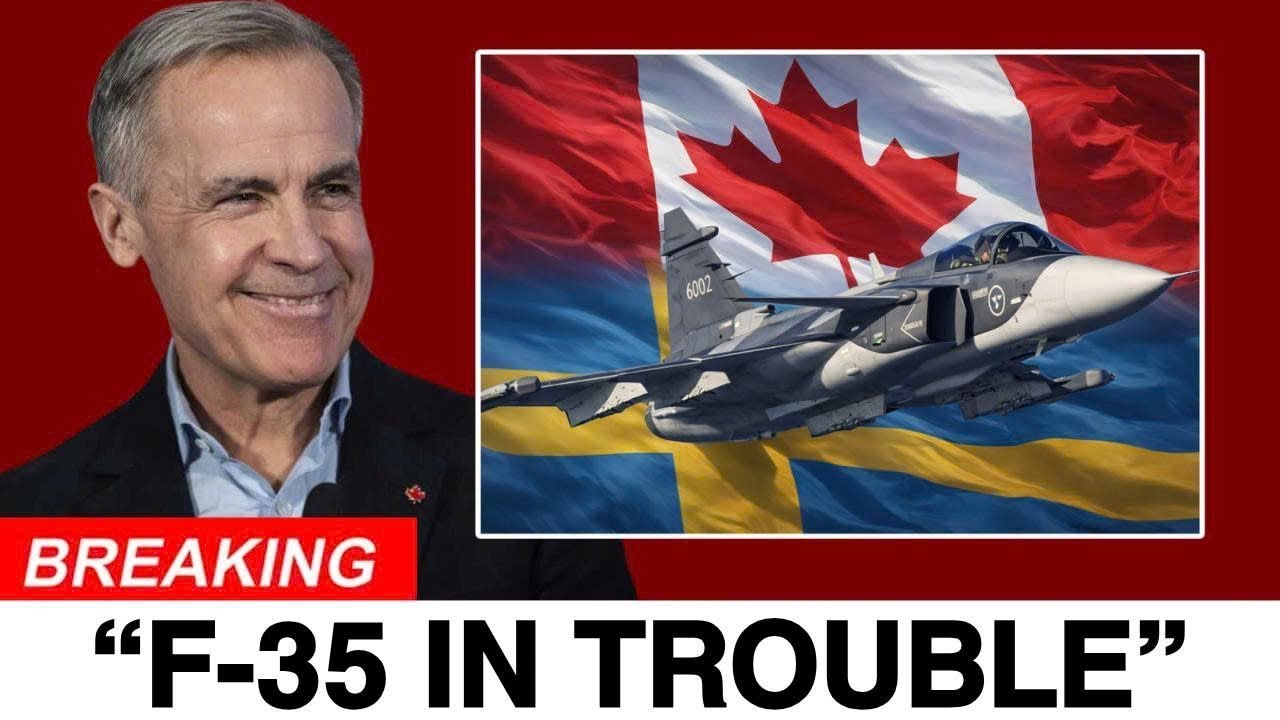
Canada’s long-anticipated plan to modernise its air force has entered unexpected territory. Behind closed doors in Ottawa, serious discussions are reportedly underway about a potential purchase of 88 Saab Gripen fighter jets, a move that would challenge the country’s long-standing commitment to the American-built F-35 Lightning II.
The possibility of shifting away from the F-35 represents more than a procurement adjustment. It signals a deeper reassessment of Canada’s defense priorities, particularly as concerns grow around cost control, operational readiness, and national sovereignty in an increasingly unstable global environment.
A Defining Decision for Canada’s Air Power
At the centre of the debate is a stark strategic choice. Canada can continue with the F-35 program led by Lockheed Martin, or pivot toward the Saab-built Saab Gripen, developed in Sweden.
This decision will shape Canada’s air force capabilities for decades and directly affect how the country defends its vast Arctic territory, monitors northern airspace, and exercises military autonomy within NATO.
The F-35: Advanced Technology With Growing Concerns
The F-35 has long been promoted as a cutting-edge stealth aircraft offering deep integration with U.S. and NATO systems. For allies closely aligned with Washington, this interoperability is a key selling point.
However, mounting concerns continue to surround the aircraft. Reports of mission-capable rates frequently falling below 50 percent have raised alarms, particularly for a country expected to operate aircraft in extreme Arctic conditions where reliability is critical. Maintenance complexity and long repair cycles further complicate sustained operations in remote regions.

Cost Pressures and Long-Term Financial Risk
Canada’s projected cost for acquiring and operating the F-35 fleet is estimated at close to 19 billion Canadian dollars, with defence analysts warning that this figure may grow substantially over time.
Experiences in other countries, including Switzerland, have shown how initial F-35 cost estimates can rise sharply once sustainment, upgrades, and lifecycle expenses are fully accounted for. For Canada, such financial uncertainty could limit flight hours, reduce readiness, and strain broader defense budgets.
Sovereignty and Software Control at the Core of the Debate
Beyond cost and performance, sovereignty has become a central concern. The F-35’s software, upgrades, and mission systems remain tightly controlled by the United States. Any significant modification or integration of new weapons requires U.S. approval.
In a period marked by trade disputes, tariffs, and diplomatic friction, critics argue that such dependency exposes Canada to strategic vulnerability. Relying on foreign authorization to adapt military capabilities raises fundamental questions about independent defense decision-making.
Why the Saab Gripen Is Gaining Attention
The Gripen presents a fundamentally different philosophy. Designed for operation in harsh climates and dispersed environments, it can take off from short, austere runways and requires far fewer maintenance resources than the F-35.
Crucially, Saab offers full access to source code and systems integration, allowing customer nations to control upgrades, weapons selection, and mission profiles independently. For Canada, this level of autonomy is increasingly attractive as geopolitical uncertainty grows.

Operational Readiness and Arctic Suitability
With reported mission-capable rates approaching 80 percent, the Gripen has built a reputation for reliability. Lower operating costs allow for more frequent patrols, extended training hours, and sustained Arctic presence without escalating budgets.
These attributes align closely with Canada’s geographic realities, where long distances, extreme cold, and limited infrastructure define day-to-day air force operations.
Long-Term Savings and Strategic Flexibility
Defense economists estimate that choosing the Gripen could save Canada tens of billions of dollars over the aircraft’s lifetime. Those savings could be redirected toward surveillance systems, northern infrastructure, cyber defense, and naval modernization.
Rather than concentrating resources into a single high-cost platform, Ottawa would gain flexibility to adapt its defense posture as threats evolve.
Echoes of the Avro Arrow and National Memory
The number 88 carries symbolic weight in Canada’s aviation history, recalling the Avro Arrow, a groundbreaking Canadian fighter program cancelled in the late 1950s under external pressure. That decision is often cited as a moment when Canada relinquished technological leadership and defense independence.
For some observers, the Gripen discussion revives unresolved questions about whether Canada should once again prioritise autonomy over alignment.

A Choice That Will Redefine Canada’s Defense Identity
This emerging debate is unfolding largely outside public view, but its consequences are profound. Choosing the F-35 reinforces close integration with U.S. military systems. Selecting the Gripen would mark a deliberate shift toward sovereign control and diversified partnerships.
Either path carries strategic trade-offs, but the growing seriousness of the Gripen option suggests Ottawa is no longer treating the F-35 as inevitable.
What Comes Next for Ottawa
As diplomatic, industrial, and military stakeholders intensify their lobbying efforts, Canada’s fighter jet decision is shaping up to be one of the most consequential defense choices in modern Canadian history.
Whether Ottawa ultimately doubles down on the F-35 or pivots toward the Gripen, the outcome will define how Canada defends its skies, protects the Arctic, and asserts its sovereignty well into the mid-21st century. The balance between alliance integration and national independence now hangs in the balance.