Ottawa’s carefully worded response signals a rare divergence from Washington and reshapes expectations of allied alignment
Canada has taken an unexpected and consequential step on the global stage by declining to endorse the United States’ military intervention in Venezuela. Under the leadership of Mark Carney, Ottawa’s decision to withhold approval marks a striking departure from decades of near-automatic alignment with Washington on matters of foreign intervention.
As explosions echoed across Caracas and U.S. aircraft dominated Venezuelan airspace, many governments were expected to quickly fall in line behind Washington’s operation. Instead, Canada’s response arrived slowly, deliberately, and with unmistakable significance.
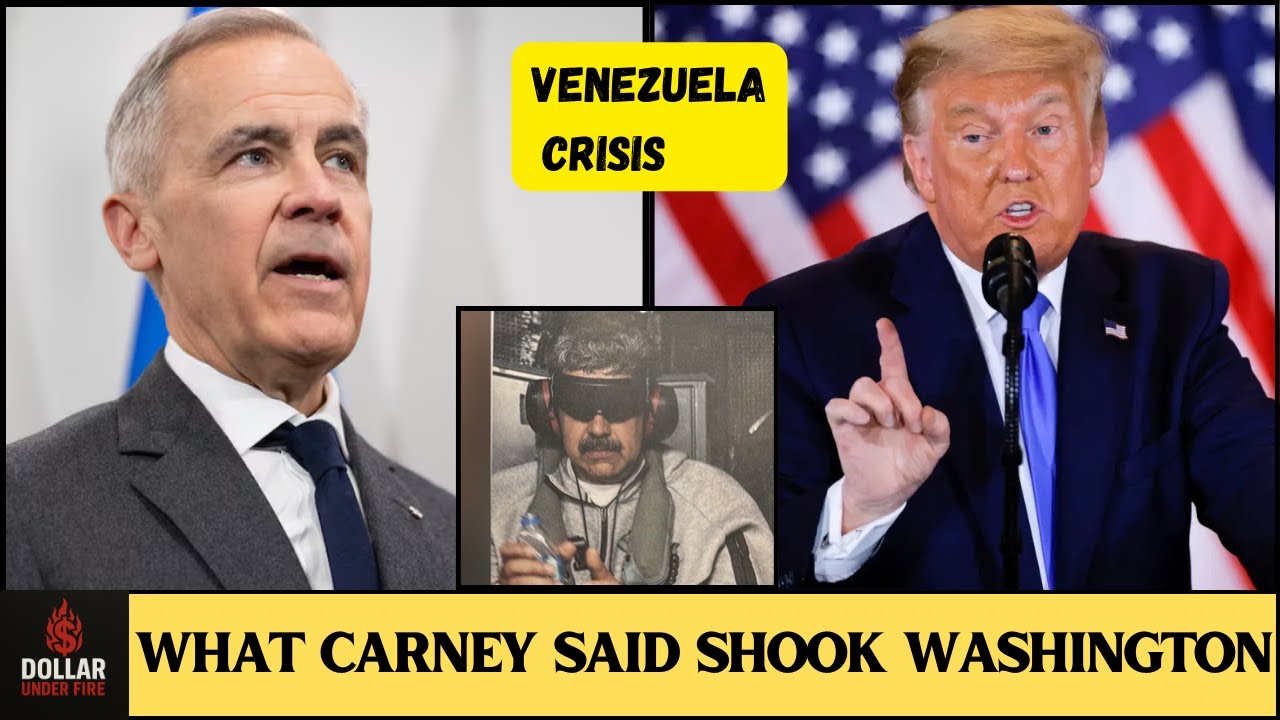
A Moment That Defied Diplomatic Expectation
For years, Canada has stood shoulder to shoulder with the United States on international security actions, particularly when framed as efforts to defend democracy. When American forces moved against Venezuela’s government, analysts widely assumed Ottawa would issue swift public backing.
That endorsement never came.
Hours passed with no official comment, a silence that unsettled diplomatic observers and signaled that Canada was weighing more than alliance loyalty. This pause was not indecision, but strategy.
A Statement Defined by What It Did Not Say
When Canada finally spoke, the wording was precise and restrained. Ottawa reaffirmed its opposition to Nicolás Maduro’s government and reiterated support for democratic reform in Venezuela.
What the statement notably avoided was any endorsement of the U.S. military action itself.
Rather than legitimising the intervention, Canada emphasized the Venezuelan people’s right to determine their future through peaceful and democratic means, distancing itself from the use of force as a pathway to political change.

International Law at the Center of Ottawa’s Position
At the heart of Canada’s response was a subtle but firm reference to international law. Ottawa stressed the importance of lawful, negotiated solutions and respect for sovereign processes, language widely interpreted as a quiet challenge to the legality of the U.S. operation.
By avoiding direct criticism while foregrounding legal norms, Canada questioned the premise that military power alone confers legitimacy. The message was unmistakable: democracy cannot be imposed without undermining the very rules meant to protect it.
A Philosophical Divide Between Allies
This episode exposed a deeper contrast in how Washington and Ottawa approach global crises. The U.S. intervention reflected a belief in decisive action first, with legitimacy assumed or justified later. Canada countered with a doctrine rooted in consensus, legality, and restraint.
Rather than viewing force as authority, Ottawa framed authority as something earned through process, law, and international cooperation.
Managing Domestic and Global Pressure
Within Canada, reaction was mixed. Some applauded the U.S. strike as a moral stand against authoritarianism, while others condemned it as an unlawful breach of sovereignty. Carney avoided aligning with either extreme.
By focusing on principles instead of rhetoric, the Canadian government insulated itself from internal polarization while reinforcing a consistent foreign policy framework anchored in long-standing values.

Humanitarian Focus Over Military Endorsement
Canada’s response also redirected attention toward humanitarian concerns. Ottawa emphasized refugee protection, humanitarian assistance, and diplomatic engagement, framing Venezuelans as civilians in need of protection rather than symbols in a geopolitical contest.
This approach underscored a belief that leadership is demonstrated not through escalation, but through responsibility and long-term stability.
A Signal With Global Implications
Canada’s refusal to endorse unilateral military action reverberates far beyond Venezuela. It raises critical questions about the future of global governance and whether international law still serves as a meaningful constraint on powerful states.
If military interventions proceed without multilateral authorization, smaller nations risk being left vulnerable to the same logic of force. Canada’s stance implicitly challenged this trajectory.
Recasting Canada’s Global Role
In withholding endorsement, Ottawa repositioned itself as more than a reflexive ally. Canada emerged as a principled actor willing to complicate relations with its closest partner in order to uphold international norms.
This move may encourage other nations to reassess automatic alignment with great-power interventions and reassert the importance of lawful process.

A Turning Point in Modern Diplomacy
The Venezuela crisis revealed not only a nation in turmoil, but fractures within the international order itself. Canada’s response demonstrated that silence, when deliberate, can carry more weight than applause.
As American forces advanced, Canada’s restraint stood as a rebuke of the “act now, justify later” doctrine. History may judge this moment not by the speed of military action, but by who chose to defend the rules designed to prevent chaos.
What This Means Going Forward
Venezuela’s future remains uncertain, but Canada’s position has already reshaped diplomatic expectations. By refusing to grant legitimacy to force without international consent, Mark Carney signaled that alliance does not require submission.
This moment may prove to be an early marker of a broader shift in global politics, where credibility is measured not by military reach, but by adherence to principles that restrain it. The world is watching how this stance influences the next crisis.