What began as a hardline trade strategy aimed at reviving U.S. manufacturing is now producing a starkly different outcome. New data shows that U.S. tariffs on Canadian goods have coincided with more than one million layoffs this year, including 67,000 lost manufacturing jobs since April alone. After Canada retaliated with sweeping counter-tariffs on $155 billion in American exports, the dispute escalated into a full-scale economic shock. Supply chains fractured, costs surged, and industries far beyond the original targets began shedding workers—raising urgent questions about whether Washington’s trade gamble has backfired.
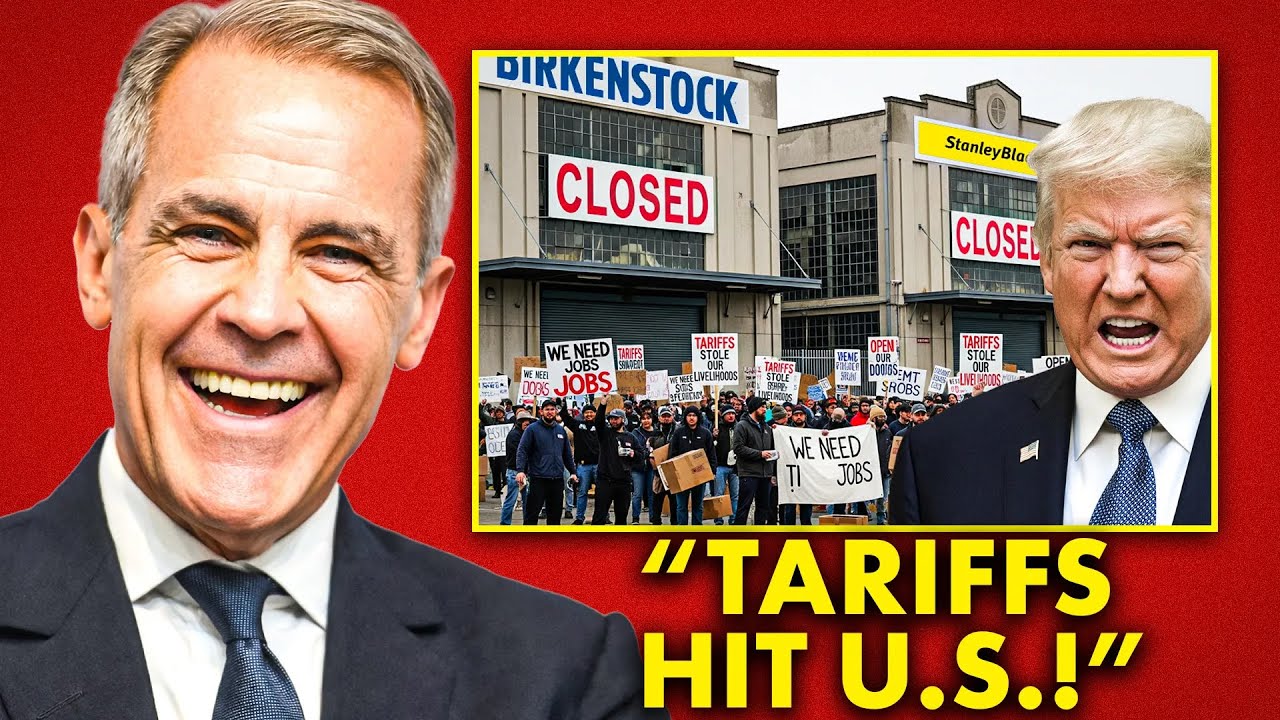
The trade war between the United States and Canada was pitched as a reset—an aggressive recalibration meant to restore American industrial strength and rebalance decades of perceived unfair trade. Instead, it is rapidly becoming a cautionary tale.
Since U.S. tariffs on Canadian goods took effect in April, the American economy has experienced a wave of job losses that few policymakers anticipated. According to recent figures, more than one million layoffs have occurred this year, with manufacturing—supposedly the main beneficiary of the tariffs—losing 67,000 jobs. October alone saw an alarming 153,000 new layoffs, signaling that the damage is accelerating rather than stabilizing.
The escalation came swiftly after Canada responded in kind. Ottawa imposed a 25% tariff on $155 billion worth of U.S. exports, targeting politically sensitive and economically symbolic products such as bourbon, orange juice, steel, and agricultural goods. The move transformed what Washington framed as leverage into a full-blown economic confrontation.
Canadian Foreign Affairs Minister Mélanie Joly has since warned that the bilateral relationship has been fundamentally altered. While diplomatic language remains measured, the economic consequences are anything but.
/cloudfront-us-east-1.images.arcpublishing.com/tgam/E5YHFQXVKVIXFBRLHD5AIBW2MM.JPG)
At the core of the problem lies supply-chain reality. American manufacturers depend heavily on Canadian inputs—from metals to energy to intermediate components. When tariffs disrupted that flow, production costs surged almost overnight. Many companies found themselves unable to absorb the increases without freezing hiring, delaying investments, or cutting jobs outright.
Instead of revitalizing factories, the tariffs acted as a tax on production.
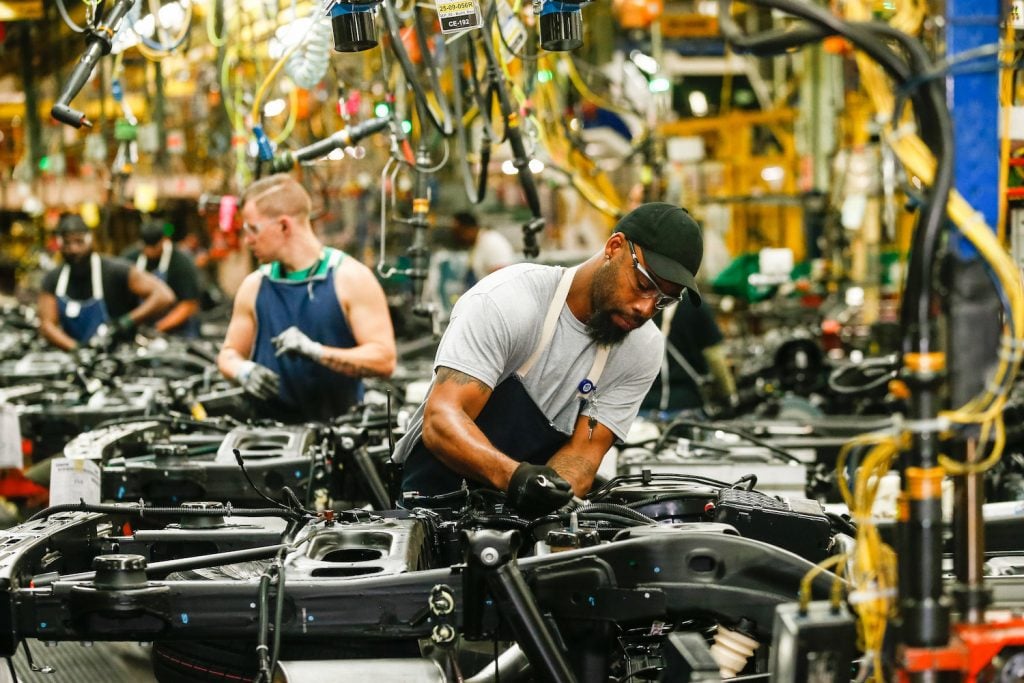
Manufacturing hiring has now fallen to its weakest pace since 2016, according to industry analysts. Auto manufacturers, construction firms, and equipment producers report mounting uncertainty as costs rise and demand softens. Projects have been delayed, expansions shelved, and long-term planning put on hold.
Retailers are also sounding the alarm. The National Retail Federation reports that price increases are already filtering through to consumers, with everyday goods becoming more expensive. Economists estimate that the average American household could see annual costs rise by roughly $2,400 as tariffs ripple through supply chains.
For many families, the pain is no longer abstract.

While the Trump administration has continued to defend the tariffs as a necessary step toward reshaping global trade, critics argue the strategy underestimated both Canada’s resolve and the interconnectedness of modern economies. Far from folding under pressure, Canada responded with precision—targeting U.S. exports in ways that maximized political and economic impact.
The result has been an uneven exchange of pain.
Canada’s economy, while affected, has absorbed the shock more strategically. Its retaliatory measures were designed to hit regions and industries with political weight in the United States, ensuring that the consequences would be felt quickly and visibly. Meanwhile, American workers—many far removed from trade negotiations—have borne the brunt of the fallout.
Analysts note that this dynamic exposes a deeper vulnerability in U.S. trade policy. Tariffs may be blunt instruments in a world defined by complex supply chains, where economic pressure rarely stays contained within national borders. Instead of forcing concessions, such measures can amplify instability at home.
The broader implications are difficult to ignore. Businesses are increasingly reluctant to commit capital amid ongoing uncertainty. Investors are cautious. Consumers are pulling back. What began as a tactical maneuver has evolved into a drag on growth.

As the trade war grinds on, both countries face hard questions. For Canada, the episode reinforces the value of targeted retaliation and economic diversification. For the United States, it raises doubts about whether coercive trade strategies can deliver promised gains without inflicting collateral damage.
More broadly, the crisis underscores a fundamental truth of modern trade: economic power is no longer unilateral. Decisions made at the political level can cascade through markets with unintended speed, reshaping industries and livelihoods in ways that are difficult to reverse.
For now, the tariffs remain in place, and the layoffs continue.
Whether Washington chooses to recalibrate—or double down—may determine not only the future of U.S.-Canada trade relations, but the credibility of tariff-driven economic strategy itself. What is already clear is this: the cost of this trade war is being paid not in abstract numbers, but in lost jobs, strained households, and a growing sense of uncertainty across the American economy.