In the blazing New Mexico desert, a ruthless act of hatred was abruptly halted when Josiah, a seasoned rancher, discovered Saraphina, an Apache girl, bound and abused, accused of witchcraft. Cutting her down, he ignited a fierce confrontation with Sheriff Thorne’s men, exposing dark betrayals and kindling a fragile bond of survival and hope.
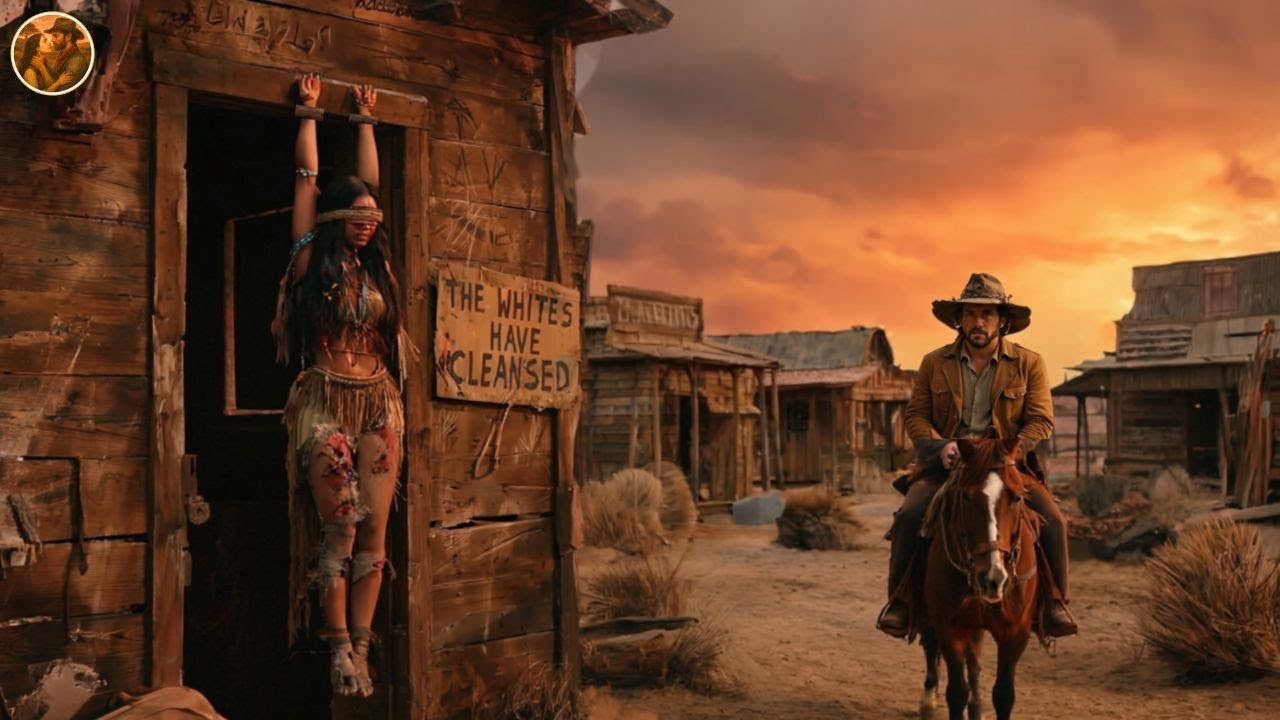 On December 1, 1888, the unforgiving sun scorched Redemption’s ghost town, where Josiah tracked a stray calf for hours under a silent, oppressive sky. His solitude shattered by a faint, desperate whimper. Investigating, he found Saraphina, a young Cherokee woman hanging by her wrists, marked as a witch with hateful slurs scrawled beneath her.
Her wrists were raw, rope burns biting deep. Dust and dried blood smeared her skin, smallpox scars evident on her face—visible testaments to trauma and disease. A crude sign warned, “Smallpox witch keep away God’s curse,” and in jagged letters hated words: “White man’s cleansing.” Josiah, haunted by loss, recognized the brutality masked as justice.
The chilling silence was pierced when he slashed at the ropes, freeing the weakened girl. Saraphina’s breathing was erratic, her eyes dark and untrusting, but Josiah’s voice was calm, promising safety where their worlds might collide. He wrapped her in his coat, guiding her to his isolated ranch, a sanctuary shadowed by grief and resilience.
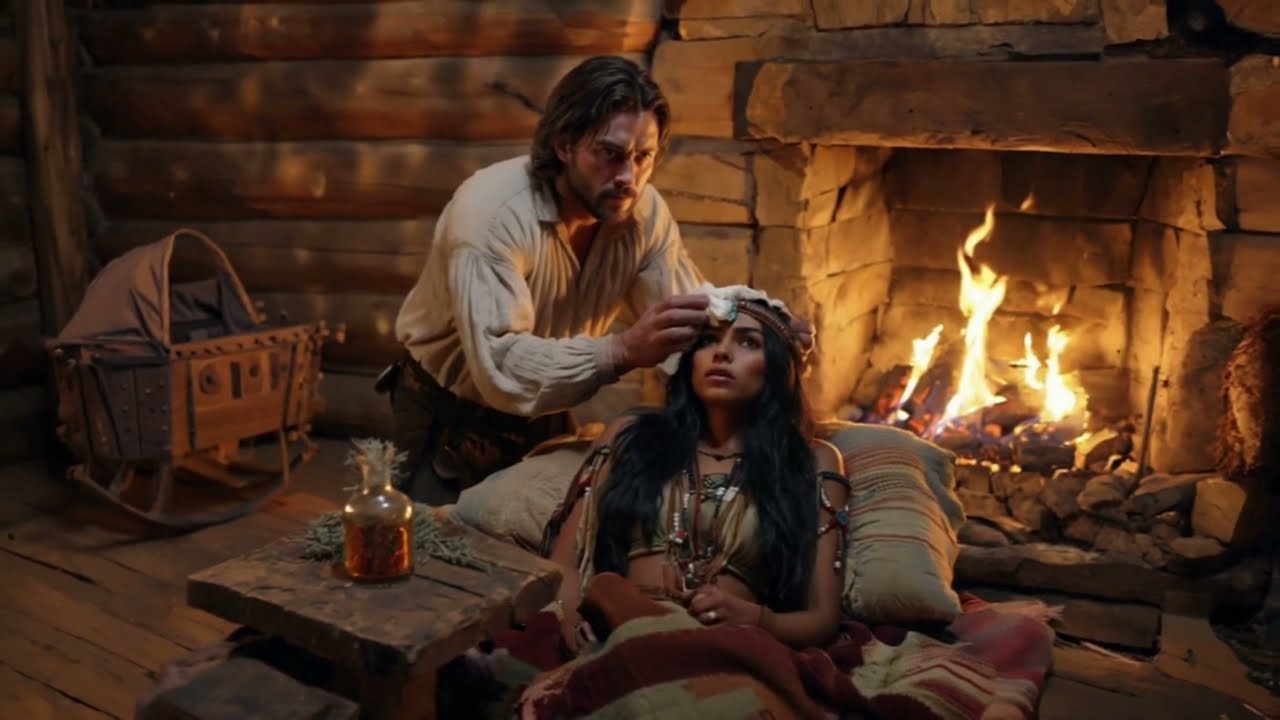
Inside Josiah’s weathered cabin, the remnants of past sorrow lingered—his daughter’s empty cradle a stark reminder of his own heartbreak. Yet this moment marked a pivot; he applied healing poultices as Saraphina whispered of betrayal, her family lost to smallpox-ridden blankets gifted by Sheriff Thorne. Their shared pain forged an uneasy alliance.

Over days, Saraphina’s fever broke, her movements slow yet determined. Josiah witnessed the fierce strength underlying her scars, as she reclaimed her dignity with quiet acts—sweeping floors, tending chickens—slowly breathing life into a ranch once weighed down by solitude and loss.
Their conversations peeled back layers of hate and suspicion. Saraphina revealed the cruel deceit of men like Thorne, who exploited native lands for greed, using disease as a weapon. Josiah’s anger swelled—not at Saraphina, but at the man who sold lives for gold. Together, they bore witness to a shared history of tragedy.
Trust, fragile as desert blooms, began to take root. Saraphina, once a symbol of death to some, found courage in Josiah’s protection. Their bond deepened beyond survival—a quiet defiance against hatred and a quest for justice in a land scarred by violence and betrayal.
The peace shattered when Sheriff Thorne arrived with armed riders, demanding Saraphina’s surrender. Josiah stood resolute, rifle poised, refusing to relinquish the girl who represented the humanity Thorne sought to erase. The tense stand-off illuminated the dark heart of lawlessness veiled in badge and shadow.
Chaos erupted as Saraphina unleashed a desperate strategy—freeing horses and creating a dust storm to disorient Thorne’s men. In the ensuing melee, Thorne met a violent end, a symbol of corrupt power crushed under the weight of his own cruelty, as Josiah and Saraphina stood united amidst the fading dust and echoing gunfire.
In the aftermath, healing took physical and emotional form. Josiah’s guilt transformed into purpose; Saraphina’s simmering hatred softened into resilience, their shared pasts no longer chains but stepping stones toward renewal and healing in the harsh New Mexico landscape.

This once forsaken ranch evolved into a beacon—lavender fields blooming over cracked earth, shelter to survivors and wanderers. Saraphina’s voice wove Cherokee songs into the wind, Josiah’s tales grounding the community in shared endurance. Together, they cultivated life from the ashes of distrust and violence.
Years passed, and the ranch thrived, a living legacy of love overcoming loss. The laughter of children filled the air, their futures intertwined with the land and the courage of two souls who faced hatred and forged a home where once there was only despair.
Josiah and Saraphina’s story, born from tragedy and defiance, now inspires resilience amid the echoes of the Trail of Tears. Their love, a fiery grace in the desert, transformed a haunted past into a promise of peace and belonging for generations to come.
This haunting tale reveals the brutal realities of history’s dark scars—of smallpox as a weapon, of greed cloaked in law, and of the indomitable human spirit’s capacity to heal and resist. Josiah’s stand and Saraphina’s survival deliver a powerful message: even in the harshest deserts, hope can bloom fiercely.