The Atlanta Hawks find themselves at a crossroads as the spotlight shines on Trae Young, whose defensive struggles have raised urgent questions about his future with the team. Despite his offensive prowess, recent games reveal a troubling trend: the Hawks’ defense collapses when he’s on the court, prompting speculation about a potential trade.
 In a recent showdown against the Chicago Bulls, the Hawks allowed a staggering 152 points in regulation, highlighting a defensive crisis. The last five minutes of the game showcased how opponents are increasingly targeting Young, exploiting his defensive weaknesses to create mismatches and open shots.
Young’s inability to guard efficiently has not just been a one-off issue; it has become a pattern. In the last few games, teams like the Hornets and Knicks have similarly attacked him, leading to high-scoring outings that have contributed to Atlanta’s losing streak.
The numbers tell a stark story: the Hawks have a third-worst defensive rating when Young plays, allowing 122 points per 100 possessions. In contrast, the team performs significantly better without him, allowing just 115 points in his absence. This raises the question: can a single player negatively impact a team’s defense to this extent?
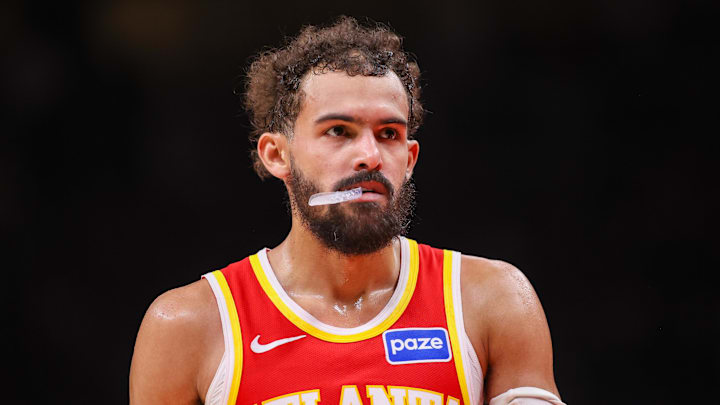
Historically, elite offensive talents have found ways to mask their defensive shortcomings. Yet, the modern NBA has evolved, and it’s becoming increasingly challenging to hide defensive liabilities. Young, at 6’2″ and 164 pounds, struggles against taller, stronger opponents, making him a defensive target for every team.
As offenses have become more sophisticated, they’ve learned to exploit Young’s limitations. Teams are adept at putting him in action, forcing the Hawks to make defensive adjustments that often lead to breakdowns. His lack of lateral quickness and height makes it nearly impossible for him to contest shots effectively, leading to a cascade of points from opponents.
Moreover, Young’s defensive rotations have been inconsistent, often leaving his teammates scrambling to cover for his lapses. This lack of communication and effort has compounded the Hawks’ defensive woes, creating a ripple effect that undermines the entire team’s performance.

The Hawks’ struggles are not solely on Young, but his presence has become a significant factor in their defensive decline. With the team hovering around .500 when he plays, the question remains: is it time for Atlanta to consider a trade?
As the trade deadline approaches, the Washington Wizards have emerged as a potential suitor. With ample cap space and a roster of developing young players, they could provide Young with the fresh start he needs. In a new environment, he might thrive as a specialized offensive weapon, allowing him to focus on his strengths.
Young’s offensive skill set remains undeniable. His elite shooting, ball-handling, and playmaking abilities have made him a top-tier offensive talent. However, the mounting evidence suggests that his defensive shortcomings may outweigh his contributions, complicating his role as a franchise cornerstone.
As the Hawks weigh their options, the future of Trae Young hangs in the balance. Will Atlanta double down on their star player or pivot in a new direction? The coming weeks will be critical in determining the trajectory of both Young’s career and the Hawks’ aspirations for success.