Beneath the churning waters off modern-day Alexandria lies a discovery that feels more legend than reality: the long-lost royal harbor of Cleopatra, swallowed by the sea more than 2,000 years ago. Once the epicenter of power for Egypt’s last queen, this submerged palace complex is now reemerging through groundbreaking underwater archaeology—revealing fragments of a civilization that ruled the ancient world.
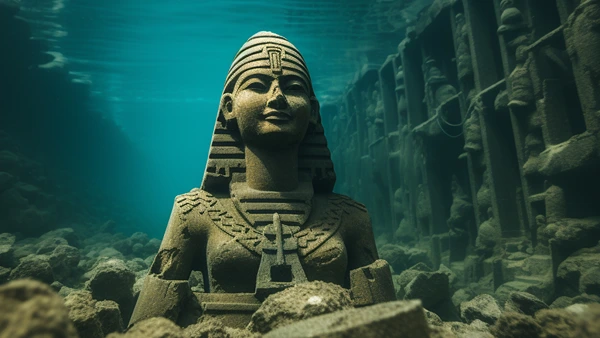
Scattered across the seabed are toppled statues, broken obelisks, and massive stone blocks that once framed Cleopatra’s maritime capital. These ruins belonged to a royal harbor that symbolized dominance, wealth, and political ambition, blending Greek and Egyptian traditions into a visual statement of divine authority. Today, they form an eerie underwater graveyard, frozen in time.
Historians believe a series of catastrophic earthquakes in the first century caused the harbor to collapse and sink beneath the Mediterranean. What followed was centuries of silence, as layers of silt and saltwater erased the city from view—until modern divers began uncovering its remains.

Each dive brings new revelations. Archaeologists have identified ceremonial platforms, collapsed columns, and statues of gods whose identities are still debated. These discoveries offer rare glimpses into royal rituals, daily life, and the symbolic architecture that reinforced Cleopatra’s image as both ruler and deity. The artistry is unmistakable: weathered carvings still reveal a fusion of Hellenistic elegance and ancient Egyptian symbolism.
Yet the ruins guard their secrets closely. Many structures remain partially buried, and shifting underwater conditions make exploration slow and dangerous. Still, the excitement is undeniable. Researchers believe vast portions of the palace complex have yet to be uncovered, raising questions about what else lies hidden beneath the waves.
More than a stunning archaeological find, Cleopatra’s underwater palace challenges long-held assumptions about ancient urban planning, trade, and cultural exchange. It underscores Alexandria’s role as a crossroads of civilizations and highlights how fragile even the most powerful empires can be when confronted by nature.
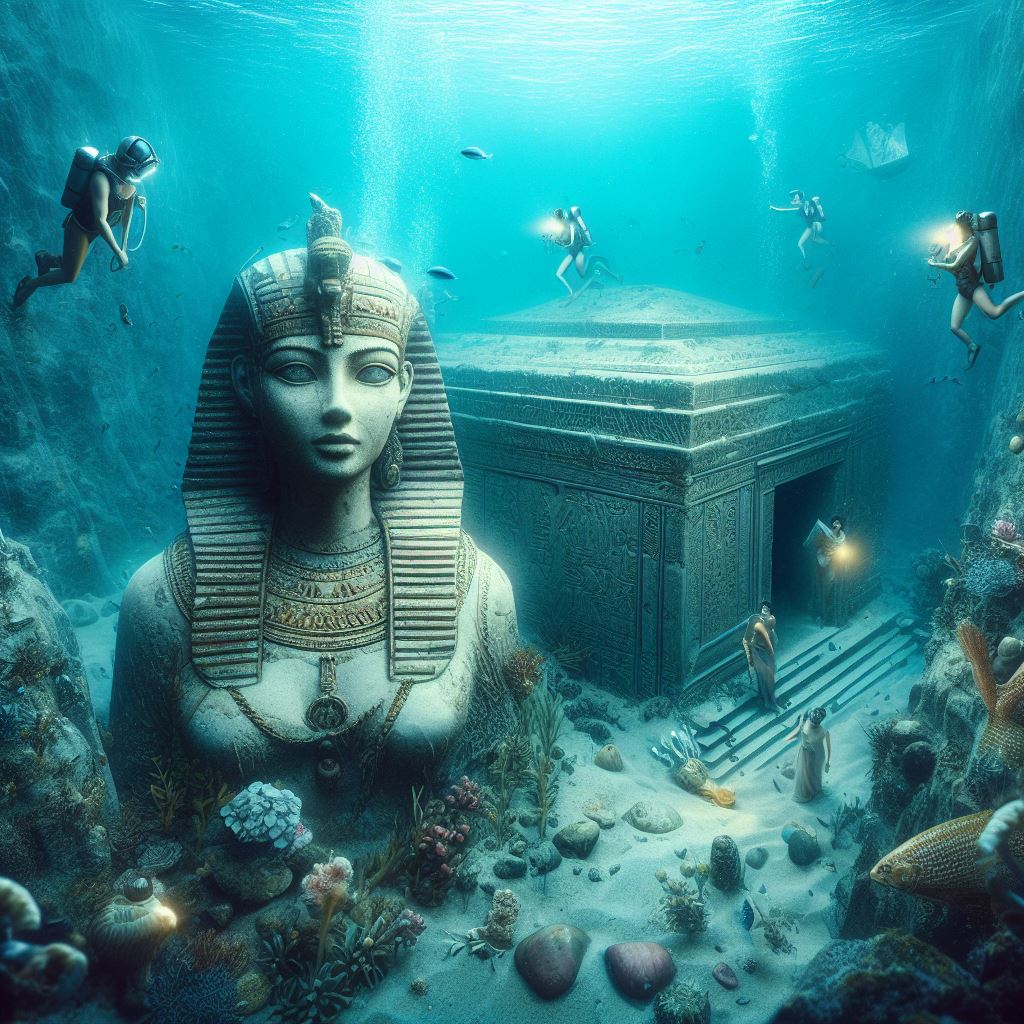
As technology and archaeology continue to converge, the lost harbor of Cleopatra may soon yield answers historians have sought for centuries. Until then, the ruins remain a haunting reminder that history is never truly gone—it’s simply waiting to be rediscovered.