Niko Jenkins, an infamous figure on Nebraska’s death row, endures a life of extreme isolation and mental torment. Confined within the cold walls of a concrete cell, Jenkins faces a reality many consider worse than death itself. His existence is a haunting testament to the consequences of violence and mental illness intertwined.
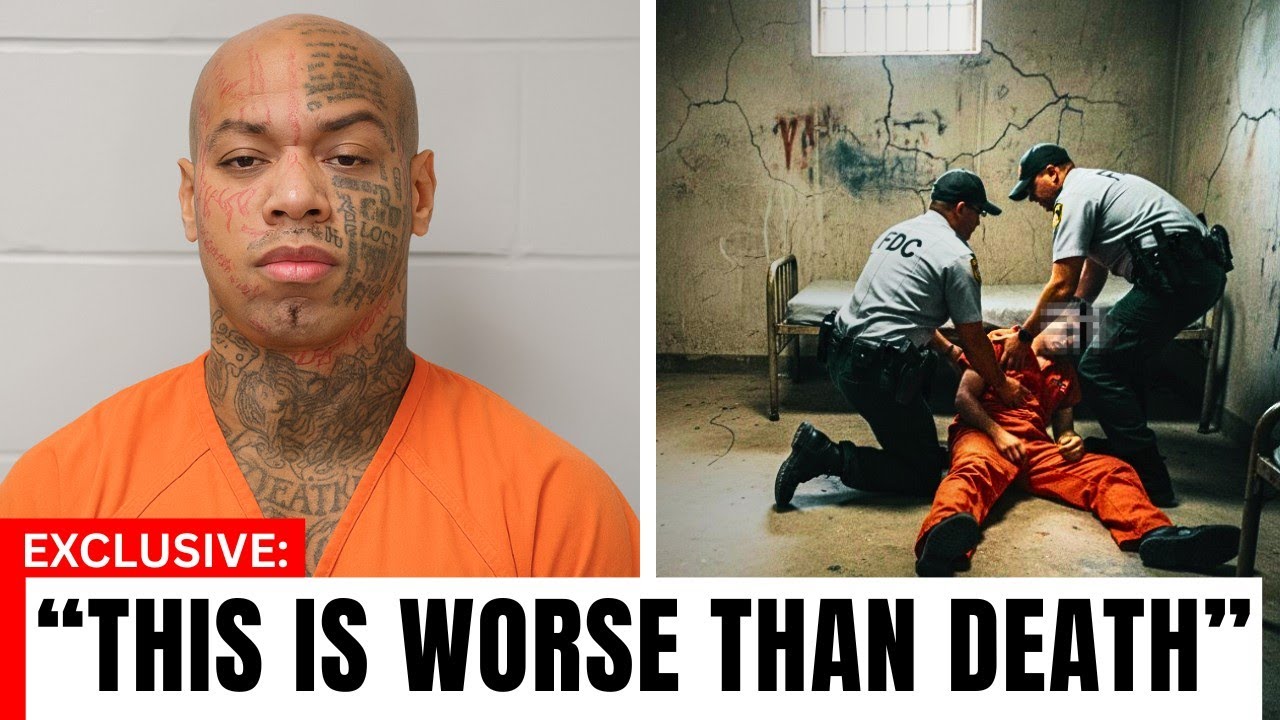 Since his arrest in 2013 for a brutal killing spree that left four innocent victims dead, Jenkins has been a subject of national horror. His erratic courtroom behavior shocked the nation, but what unfolds behind prison walls is even more chilling. Jenkins remains alive, yet his life is a relentless cycle of solitude and psychological decay.
In solitary confinement at the Nebraska State Penitentiary, Jenkins lives in a bare, windowless cell. The silence is deafening, punctuated only by the dull hum of ventilation and the sound of his own breathing. Each day, he receives meals through a slot in the steel door, with minimal human interaction. This isolation has taken a severe toll on his mental health.
Reports describe Jenkins pacing his cell, shouting to himself, and scribbling strange writings on the walls. Diagnosed with multiple mental disorders, including schizophrenia, he struggles with delusions and hallucinations. His mind has become a battleground, where the echoes of his thoughts grow louder each day, pushing him further into madness.

Prison officials deemed Jenkins too dangerous for general population, leading to his near-total isolation. His one hour of outdoor time is spent alone, surrounded by razor wire, a grim reminder of his confinement. The lack of human contact has eroded his sanity, leaving him trapped in a cycle of despair.
Despite his violent past, Jenkins continues to challenge the system. He floods the courts with bizarre motions and appeals, arguing that his mental illness should exempt him from execution. This relentless fight has turned his death sentence into an agonizing limbo, with no clear end in sight.

Jenkins’s life on death row is stripped of the comforts most would expect. He has no access to television or personal electronics, only books and his thoughts. Each day blends into the next, marked by the same routine of isolation and despair, where the anticipation of death looms heavily in the air.
As time drags on, Jenkins’s name remains a topic of public discussion. Some view him as a victim of the system’s failures, while others see him as a monster. His cryptic letters to journalists and courts keep his story alive, blurring the lines between reality and delusion.

For Niko Jenkins, the true horror lies not in the death penalty itself, but in the unending uncertainty of his fate. The psychological strain of waiting for an execution that may never come has created a unique form of suffering. In this limbo, he grapples with the paradox of fearing death while yearning for the end of his torment.
As he remains confined, the question looms: is this justice or a darker reflection of societal failure? The chilling reality of Niko Jenkins’s life behind bars serves as a stark reminder of the complexities surrounding mental illness and the criminal justice system. In the quiet corners of Nebraska’s death row, Jenkins continues to exist, a haunting figure 𝒄𝒂𝓊𝓰𝒉𝓉 in a relentless cycle of punishment and isolation.