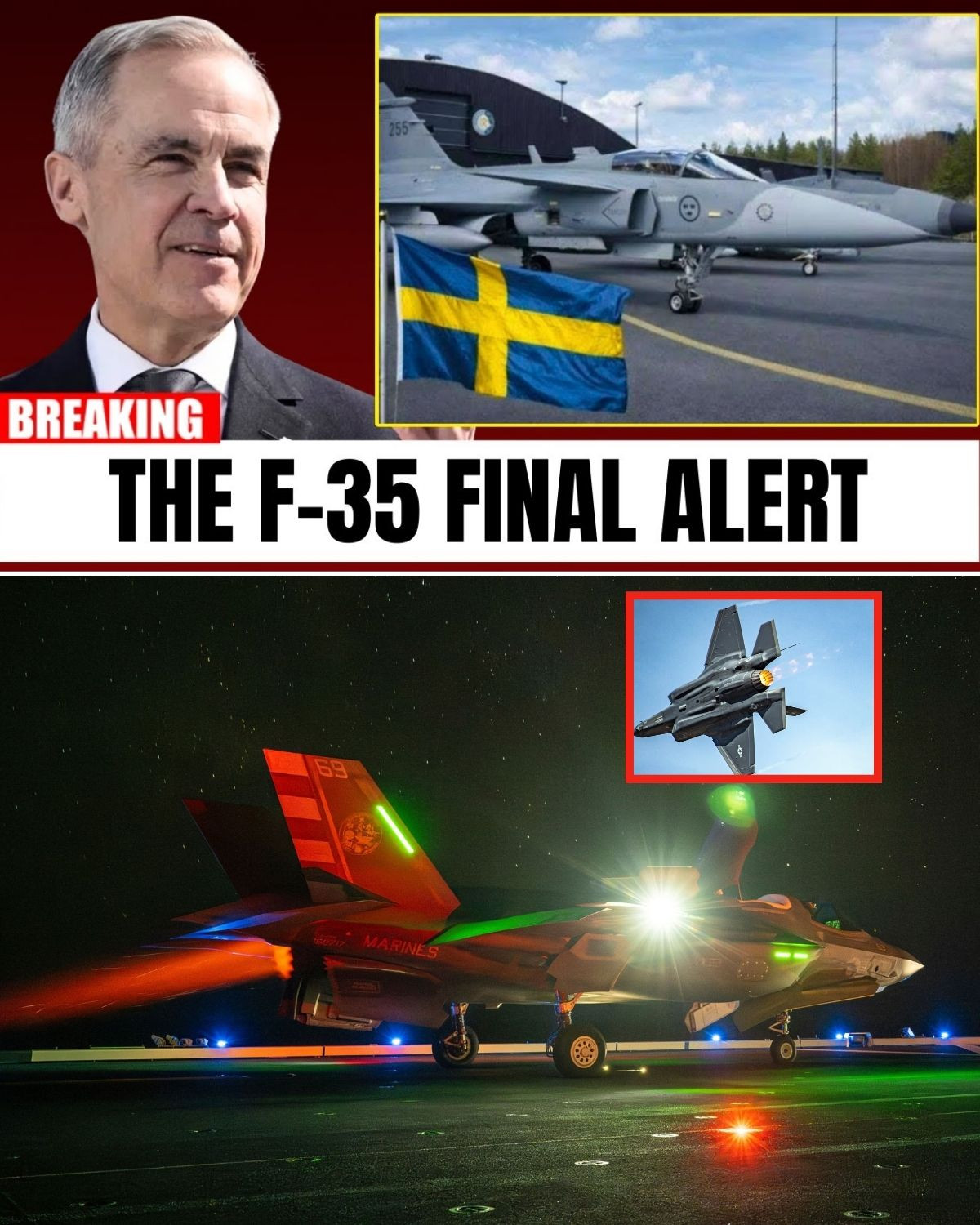
 Canada is facing a critical decision as Switzerland raises alarms about the F-35 fighter jet’s soaring costs and operational limitations. With Canada poised to invest nearly $19 billion in the same aircraft, questions about financial control and national sovereignty loom large. This unexpected shift could redefine Canada’s defense strategy.
 Switzerland’s recent warnings have sent shockwaves through defense circles, particularly in Ottawa. Known for its cautious military approach, Switzerland is now grappling with the reality that the F-35’s operational costs are significantly higher than initially projected. The implications for Canada, which is on the brink of committing to the same program, are profound.
As Switzerland’s defense officials reveal cost overruns of 20 to 30%, concerns about budget predictability have emerged. Canada, already facing strained defense budgets, must now reconsider whether it is stepping into a financial trap that could limit its military autonomy. The stakes are high.
The F-35 is more than just a fighter jet; it represents a complex web of digital dependencies. Switzerland’s experience highlights the risks of relying on U.S. infrastructure for operational control. This raises urgent questions for Canada: What happens if U.S. priorities shift during a crisis?
Canada’s vast and challenging geography complicates the situation. Unlike Switzerland, Canada must defend enormous, sparsely populated regions under extreme conditions. The F-35’s reliance on centralized logistics may prove inadequate for Canada’s unique operational needs, especially in harsh Arctic climates.
Moreover, cybersecurity concerns add another layer of urgency. The F-35’s digital systems are primarily controlled by the U.S., creating vulnerabilities that could jeopardize Canada’s air defense capabilities in a geopolitical crisis. Time is of the essence; Canada cannot afford delays in decision-making.
The geopolitical ramifications of Canada’s decision are significant. Choosing the F-35 signals alignment with U.S. defense strategies, but opting for a European alternative could send shockwaves through NATO. Canada’s choice will influence defense dynamics not just for itself but for allies worldwide.
Switzerland’s alarm signals a turning point for Canada. The nation is now exploring its options, with increased interactions with European manufacturers like Saab. This shift suggests a growing awareness that strategic independence may outweigh the allure of advanced technology.
Canada stands at a crossroads. One path leads deeper into a complex, costly fighter program with limited control. The other offers a chance for greater autonomy and operational suitability. The choice Canada makes will resonate across NATO for decades to come.
As the clock ticks, Canada must grapple with the fundamental question: Will it prioritize national security or national independence? The answer remains uncertain, but the urgency for a decision is clear. Switzerland’s experience has opened a critical debate that no serious nation can afford to ignore.