Deep within Turkey’s rugged eastern highlands, a strange, boat-shaped formation is once again shaking the foundations of both science and faith. Researchers working near Mount Ararat now claim they’ve uncovered compelling new evidence that could link the biblical story of Noah’s Ark to a real-world structure — reigniting one of history’s most controversial debates.
The site, known as the Durupinar Formation, has puzzled explorers since it was first identified in the 1950s. From above, the mound bears an uncanny resemblance to a massive ship frozen in stone. But recent investigations have gone far beyond surface appearances.
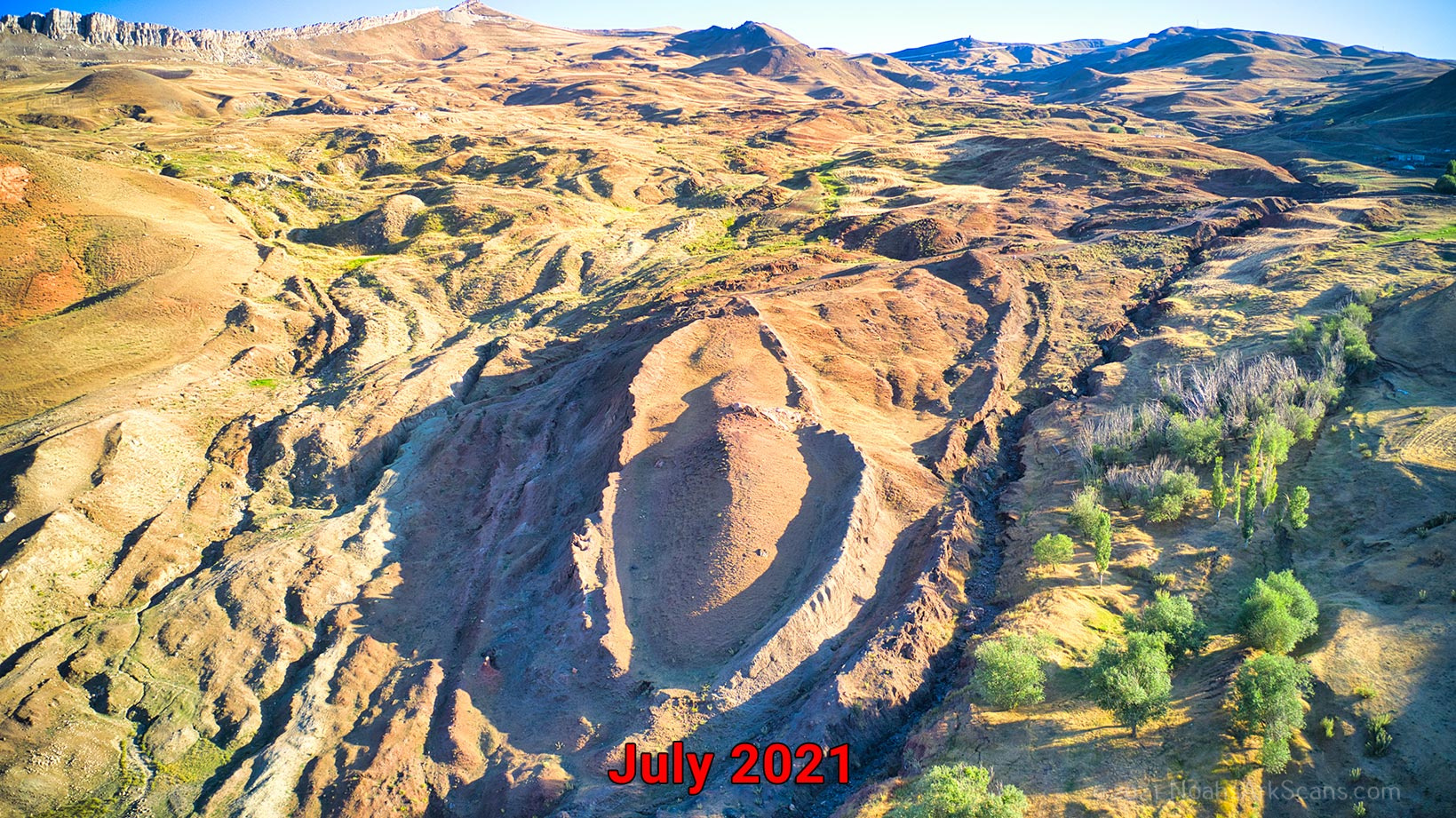
Led by Professor Faruk Kaya, the research team has conducted extensive mapping, soil analysis, and ground-penetrating radar scans. What they found beneath the surface stunned even seasoned experts. Radar images revealed layered, deck-like structures and tunnel-shaped voids, features that researchers say align strikingly with what one would expect from a large, ancient vessel rather than a natural rock formation.
Even more provocative are the measurements. The formation stretches roughly 538 feet long — nearly identical to the dimensions described in the Book of Genesis. “The proportions are too precise to ignore,” said one researcher involved in the study. “It matches the biblical account with unsettling accuracy.”
Laboratory tests added another layer to the mystery. Soil samples taken from within the formation showed significantly elevated levels of organic material and potassium, far higher than surrounding ground. Scientists suggest this could indicate the long-term decay of massive amounts of wood — a finding difficult to reconcile with purely geological explanations.

Andrew Jones, a lead researcher on the project, summed up the team’s reaction bluntly: “This is exactly what you’d expect if this were once a man-made structure.”
Still, skepticism remains fierce. Many geologists argue the Durupinar Formation is a naturally occurring feature shaped by tectonic movement and erosion over thousands of years. They warn against letting belief override scientific rigor, stressing that extraordinary claims demand undeniable proof.
Yet the discoveries have already triggered a global media storm. Headlines questioning whether Noah’s Ark has finally been found are spreading fast, drawing renewed attention to the uneasy intersection of science, history, and religion.
Turkey’s government has reportedly fast-tracked permits for further exploration, while preservationists urge caution, fearing irreversible damage to the site. Meanwhile, local communities watch with pride — and anticipation.
Whether the Durupinar Formation proves to be the Ark or not, one thing is certain: something beneath that ancient mountain is forcing humanity to confront a question as old as civilization itself — where does myth end, and history begin?