A silent shift north of the border is sending shockwaves through the U.S. housing market. After years of punitive tariffs imposed during the Trump administration, Canada has quietly rewritten its lumber export playbook—detaching itself from deep dependence on the United States. The consequences are now becoming impossible to ignore. American builders are facing soaring costs, stalled projects, and worsening housing shortages, while Canada, bruised but adaptive, is emerging more autonomous and strategically diversified. What began as a trade dispute has evolved into a case study in how political decisions can fracture once-stable economic systems.

For decades, the U.S. housing market was built—quite literally—on Canadian wood. Nearly 87% of America’s imported softwood lumber came from Canada, forming the backbone of a tightly integrated North American supply chain designed for efficiency, scale, and affordability. That system functioned smoothly for generations, largely insulated from political turbulence.
Then came the tariffs.
Under the Trump administration, duties on Canadian softwood lumber surged past 45%, framed as a protectionist move to revive domestic U.S. production. The policy was politically popular in some circles, but economically destabilizing. Almost overnight, a relationship that had taken decades to refine was thrown into uncertainty.
The immediate damage was felt first in Canada. Faced with sharply reduced access to their largest market and unable to pass on the full cost of tariffs, Canadian mills began scaling back or shutting down altogether. Entire communities—especially in rural, forestry-dependent regions—were hit hard. Jobs disappeared, municipal revenues shrank, and local economies slipped into decline.
But the shock did not stop at the border.
American homebuilders soon found themselves paying the price. Lumber costs spiked dramatically, adding thousands—sometimes tens of thousands—of dollars to the price of a new home. For builders already squeezed by high interest rates, labor shortages, and regulatory costs, the tariff-driven price surge became another destabilizing force.

The choices were grim: absorb the costs and cut margins, pass them on to buyers and reduce demand, or delay and cancel projects altogether. In practice, many did all three. The result was fewer homes built at a time when the U.S. was already facing a structural housing shortage.
Compounding the problem was a hard reality Washington had underestimated: the U.S. lumber industry could not simply “turn on” enough new capacity to replace Canadian supply. Industry data showed that even under optimistic scenarios, scaling domestic production would take years, not months. Timber supply, mill construction, workforce training, and environmental permitting all move slowly.
While the U.S. struggled to adjust, Canada quietly recalibrated.
Rather than retaliate with headline-grabbing trade wars, Ottawa pursued a more strategic response. Under the economic leadership of Mark Carney, Canada began reducing its vulnerability to U.S. political swings. Support packages were rolled out to stabilize affected industries, while policymakers encouraged diversification away from a single dominant export destination.
Canadian producers started looking west and east. Asia and Europe—markets offering longer-term contracts and greater policy predictability—became increasingly attractive. Domestic trade links were strengthened. The message from Ottawa was subtle but clear: dependence was a risk Canada could no longer afford.
By the mid-2020s, this shift had hardened into policy reality. Canadian lumber exports to the U.S. no longer held the same central role, and supply chains that once flowed seamlessly south began branching outward instead. For Canada, the transition was painful—but purposeful.
For the United States, the consequences are only now fully surfacing.
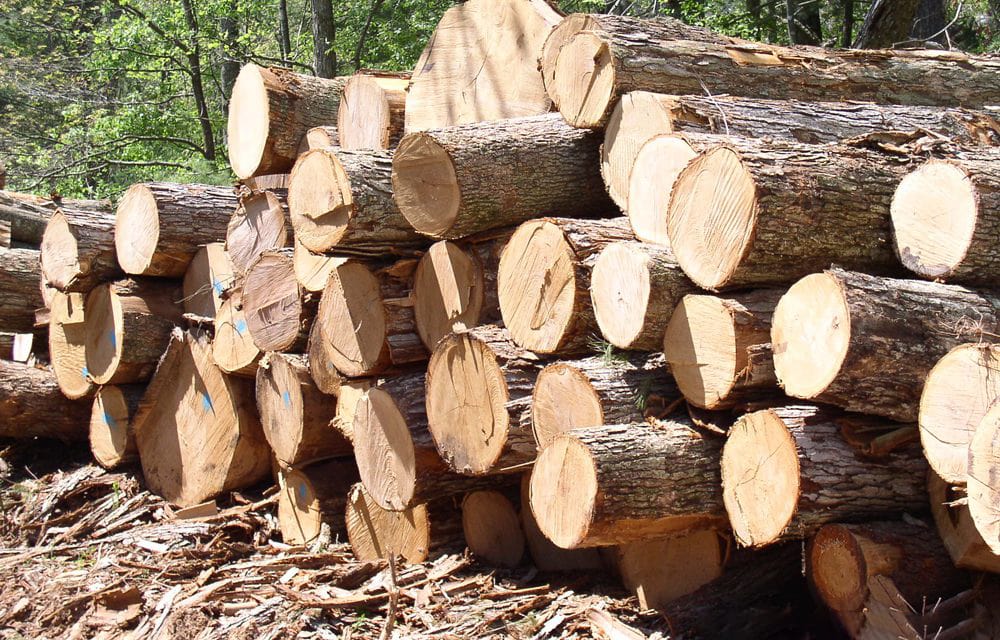
By 2026, housing affordability is projected to worsen significantly, particularly in fast-growing regions. Builders continue to face uncertainty in sourcing materials at predictable prices, while buyers confront shrinking inventories and escalating costs. What was once framed as a trade defense has morphed into a structural headwind for the American middle class.
Beyond economics, the episode offers a broader lesson. Highly integrated systems—whether supply chains, alliances, or markets—are fragile when treated as tools of political leverage. Once trust is broken, rebuilding it is far harder than replacing it.
Canada paid a price in this trade conflict, but it emerged with something it lacked before: strategic autonomy. The U.S., meanwhile, is grappling with the unintended consequences of protectionism in an industry where interdependence was not a weakness, but a strength.
The balance of power in North American trade has shifted quietly, but decisively. And as homes grow more expensive and harder to build, American consumers are discovering that trade wars are rarely contained to spreadsheets and press releases—they end up reshaping everyday life.