What began as a technical trade dispute over softwood lumber has evolved into a full-scale economic shock with consequences rippling across North America. After Washington imposed tariffs exceeding 45% on Canadian lumber, Ottawa didn’t blink—it pivoted. Canadian producers shut down mills, supply chains fractured, and the U.S. housing market stalled at a moment of historic vulnerability. As home prices surge and construction slows, millions of Americans are watching the dream of homeownership slip further away, while Canada quietly restructures its economy to reduce dependence on a politically volatile neighbor.

For decades, the American housing market has rested—quite literally—on Canadian timber. Nearly 87% of U.S. lumber imports came from Canada, forming one of the most integrated and efficient supply chains in North American history. Builders relied on its stability. Consumers benefited from affordability. And policymakers largely took the relationship for granted.
That equilibrium collapsed when Washington imposed sweeping tariffs on Canadian softwood lumber, arguing that domestic producers needed protection. The assumption was clear: Canada would absorb the costs, keep shipping, and the U.S. market would adjust.
Instead, Canada chose a different path.
Faced with tariffs that wiped out margins, many Canadian lumber producers shut down operations entirely. Mills went dark. Forestry towns began to empty. Jobs disappeared almost overnight, hollowing out rural economies that had depended on the industry for generations.
The shock didn’t stop at the border.
American processors and builders immediately felt the squeeze. Lumber prices surged. Supply dried up. Projects stalled. The belief that U.S. mills could quickly fill the gap proved misguided. Domestic production was already near capacity, and expanding output requires years—not months—of investment, labor training, and infrastructure development.
Builders were left with impossible choices: absorb rising costs and bleed cash, pass those costs onto buyers already priced out of the market, or delay construction altogether. Many chose the latter.
The result is a construction paralysis layered onto an already severe housing shortage. Home prices continue to rise. Inventory remains tight. And for millions of families, homeownership is no longer a near-term goal—it’s an increasingly distant aspiration.
While the U.S. struggles to manage the fallout, Canada is moving decisively. Under the economic stewardship associated with Mark Carney’s strategic thinking, Ottawa has accelerated efforts to diversify trade partnerships, reduce reliance on the U.S. market, and insulate its economy from future political shocks. This is not retaliation—it’s recalibration.
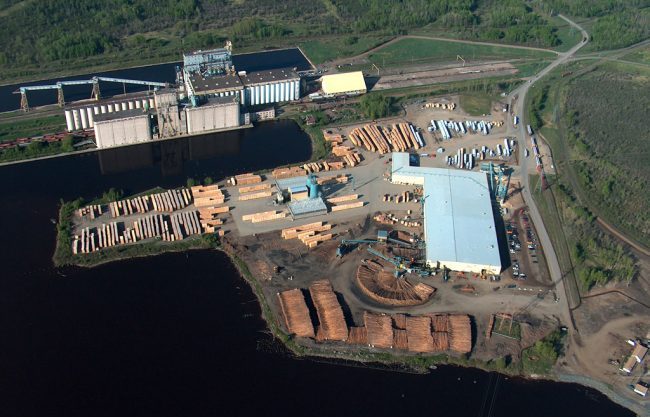
The unraveling of the North American lumber supply chain carries long-term consequences. Mills that close do not reopen easily. Skilled workers relocate. Institutional knowledge erodes. What’s lost isn’t just output, but capacity built over generations.
The trade war also exposes a deeper miscalculation in Washington: leverage in a globalized economy is rarely absolute. Tariffs may signal strength, but they often trigger unintended reactions—especially when applied to deeply integrated industries.
As lawmakers debate policy in abstract terms, the reality on the ground is stark. Families face higher housing costs. Builders face stalled pipelines. Rural communities—on both sides of the border—are fraying.

In the end, this conflict was never just about lumber. It was a test of foresight, patience, and strategic restraint. And as the dust settles, the balance sheet looks increasingly uneven: a weakened U.S. housing sector, and a Canada emerging more independent, more diversified, and less vulnerable to political pressure.
The lesson is hard but clear. In an interconnected world, confrontation carries costs that linger long after tariffs are lifted. And sometimes, the price of a trade war is paid not in percentages—but in broken supply chains, fractured communities, and dreams deferred.