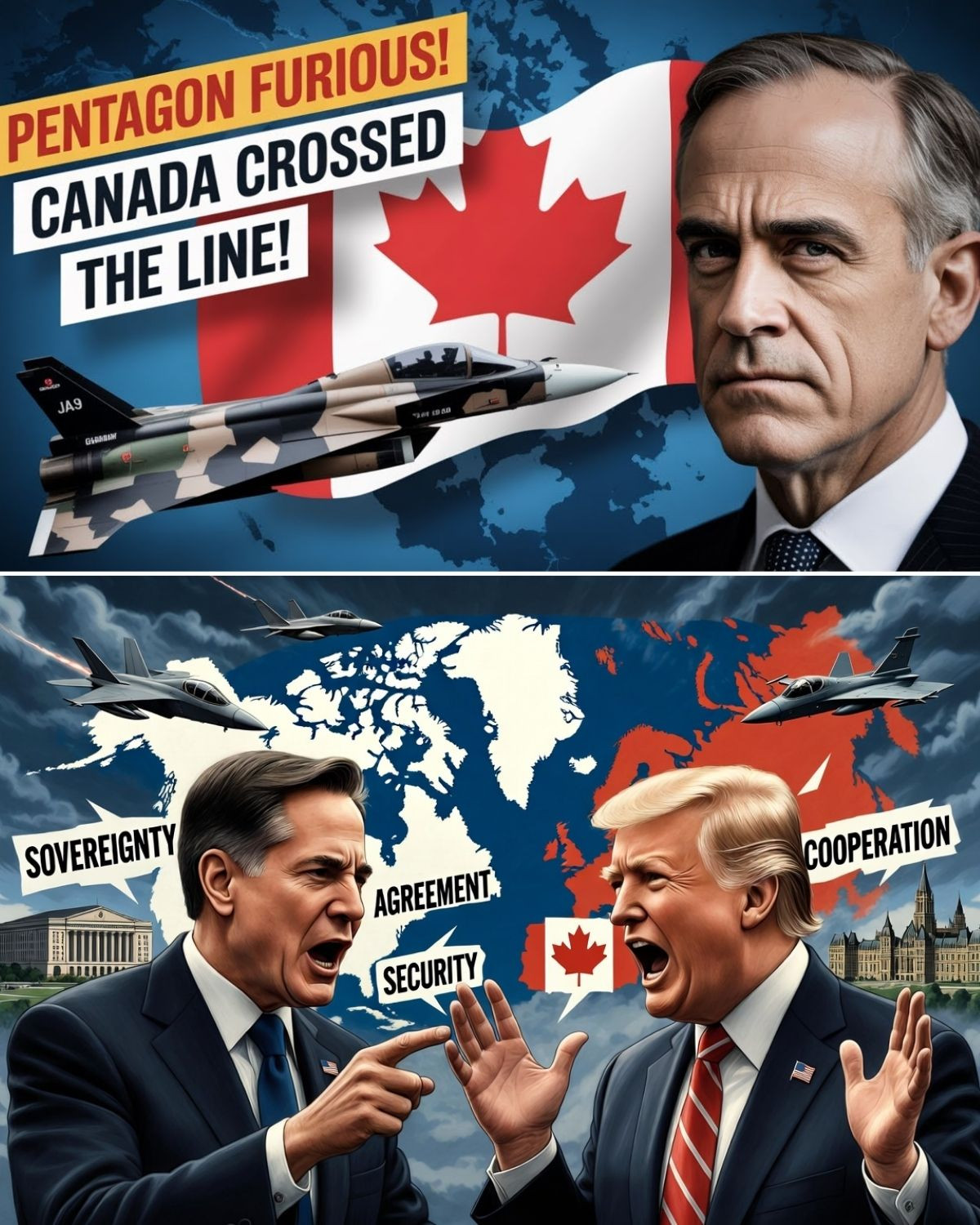
 The Pentagon is reeling as Canada explores fighter jet deals outside the U.S., shattering decades of military cooperation. This unexpected shift threatens American influence in North American defense, raising alarms about trust, sovereignty, and Arctic security. Washington’s fury is palpable as Ottawa considers alternatives to the F-35.
 For years, the U.S. assumed Canada would exclusively fly American jets, ensuring seamless integration and defense collaboration. But now, Ottawa is openly pursuing options like the Swedish Gripen E, a move that has sent shockwaves through Washington’s military and diplomatic circles.
The implications are staggering. The Pentagon views Canada’s interest in non-American jets as a direct challenge to its control over North American defense. This isn’t merely about aircraft; it’s a high-stakes game of influence and trust, with potential ramifications for Arctic security and NATO operations.
Canada’s CF-18s are aging, and the need for a replacement is urgent. However, instead of opting for the expected F-35, Ottawa has launched a complex selection process fraught with political debates and delays. The longer this decision takes, the more anxious Washington becomes, fearing a loss of strategic alignment.
The entry of the Gripen E has intensified the situation. Designed for extreme Arctic conditions, this jet offers Canada greater operational independence and cost-effectiveness compared to the F-35. The prospect of local production and technology transfer is particularly appealing, promising autonomy that the U.S. jets cannot match.
Behind closed doors, Pentagon officials are reportedly furious. They fear that a shift to foreign jets could disrupt supply chains, complicate joint operations, and create blind spots in Arctic defense—an area of heightened geopolitical tension with Russia and China.
As Canadian leaders weigh their options, they’re faced with intense lobbying from the U.S. to stick with American jets. Yet, Ottawa is pushing back, demanding more control over mission data and upgrades, signaling a desire for greater sovereignty in its defense policy.
Despite the pressure, Canada’s frustrations with the F-35 program are well-documented. Rising costs, maintenance issues, and a lack of control over upgrades have fueled skepticism about sticking with U.S. jets. The desire for a more independent defense strategy is growing stronger.
Ultimately, the F-35 may still prevail as Canada’s choice, but the underlying tensions between autonomy and alliance obligations remain unresolved. This saga is far from over, as Canada signals a shift toward a more independent defense posture, exploring options that could reshape North American security dynamics.
The world is watching closely as Canada navigates this critical juncture. Its decisions could redefine military alliances and Arctic security for years to come, posing a significant challenge to U.S. influence in the region. The stakes have never been higher.