As U.S. bombs fell on Caracas and Washington declared victory in Venezuela, global attention fixed on the battlefield. But the real shock came hours later—from Ottawa. In a carefully measured statement, Canada refused to cheer the U.S. military intervention or defend Nicolás Maduro, instead reaffirming its commitment to international law, democratic legitimacy, and multilateral process. The restrained response unsettled American officials and signaled a deeper shift in Canadian foreign policy—one that challenges assumptions of automatic alignment with U.S. power and raises uncomfortable questions about leadership, legality, and global order.
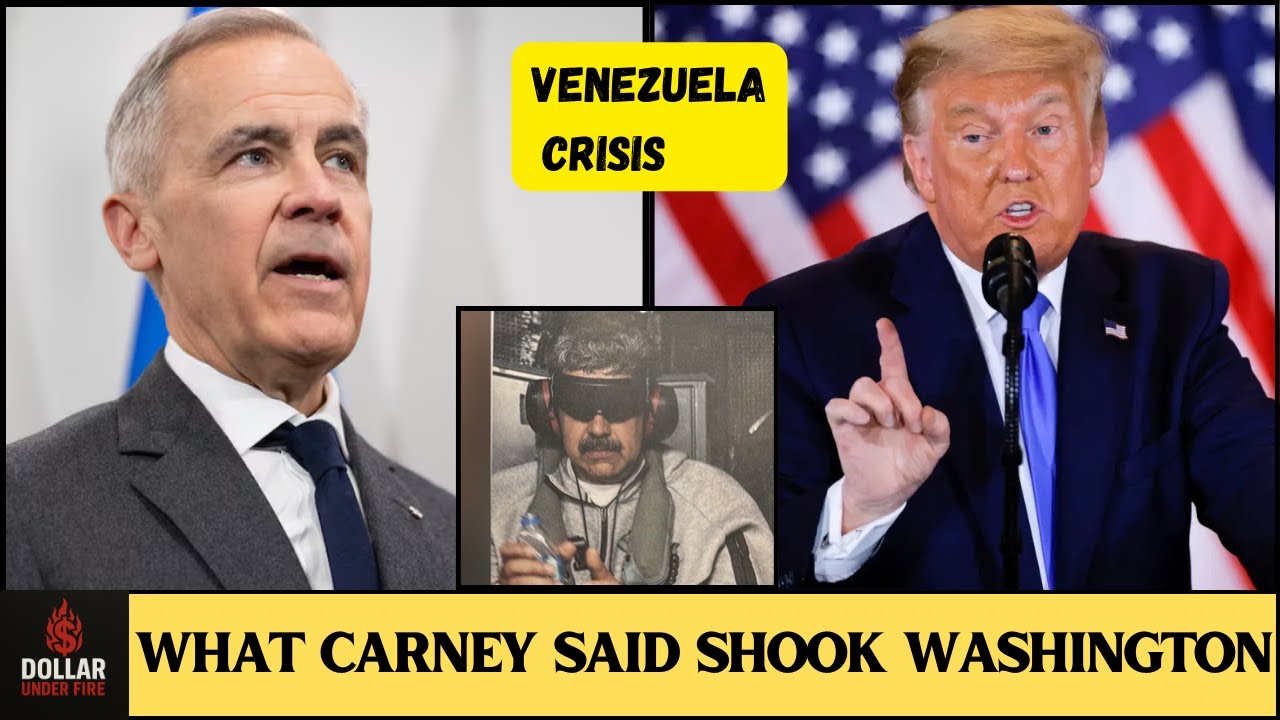
When explosions echoed across Caracas and American aircraft streaked through Venezuelan airspace, the world assumed the diplomatic response would be swift and predictable. Washington framed the strikes as decisive leadership. Allies were expected to fall in line. Statements of support, or at least muted approval, seemed inevitable.
Canada did neither.
For hours, Ottawa remained silent as the United States announced the detention of President Nicolás Maduro and celebrated what it described as a decisive intervention. The absence of an immediate Canadian response raised eyebrows across diplomatic circles. Was Ottawa hesitating—or recalibrating?
The answer, when it arrived, was more disruptive than silence.
A Statement That Refused the Binary
Canada’s response did not follow the familiar script. There was no praise for American force, no condemnation of the intervention, and no defense of Maduro’s rule. Instead, the statement struck an unexpected tone—measured, deliberate, and grounded in principle.
Speaking for Canada, Mark Carney emphasized democratic legitimacy, the right of the Venezuelan people to determine their own future, and the central role of international law. Maduro’s regime, he reaffirmed, lacks legitimacy. But so too, he suggested, does unilateral military action carried out without broad international authorization.
The message was subtle—but unmistakable.
“International law matters,” Carney said, a phrase that landed in Washington less like a footnote and more like an indictment.

Washington’s Assumptions Are Challenged
For decades, U.S. policymakers have viewed Canada as a dependable partner—particularly in the Western Hemisphere. Ottawa had sanctioned Maduro’s government, supported Venezuelan refugees, and condemned human rights abuses. Many assumed that history would translate into quiet endorsement of American military action.
That assumption proved misplaced.
Canada’s refusal to celebrate the intervention marked a clear departure from past alignment. It exposed a philosophical divide between Washington’s emphasis on speed and force, and Ottawa’s insistence on legality, process, and institutional legitimacy.
The discomfort in Washington was palpable. Canada had not opposed the United States outright—but it had denied the validation Washington expected.
Principle Over Performance
Domestically, Canada’s response fractured public opinion. Some voices applauded the U.S. intervention as a necessary strike against tyranny. Others condemned it as reckless and illegal. A third group accepted Maduro’s illegitimacy but questioned America’s role as enforcer.
Carney’s statement cut through those divisions.
Rather than engaging in emotional reaction or political theater, Canada grounded its position in consistency. Democracy, he argued, cannot be imposed at gunpoint. Stability cannot be built on unilateral force. Legitimacy flows from law, not explosions.
In an era of rapid escalation and instant judgment, the restraint itself was a statement.
A Different Vision of Leadership
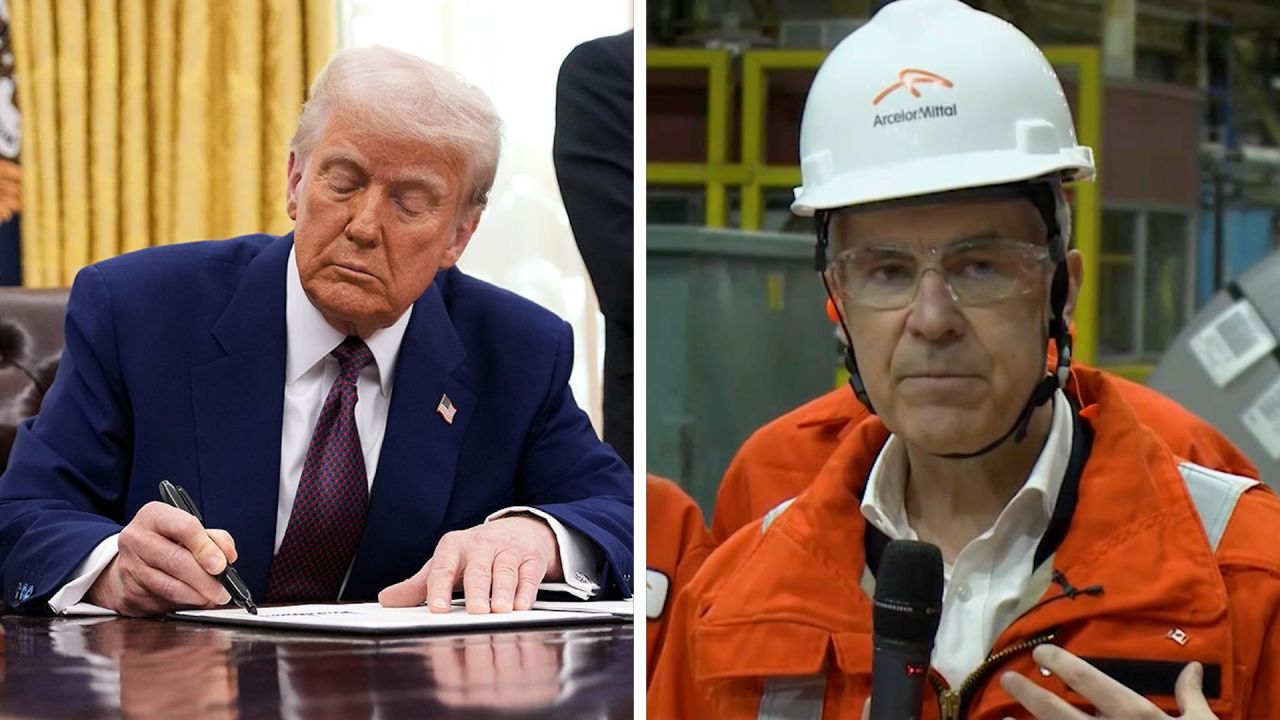
The contrast between Washington and Ottawa could not have been sharper. U.S. officials spoke the language of control, dominance, and decisive action. Canada spoke of coalitions, institutions, and lawful transition.
To critics, Ottawa’s approach looked slow and overly cautious. To supporters, it represented something increasingly rare in global politics: credibility built on principle rather than power.
Carney’s refusal to rush judgment suggested that leadership does not always mean acting first—or loudest. Sometimes, it means refusing to be pulled into chaos simply because it is unfolding.
Global Implications Beyond Venezuela
The significance of Canada’s response extends far beyond Caracas. Allies around the world are watching closely. If one of America’s closest partners can publicly resist the gravitational pull of U.S. military action, others may feel emboldened to assert their own boundaries.
The moment raises uncomfortable questions for Washington. Can alliances survive when support is conditional on legality rather than loyalty? And in a world increasingly defined by unilateral moves, who sets the rules?
Canada’s answer appears clear: power does not replace principle.
A Quiet Assertion of Sovereignty
Ottawa’s statement was not loud. It did not provoke. It did not escalate. Yet its impact may outlast the initial shock of the invasion itself.
By refusing to follow expectations, Canada quietly asserted its sovereignty—its right to independent judgment even under intense pressure. It positioned itself not as an obstacle to action, but as a defender of the rules that make action legitimate.
In doing so, Canada may be redefining its role on the global stage: not as a reflexive ally, but as a stabilizing force willing to say no when values are at risk.
The Long View
In an age when force often masquerades as leadership, Canada’s restraint stands out. Credibility, Ottawa suggests, is built not through speed or spectacle, but through consistency.
As Venezuela’s future remains uncertain, one thing is already clear. The diplomatic aftershocks of this moment will ripple far beyond Latin America—reshaping alliances, recalibrating expectations, and forcing a reckoning over what leadership truly means in a fractured global order.