For decades, it has been one of the most puzzling images in ancient history: stone carvings from Mesopotamia showing winged beings holding what looks uncannily like a modern handbag. Some dismissed it as symbolic art. Others spun theories involving lost technologies—or even extraterrestrial visitors. Now, archaeologists say they may finally understand what the so-called “Mesopotamian god handbag” really was, and the discovery is reshaping how we view the spiritual world of early civilization.
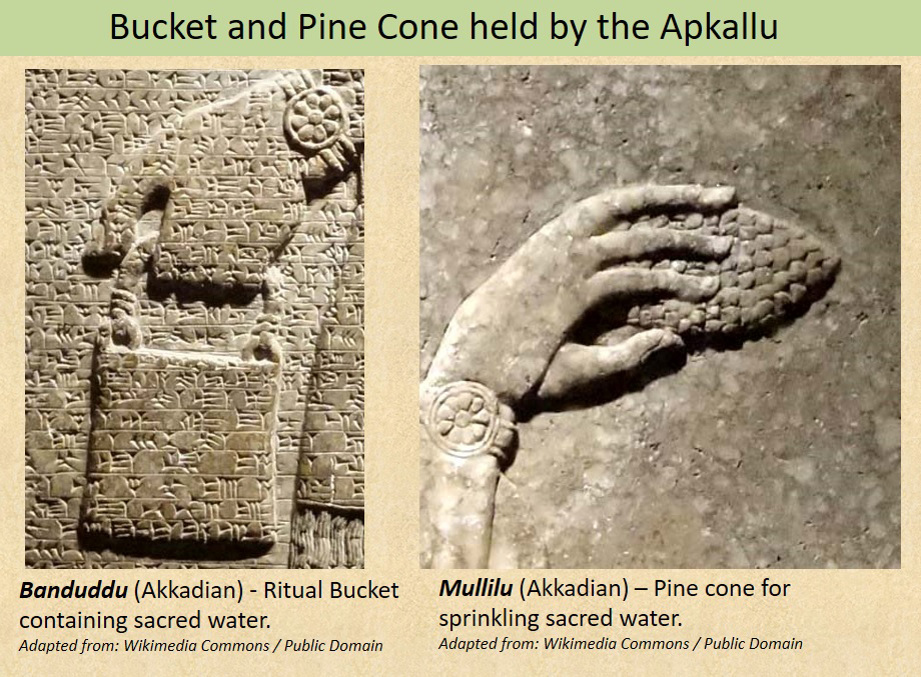
Recent examinations and early scan analyses of these ancient depictions have revealed intricate carvings and structural details once thought impossible to interpret. What initially appeared to be a decorative or abstract object is now believed to represent a ritual purification bucket, a sacred tool used in some of the earliest known religious ceremonies.
In Mesopotamian belief, maintaining cosmic order was essential. Chaos was not just physical—it was spiritual. The “handbag,” researchers argue, symbolized a vessel filled with holy water used in cleansing rituals meant to protect temples, kings, and entire cities from corruption and disorder. The object frequently appears alongside a pine cone–shaped item, which scholars identify as a ritual sprinkler used to disperse sacred water.
The figures holding the handbag are often winged beings known as apkallu—mythical guardians described as teachers of humanity and protectors of divine knowledge. Their presence reinforces the idea that this object was not ordinary, but central to sacred rites designed to safeguard civilization itself.
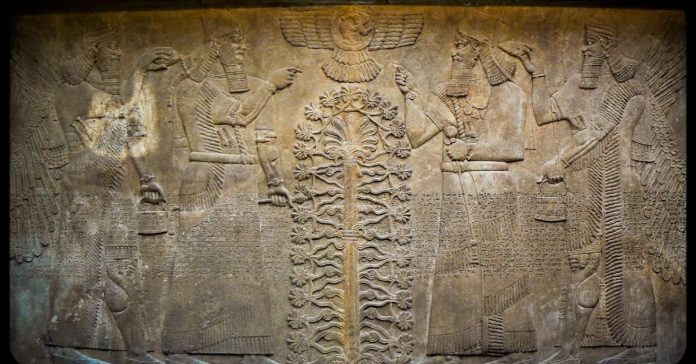
What has reignited global fascination is the handbag’s uncanny resemblance to similar shapes found in ancient cultures far beyond Mesopotamia. From Göbekli Tepe in Turkey to stone carvings in Mesoamerica, nearly identical “handbag-like” forms appear across continents and eras. The visual echo has sparked intense debate: is this evidence of a shared symbolic language, a universal human instinct, or something more mysterious?
Mainstream scholars urge caution, emphasizing cultural symbolism and convergent design. But alternative theories—ranging from lost advanced civilizations to extraterrestrial contact—continue to thrive online, highlighting humanity’s enduring fascination with the unknown.
Regardless of interpretation, the Mesopotamian handbag has become more than an artifact. It is a reminder that early civilizations were deeply spiritual, sophisticated, and obsessed with balance between the human and divine.
As researchers continue to analyze these ancient carvings, one thing is clear: even the smallest symbols from the past can carry enormous meaning. And sometimes, what looks familiar—like a handbag—can open the door to an entirely forgotten world.