The completion of Canada’s Trans Mountain pipeline expansion is quietly reshaping North America’s energy map — and leaving U.S. refineries exposed. For the first time, Canadian oil producers can ship crude directly to Asian markets at global prices, ending decades of dependence on American buyers. As tankers head west instead of south, U.S. refineries that relied on discounted Canadian oil face higher costs, shrinking margins, and an uncertain future. What appears to be an infrastructure upgrade is, in reality, a structural shift in power that challenges long-standing assumptions about energy security, trade, and control.

For decades, the energy relationship between the United States and Canada followed a familiar script. Canada produced vast quantities of heavy crude. The U.S. bought most of it — cheaply. Geography, limited export infrastructure, and market access ensured American refiners enjoyed a steady supply of discounted oil, while Canadian producers had few alternatives.
That era is now ending.
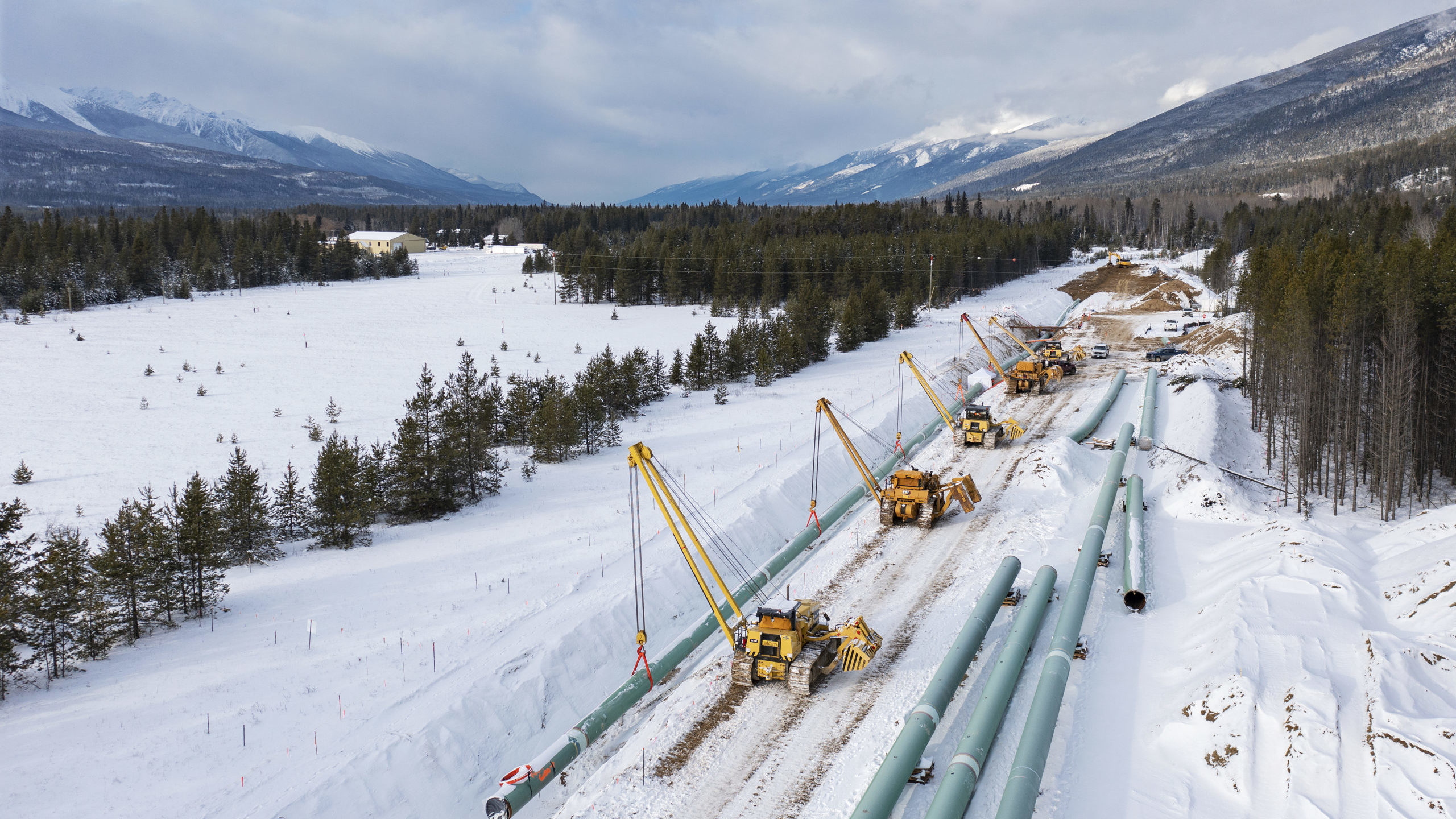
With the Trans Mountain pipeline expansion fully operational, Canada has gained direct access to Pacific markets, allowing oil to flow westward to Asia rather than south into the United States. The implications go far beyond diversification. This is a fundamental reordering of leverage in North American energy markets.
From Captive Supplier to Global Player
Historically, Canada’s lack of independent export capacity forced its oil industry into a near-monopsony relationship with U.S. refiners. American buyers could dictate terms, knowing Canadian crude had nowhere else to go. Prices reflected that imbalance.
The Trans Mountain expansion breaks that constraint. With access to global markets — including China, Japan, and South Korea — Canadian producers can now sell at international prices. Oil that was once effectively captive has become a strategic asset.
In economic terms, Canada has shifted from price-taker to negotiator. In political terms, it has reclaimed autonomy over one of its most valuable resources.
U.S. Refineries Face a New Reality
For American refineries, particularly on the West Coast, the shift is unsettling. Many facilities were designed specifically to process Canadian heavy crude. Retooling to handle different grades of oil is expensive, time-consuming, and in some cases economically unviable.
As Canadian barrels are redirected overseas, U.S. refiners face higher input costs, tighter margins, and operational uncertainty. Some analysts warn that layoffs and capacity reductions may follow, especially at aging plants already struggling with declining fuel demand and environmental compliance costs.
The stability once provided by predictable, discounted Canadian supply is no longer guaranteed.
Energy Dependence, Exposed
This moment exposes a long-ignored vulnerability in U.S. energy strategy. While American policymakers often framed energy security in terms of domestic production, they quietly relied on Canada to fill critical gaps — at favorable prices.
That dependence was rarely acknowledged because it was comfortable. Canadian oil was reliable, politically stable, and cheap. The pipeline expansion disrupts that comfort, revealing how deeply U.S. refining economics were shaped by an asymmetric relationship.
Now, as Canada exercises its new leverage, American energy planners are being forced to confront a reality they long avoided: supply chains are not neutral, and control matters.
More Than a Trade Story
Much of the public conversation has framed the pipeline’s impact as a trade or geopolitical issue — Canada pivoting to Asia, the U.S. losing influence. But that framing understates the significance of what is happening.
This is a structural market shift. Power is moving from buyers to producers. Optionality is replacing dependency. And pricing is being reset to reflect global demand, not regional convenience.
In that sense, the Trans Mountain expansion is less about oil and more about who gets to write the rules of access in a changing energy world.
Local Consequences, Global Forces
The effects will not be felt evenly. Communities built around U.S. refineries face uncertainty as facilities reassess long-term viability. Jobs, tax bases, and local economies are suddenly tied to decisions made far beyond city limits — in global energy markets and Canadian export terminals.
At the same time, Canadian producers stand to gain stronger revenues and greater insulation from U.S. political pressure. Energy, once a point of quiet dependence, has become a bargaining chip.
A Wake-Up Call for Energy Policy
For Washington, this moment should serve as a warning. Infrastructure decisions made years ago can reshape power dynamics for decades. Energy security is not just about production volume, but about access, flexibility, and resilience.
Reactive measures — subsidies, short-term supply fixes, political pressure — may soften the immediate blow, but they will not reverse the underlying shift. The U.S. must now plan for an energy landscape where Canada is no longer a captive supplier, but a global competitor.
A Turning Point
The Trans Mountain pipeline expansion marks a decisive break in North American energy relations. It ends an era defined by convenience and imbalance, replacing it with one shaped by market leverage and strategic choice.
As oil tankers leave Canada’s west coast bound for Asia, the message is unmistakable: energy power flows to those who control their exits. How the United States responds will determine whether this moment becomes a temporary disruption — or a lasting recalibration of economic reality.