A policy meant to protect American industry is now exposing one of its most critical weaknesses. After the United States imposed 50% tariffs on Canadian aluminum under the banner of national security, U.S. manufacturers are facing a severe supply crunch, soaring costs, and shrinking production capacity. With American smelters running at barely half capacity and Canada redirecting aluminum exports to Europe and Asia, the fallout is spreading across the auto, aerospace, and construction sectors. What was designed as economic muscle-flexing is rapidly becoming a case study in how tariffs can backfire—and shift leverage north of the border.

When the Trump administration announced sweeping tariffs on aluminum imports in March 2025, the message was unmistakable: protect American industry at all costs. Framed as a national security measure, the initial 25% tariff was quickly doubled to 50%, with Canada—America’s largest and most reliable aluminum supplier—squarely in the crosshairs.
Less than a year later, the consequences are becoming impossible to ignore.
The United States is now grappling with a full-blown aluminum supply crisis. Domestic smelters are operating at just 53% capacity, and American production accounts for only about 1.2% of global aluminum output. Instead of revitalizing U.S. manufacturing, the tariffs have highlighted how hollowed out the industry has become—and how dependent it remains on foreign supply.
The contrast with Canada is stark.
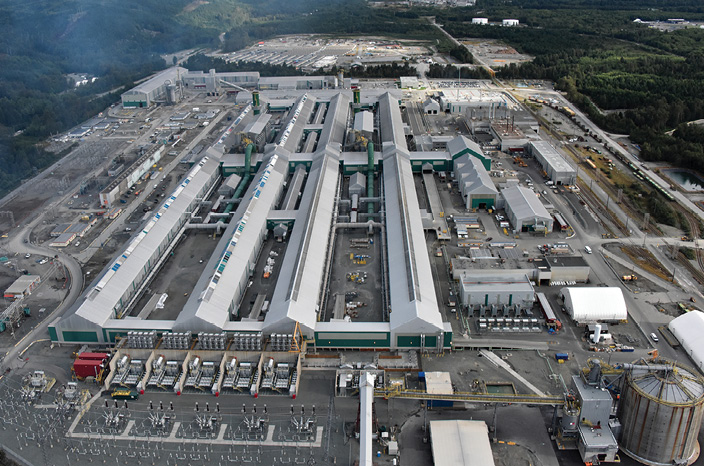
In 2024, a single Canadian smelter in Sept-Îles produced 628,000 tons of aluminum—nearly matching the total output of all U.S. smelters combined. Faced with punitive U.S. tariffs, Canadian producers wasted no time pivoting away from their traditional market. Shipments once destined for American factories are now flowing to Europe and Asia under long-term contracts that promise stability and better margins.
For U.S. manufacturers, the impact has been brutal.

Major players like Ford and Alcoa are absorbing hundreds of millions of dollars in added costs from tariffs alone. Those costs are being compounded by a surge in aluminum prices, which have climbed by as much as 139% in the Midwest as supply tightened. The ripple effects are being felt across industries—from automotive and aerospace to construction and packaging—where aluminum is not a luxury input, but a necessity.
At the heart of the crisis lies an inconvenient reality Washington has struggled to confront: energy costs.
Aluminum smelting is one of the most energy-intensive industrial processes in the world. In the United States, electricity prices are two to three times higher than in Canada, where abundant hydroelectric power costs roughly $40 to $54 per megawatt hour. That gap makes it nearly impossible for U.S. smelters to compete, regardless of tariffs.
Over the years, high energy prices and regulatory hurdles have forced many American smelters to shut down. Thousands of jobs were lost long before the latest tariffs were imposed. Now, instead of reversing that trend, the tariff policy has accelerated it—raising input costs without addressing the structural disadvantages that cripple domestic production.
Analysts say rebuilding U.S. aluminum capacity would take at least 20 years, even under favorable conditions. New smelters require massive upfront investment, long permitting timelines, and access to cheap, reliable power—none of which are guaranteed. In the meantime, American manufacturers remain exposed.
Canada, meanwhile, has turned the crisis into an opportunity.
By securing buyers in Europe and Asia, Canadian aluminum producers have reduced their dependence on the U.S. market, historically their largest customer. That diversification not only shields them from American trade volatility, but also strengthens Ottawa’s hand in future negotiations. As one trade analyst put it, “Canada no longer needs the U.S. as much as the U.S. needs Canada.”
That imbalance is becoming increasingly relevant as talks around the Canada–U.S.–Mexico Agreement (CUSMA) loom. With American industries under pressure and no quick fix in sight, aluminum has quietly become a powerful bargaining chip. Any disruption—or continued redirection—of Canadian supply carries immediate consequences for U.S. manufacturing.
Politically, the optics are uncomfortable.

A tariff justified on national security grounds has left key American industries scrambling for a material they cannot realistically produce at scale. Instead of strengthening domestic supply chains, the policy has exposed how fragile they are—and how easily leverage can shift in a globalized economy.
Looking ahead to 2026, analysts warn the aluminum crunch could worsen. As Canadian contracts with non-U.S. buyers solidify and American demand remains high, prices are expected to stay elevated. Pressure is mounting on Washington from business leaders who argue that the tariffs have become a self-inflicted wound.
The aluminum crisis offers a broader lesson about modern trade policy. In an interconnected economy, blunt instruments like tariffs can trigger unintended consequences—especially when they target partners that hold structural advantages.

For Canada, the episode has reinforced its role as an indispensable supplier with options. For the United States, it has underscored a harder truth: economic power cannot be willed into existence through tariffs alone.
As factories struggle, costs rise, and supply chains strain, the question facing policymakers is no longer whether the aluminum tariffs worked—but how long the U.S. economy can afford their fallout.