In a move that’s raising eyebrows in Washington, Canada has quietly realigned its global tech strategy—signing a sweeping technology and innovation partnership with Australia and India while the United States watches from the sidelines. Formalized at a G20 summit boycotted by former President Donald Trump, the agreement signals Ottawa’s determination to diversify away from U.S. dominance in critical technologies. Focused on artificial intelligence, green innovation, and secure supply chains for critical minerals, the pact reflects a deeper geopolitical shift—one driven not by ideology, but by economic resilience, sovereignty, and long-term strategic leverage.

For decades, Canada’s technology and innovation strategy followed a predictable path: close integration with the United States, shared supply chains, and reliance on American platforms and markets. That era may be coming to an end.
In a notable geopolitical pivot, Canada has signed a technology and innovation partnership with Australia and India—three democracies with complementary strengths and a shared interest in reducing dependence on traditional power centers. The agreement, formally known as the Australia–Canada–India Technology and Innovation Partnership, was signed by Canadian official Mark Carney at the G20 summit, conspicuously absent U.S. participation.
The absence was not accidental. Former President Donald Trump’s decision to boycott the summit underscored ongoing tensions between Washington and key allies. For Ottawa, the message was clear: waiting for stability from the United States is no longer a viable long-term strategy.
The partnership aims to deepen cooperation in critical and emerging technologies, with a sharp focus on artificial intelligence, green technology, and—most strategically—supply chain diversification for critical minerals. These materials, including lithium, nickel, and rare earth elements, are foundational to everything from electric vehicles to advanced semiconductors and defense systems.
Each partner brings something essential to the table.
Canada offers vast reserves of lithium, nickel, and other strategic minerals. Australia is already a global leader in rare earth production. India contributes scale, market depth, and growing technological capacity. Together, the three countries form a credible alternative to China’s dominance in mineral processing and to America’s influence over advanced technology platforms.
Crucially, this is not a symbolic declaration.
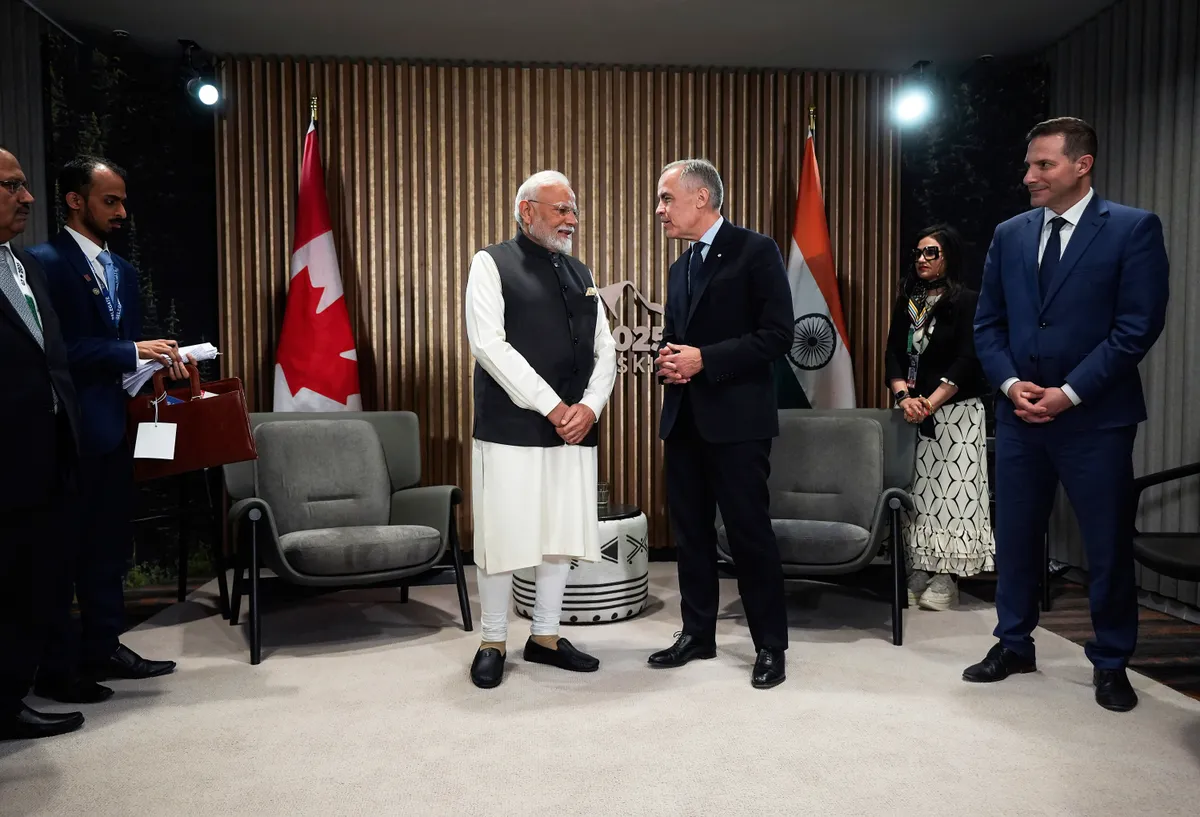
Officials from Canada, Australia, and India are scheduled to convene in the first quarter of 2026 to establish joint working groups, define research priorities, and set operational frameworks. The goal is to move quickly from diplomatic language to tangible outcomes—shared labs, coordinated investment, and aligned regulatory standards.
The context surrounding the agreement adds to its significance.
Relations between Canada and India have been strained in recent years, marked by diplomatic friction and mutual skepticism. Yet economic necessity has forced a pragmatic reset. The partnership reflects a broader global trend: trade and technology decisions are increasingly driven by market logic and supply chain security, not political comfort.
Analysts see the alliance as a calculated response to the unpredictability of U.S. policy during the Trump era—characterized by tariffs, trade threats, and even rhetoric questioning sovereignty. By building parallel networks, Canada is reducing its exposure to unilateral pressure from its largest neighbor.
The implications extend far beyond minerals.
By prioritizing artificial intelligence and green technology, the partnership positions all three countries to compete in the next phase of global technological leadership. Joint AI research could reduce reliance on U.S.-based platforms. Collaboration on clean energy innovation aligns economic growth with climate goals—while preserving data sovereignty and regulatory autonomy.
This shift could have lasting effects on North American trade dynamics.
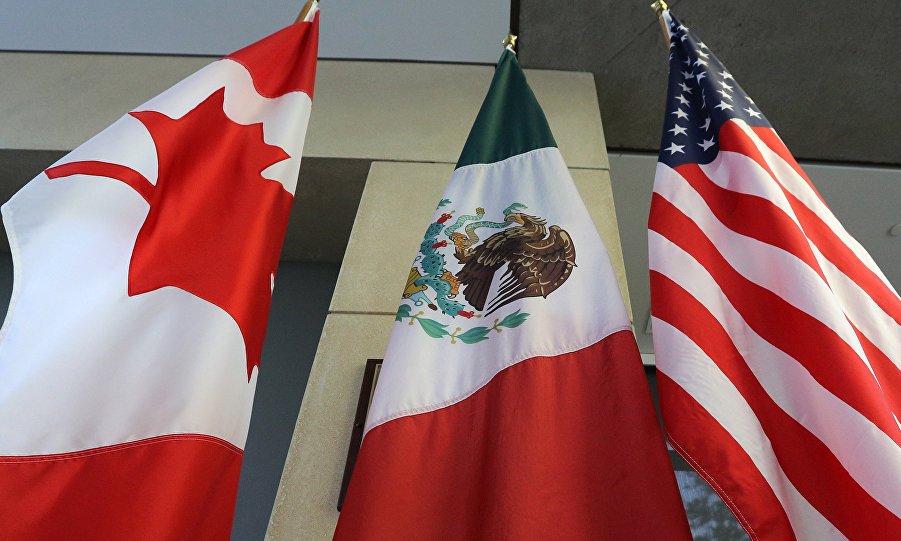
As negotiations for the Canada–United States–Mexico Agreement (CUSMA) approach, Ottawa will enter talks with something it has rarely had before: credible alternatives. Access to diversified markets, technology partners, and supply chains strengthens Canada’s hand and weakens the assumption that alignment with Washington is the only viable option.
China looms large in the background.
While the partnership is not explicitly anti-China, it clearly aims to dilute Beijing’s control over critical mineral processing and high-tech supply chains. By coordinating production, standards, and investment, Canada, Australia, and India are laying the groundwork for a parallel ecosystem—one less vulnerable to geopolitical shocks.
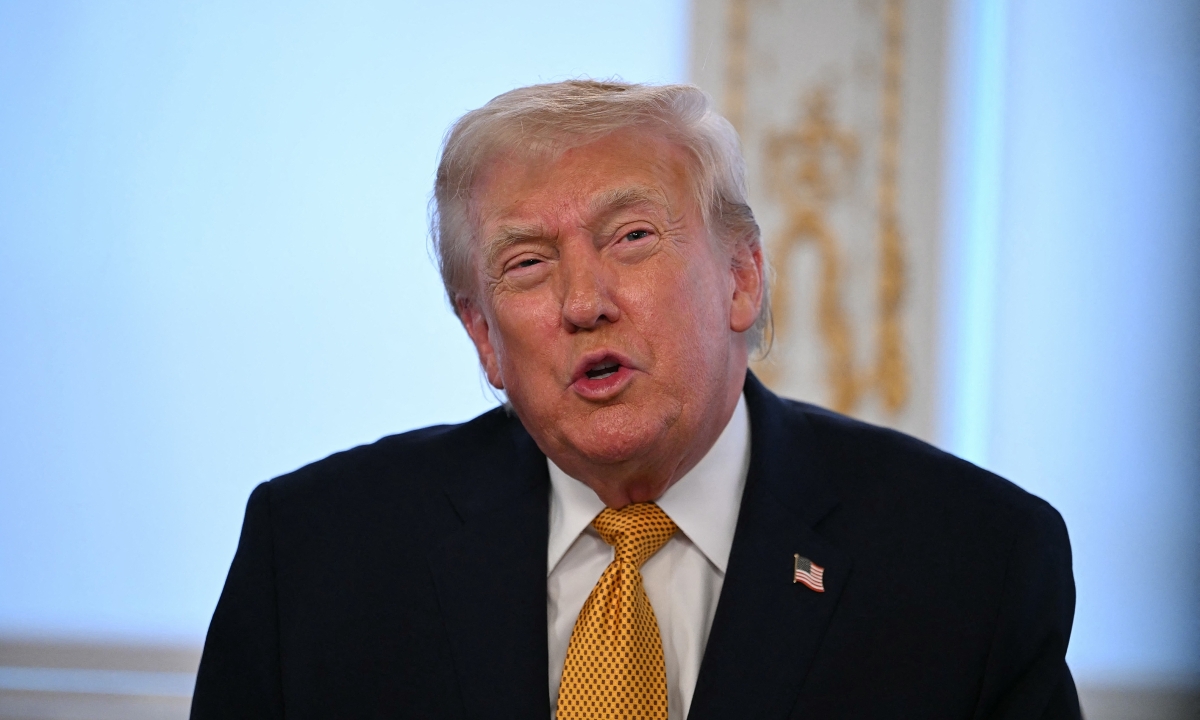
For Washington, the development is a quiet warning.
Allies are no longer content to absorb uncertainty in exchange for access. When trade pressure replaces predictability, partners look elsewhere. Canada’s move suggests that even the closest U.S. allies are willing to explore new alignments when strategic interests demand it.
For Canada, the message is equally clear: sovereignty in the modern economy is built through options, not dependence.
As the global tech landscape fractures into competing blocs, Ottawa’s decision to invest early in diversified partnerships could pay long-term dividends. What began as a response to pressure is quickly becoming a blueprint for resilience.
The geopolitical map is shifting—and Canada is no longer waiting for permission to redraw its place on it.