What began as a long-running trade dispute between the United States and Canada over softwood lumber is rapidly morphing into a full-scale housing crisis. U.S. tariffs—now reaching as high as 45%—have slashed Canadian lumber supply, driven up construction costs, and pushed new homebuilding to historic lows. With nearly 87% of U.S. lumber imports coming from Canada, the fallout is hitting homebuyers, builders, and rural communities on both sides of the border. As supply chains fracture and costs soar, the American dream of affordable homeownership is slipping further out of reach.

For decades, the North American lumber market functioned as a deeply integrated ecosystem. Canadian forests fed American construction sites, U.S. demand sustained Canadian mills, and housing affordability—while cyclical—remained tethered to a predictable supply chain. That system is now under severe strain.
At the center of the crisis is the ongoing softwood lumber trade war. Tariffs imposed by the Trump administration—some climbing to 45%—were intended to protect U.S. lumber producers and reduce reliance on Canadian imports. Instead, they have triggered cascading disruptions that neither country appears able to control.
The United States relies heavily on Canadian lumber. Roughly 87% of U.S. lumber imports originate north of the border, accounting for an estimated 25–30% of total American consumption. Most single-family homes in the U.S. are framed with Canadian softwood. That dependence means any disruption in Canadian supply is immediately felt on American job sites.
And disruption is exactly what’s happening.
Canadian mills, squeezed by tariffs and falling margins, have begun shutting down or scaling back production. Rural communities dependent on forestry are seeing job losses mount, with ripple effects spreading through the entire forest products chain—from pulp mills to panel manufacturers. What was once a steady export engine is now contracting, with industry forecasts suggesting Canadian lumber output could continue shrinking through 2030.

In the United States, the impact is most visible in housing.
Builders are facing a brutal cost squeeze. Lumber prices have surged as supply tightens, and tariffs alone are adding thousands—sometimes tens of thousands—of dollars to the cost of a new home. Developers now face three grim choices: absorb the higher costs and watch margins evaporate, pass them on to buyers already stretched thin, or delay projects indefinitely.
Many are choosing the third option.
Housing starts have fallen to historically low levels, compounding an already severe shortage of homes. The affordability picture is deteriorating rapidly. The ratio of median home prices to household income has climbed into territory typically associated with housing market crashes. Yet unlike past cycles, prices are not correcting downward—because there simply aren’t enough homes being built.
In effect, tariffs meant to protect domestic industry are pricing American buyers out of the market.
Industry experts warn that replacing Canadian lumber with domestic production is not a short-term solution. Building new mills, expanding logging capacity, and securing environmental approvals could take years—if not decades. Even then, U.S. producers face higher costs and structural constraints that limit how quickly supply can ramp up.
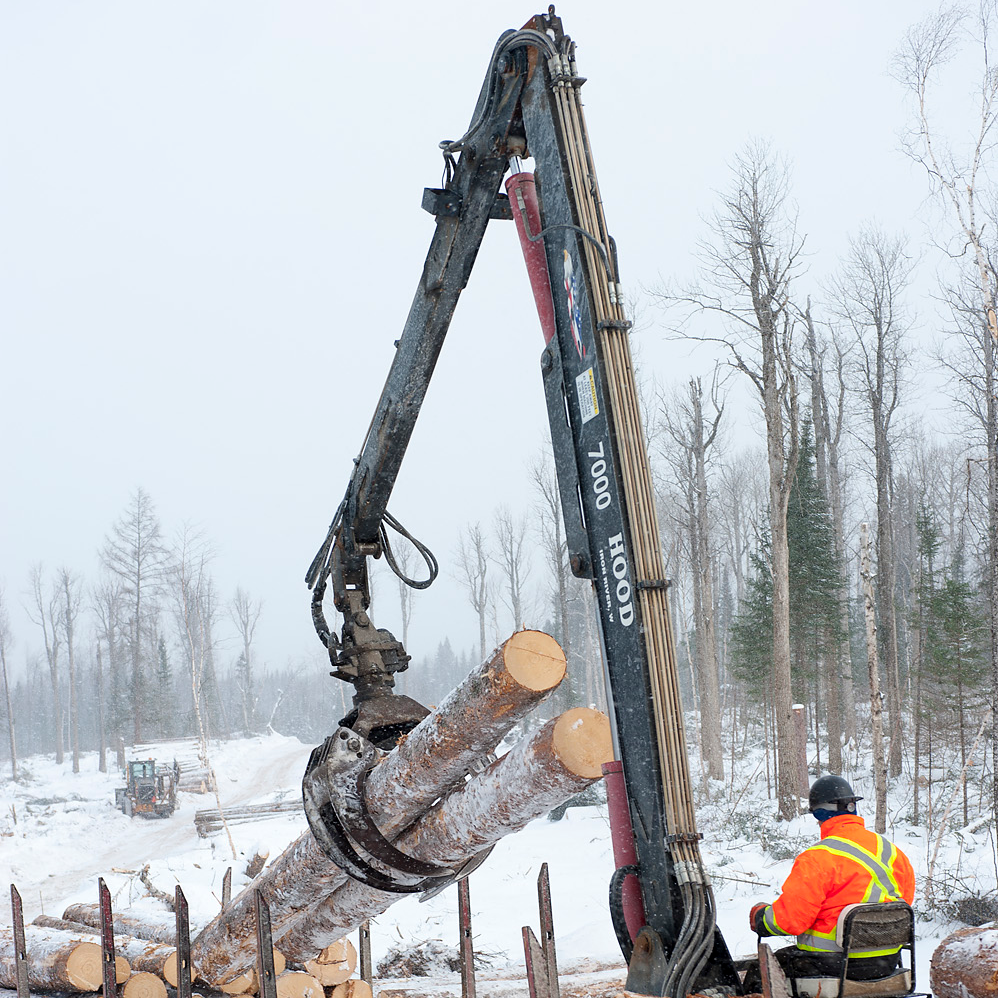
Canada, meanwhile, is beginning to rethink its reliance on the U.S. market.
Ottawa has announced a $1.2 billion support package aimed at helping Canadian lumber companies diversify exports and reduce dependence on American buyers. The plan includes loan guarantees, shipping discounts, and incentives to develop alternative products and markets. Europe and Asia are increasingly viewed as long-term growth destinations, even if the transition is painful in the short run.
The result is a slow but significant decoupling of a supply chain that took generations to build.
Looking ahead, the outlook is bleak. The U.S. Commerce Secretary is expected to revisit the status of wood product imports in 2026, raising the possibility of further tariffs rather than relief. At the same time, Canadian production is expected to remain constrained, deepening supply shortages just as U.S. housing demand continues to outstrip availability.

The political calculus on both sides has hardened. In Washington, lumber tariffs are framed as defending American jobs. In Ottawa, diversification is seen as economic survival. Caught in the middle are American homebuyers—paying higher prices, facing fewer choices, and watching the promise of homeownership drift further away.
What makes the situation especially troubling is how avoidable it appears. Economists across the political spectrum have long warned that lumber tariffs function as a tax on housing. The current crisis has validated those warnings in real time.
As the trade war drags on, the damage is no longer theoretical. It is visible in stalled construction sites, shuttered mills, and families locked out of the housing market. The integrated North American lumber system is fracturing, and with it, one of the foundations of affordable housing in the United States.
Unless policy shifts course, the softwood lumber dispute may be remembered not as a trade skirmish—but as the moment tariffs helped turn a housing shortage into a full-blown national emergency.