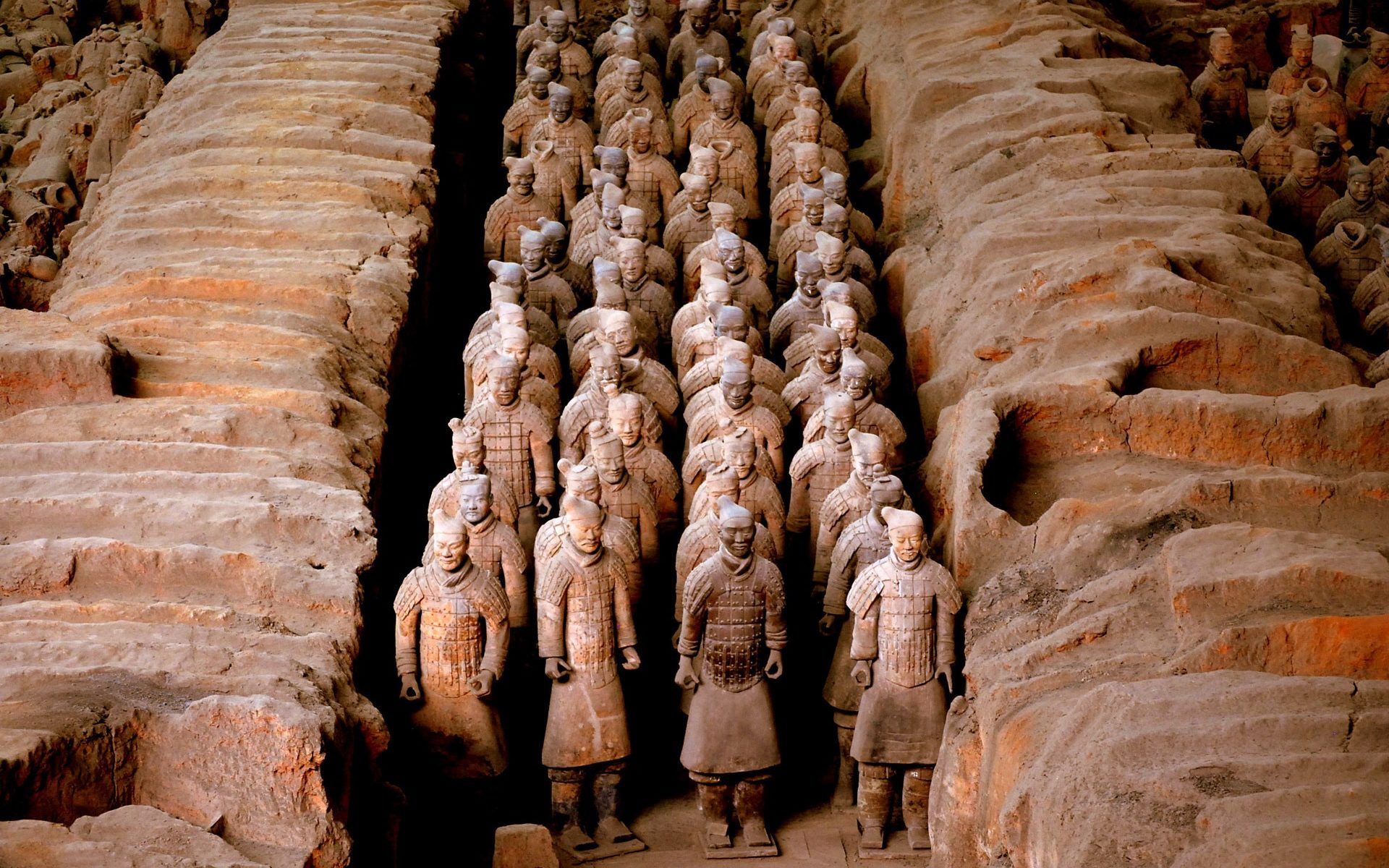
For decades, the Terracotta Army has stood as one of the most awe-inspiring archaeological wonders on Earth—8,000 life-sized clay soldiers frozen in eternal formation, guarding China’s first emperor in death. But a recent investigation led by explorer and scientist Albert Lin has uncovered a far darker truth beneath the surface: a hidden river of mercury, undisturbed for more than 2,000 years, flowing beneath the ancient burial complex.
The revelation is as chilling as it is extraordinary.
Using advanced non-invasive technology, Lin’s exploration suggests that the mausoleum of Qin Shi Huang is not merely a symbolic resting place, but a carefully engineered fortress—one designed to kill intruders long after the emperor’s death. Ancient Chinese texts had long hinted at deadly traps within the tomb, but modern science is now lending credibility to what once sounded like legend.
The Terracotta Army itself—each soldier uniquely crafted with individual facial features, armor, and posture—was never meant to be simple decoration. According to Lin’s findings, the entire underground complex was designed to mirror the emperor’s earthly empire, reinforcing his belief in absolute power and eternal rule. The soldiers were guardians. The landscape was strategic. And the mercury? A final line of defense.
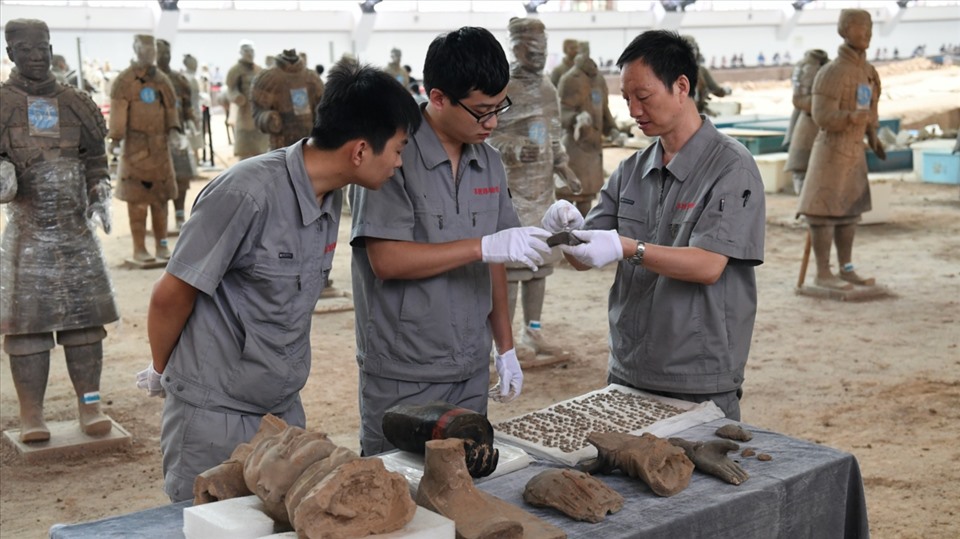
Mercury, a highly toxic element, was believed by ancient alchemists to possess mystical properties tied to immortality. But in this case, it may have served a more practical—and lethal—purpose. Scientists now believe mercury vapors and liquid deposits beneath the tomb could have acted as a chemical deterrent, ensuring that anyone who dared disturb the emperor’s rest would pay a deadly price.
“This wasn’t just a tomb,” Lin suggests. “It was a message.”
The implications of the discovery raise urgent ethical questions. Excavating the central tomb—still unopened—could pose serious health and environmental risks. Lin has strongly advocated for non-invasive exploration, warning that disturbing the mercury could endanger researchers and permanently damage the site.
These findings add a haunting new dimension to the Terracotta Army. The silent soldiers, once symbols of artistic mastery and imperial ambition, now appear to be part of a vast, calculated system of control—extending even beyond death.

As new technologies allow us to peer deeper into the past without touching it, the story of Qin Shi Huang continues to evolve. The Terracotta Army is no longer just a marvel of ancient craftsmanship—it is a reminder of how far power, fear, and obsession with immortality can go.
And beneath those ancient clay feet, history may still be flowing—quietly, toxically, and waiting.