What if one of the most scrutinized relics in human history still harbors secrets that modern science cannot explain?
In a captivating episode of The Silent Archive, Barrie Schwortz, the official documenting photographer of the Shroud of Turin Research Project, shares astonishing revelations about this enigmatic artifact.
After decades of meticulous scientific examination, Schwortz asserts that something extraordinary was discovered on the Shroud of Turin, something that continues to defy conventional scientific explanation.
This narrative transcends the typical clash of faith versus science; it presents a rare instance where science reaches its limits.
In this article, we will delve into the extraordinary claims made by Schwortz, exploring the Shroud’s history, the scientific anomalies it presents, and the implications of these findings for our understanding of history and the unknown.

Who is Barrie Schwortz?
Barrie Schwortz is not just a photographer; he is a key figure in the study of the Shroud of Turin.
As the official documenting photographer for the Shroud of Turin Research Project, Schwortz has spent decades investigating this relic.
His deep commitment to understanding the Shroud has made him a credible voice in discussions surrounding its authenticity and significance.
Schwortz’s journey began in 1978 when he was invited to be part of the research team that would conduct an in-depth examination of the Shroud.
His photographic documentation has provided invaluable insights into the fabric’s intricate details, leading to ongoing debates about its origin and meaning.
The Shroud of Turin and Its Investigation
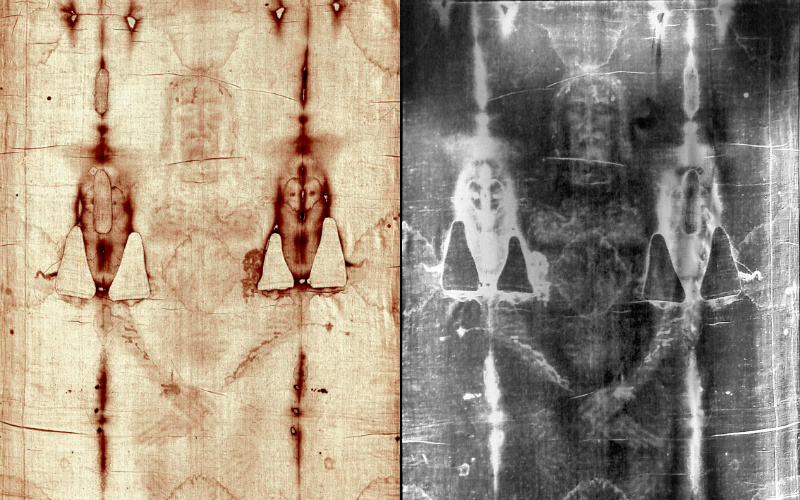
The Shroud of Turin is a linen cloth that bears the faint image of a man, believed by many to be Jesus Christ.
Its history is steeped in controversy and intrigue, with debates over its authenticity dating back centuries.
The Shroud first appeared in historical records in the 14th century, but its origins remain a topic of intense scrutiny.
In 1978, the Shroud was subjected to extensive scientific testing, including radiocarbon dating, which suggested it was created in the Middle Ages.
However, many researchers, including Schwortz, argue that the dating process may have been flawed due to contamination and other factors.
This has led to a resurgence of interest in the Shroud, with new technologies and methodologies being applied to study its mysteries.

Scientific Anomalies That Remain Unexplained
Schwortz highlights several scientific anomalies associated with the Shroud that continue to baffle researchers.
One of the most intriguing aspects is the image formation process.
The method by which the image of the man on the Shroud was created is still not fully understood.
Some scientists have proposed that it could be the result of a chemical reaction, while others suggest a form of radiation.
Yet, no one has been able to replicate the image formation under controlled conditions.
This inability to explain the image’s origin raises profound questions about the nature of the Shroud and its implications for our understanding of historical events.
Another area of mystery surrounds the bloodstains found on the Shroud.
These stains exhibit characteristics that suggest they are genuine human blood, which adds to the complexity of the artifact.
The presence of blood on the Shroud raises questions about how it came to be there and what it signifies regarding the events surrounding the crucifixion of Jesus.
What Modern Science Cannot Replicate
Despite advances in technology and scientific understanding, many aspects of the Shroud remain unreplicable.
Researchers have attempted to recreate the image using various techniques, including painting and photography, but none have succeeded in producing a result that matches the original.
This failure to replicate the Shroud’s image only deepens the mystery surrounding it.
Schwortz emphasizes that this is not merely a question of faith; it is a scientific conundrum that challenges our understanding of art, history, and the very nature of reality.
The implications of the Shroud extend beyond its physical properties.
It invites us to consider the intersection of science, faith, and history.
As scientists grapple with the Shroud’s mysteries, they are also confronted with profound philosophical questions about existence, belief, and the limits of human understanding.

Why the Mystery Still Matters Today
The enduring mystery of the Shroud of Turin is not just a relic of the past; it continues to resonate in contemporary discussions about science and spirituality.
In an age where science often seeks to explain everything, the Shroud stands as a poignant reminder of the unknown.
It challenges us to confront the limitations of our knowledge and the mysteries that lie beyond our current understanding.
The Shroud serves as a focal point for discussions about faith, evidence, and the nature of belief.
For many, it represents a tangible connection to historical events that shaped human history.
The ongoing investigation into the Shroud also highlights the importance of interdisciplinary approaches in understanding complex phenomena.
Scientists, historians, and theologians must collaborate to explore the myriad questions raised by this ancient artifact.
By doing so, we can foster a deeper appreciation for the complexities of our existence and the mysteries that continue to elude us.