The Darkest Chapter of the Crucifixion: Why Jesus Descended Into Hell
For nearly two thousand years, one question has lingered in the shadows of Christian belief, whispered in sermons, debated by theologians, and quietly avoided by many believers: what happened to Jesus in the three days between the Crucifixion and the Resurrection? According to ancient creeds, early church writings, and disputed interpretations of scripture, Jesus Christ did not immediately rise from the dead.
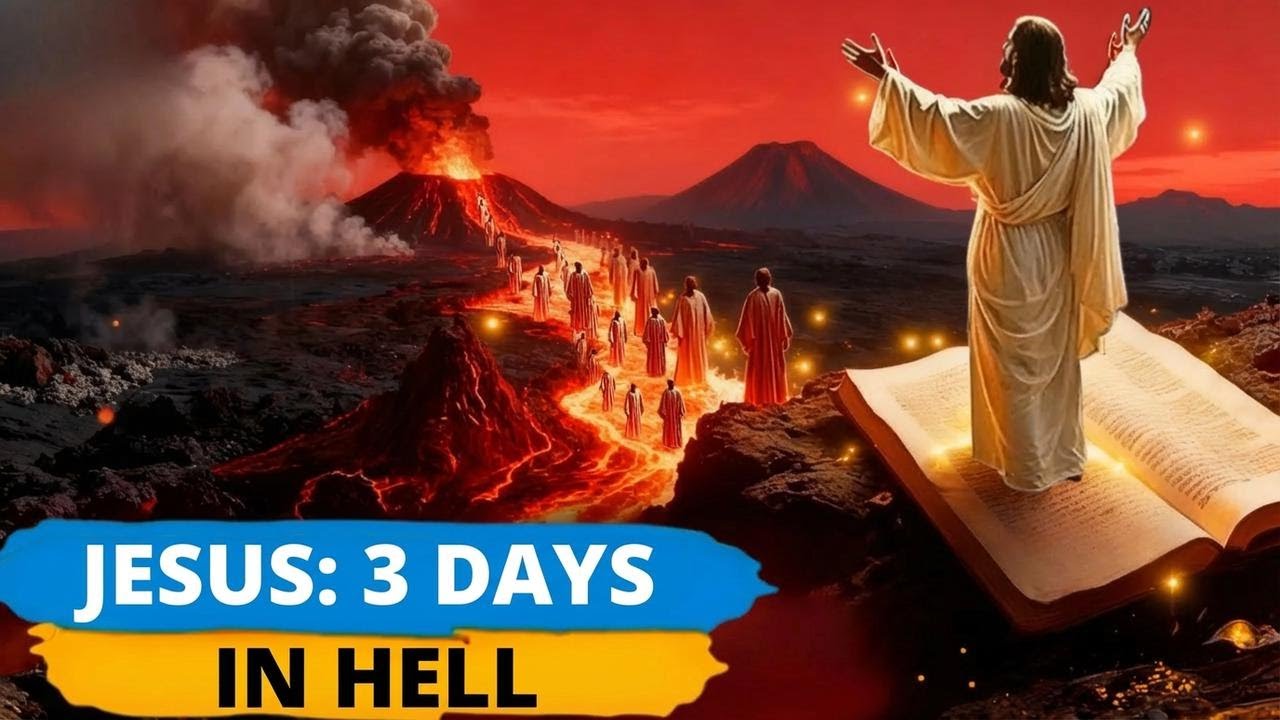
Instead, he descended into Hell.
The idea is unsettling.
It challenges the comforting image of divine triumph and replaces it with something darker, heavier, and far more mysterious.
If Jesus was sinless, why would he enter Hell at all? And if he did, what happened there during those three silent days?
The question is not fringe speculation.
It is rooted in some of the oldest confessions of Christian faith, including phrases still recited today: “He descended into Hell.
” Yet despite its prominence, few modern believers fully understand what it means—or what it implies.
The Gospels themselves are strangely quiet about those three days.
After the Crucifixion, the narrative pauses.
Jesus is buried.
His followers scatter in fear.
Hope collapses.
And then, suddenly, on the third day, the tomb is empty.
What lies between is left largely unexplained, a silence that has fueled centuries of interpretation.
Clues appear in fragments of scripture.
One of the most cited passages comes from the First Letter of Peter, which speaks of Christ preaching to “the spirits in prison.
” Another passage suggests he descended “to the lower regions of the earth.
” These lines, brief and cryptic, opened the door to a belief that Jesus entered the realm of the dead—not as a prisoner, but as a conqueror.
Early Christian thinkers wrestled intensely with this idea.

To them, Hell was not merely a place of punishment, but the domain of death itself, the realm that held humanity captive since the fall of Adam.
In this understanding, Jesus did not descend to suffer, but to invade.
His death was not the end of his mission, but its darkest and most decisive phase.
According to this interpretation, the Crucifixion broke the power of sin, but the descent into Hell shattered the power of death.
Hell, which had claimed every human soul, now faced something it had never encountered before: a sinless presence it could not contain.
Ancient texts outside the New Testament expand on this vision with vivid imagery.
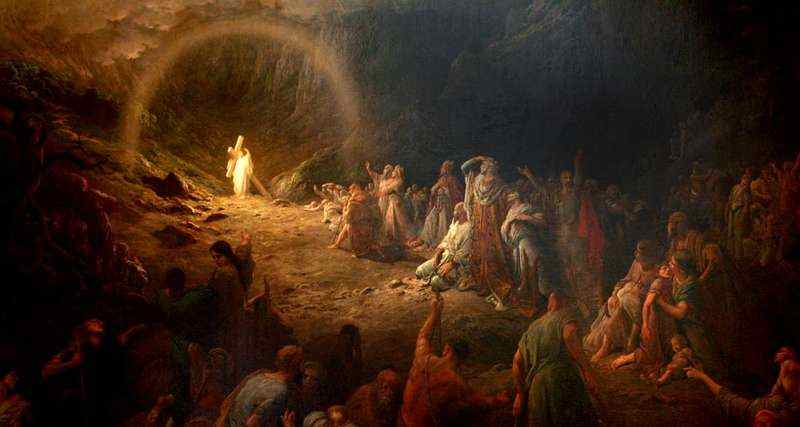
They describe Christ entering the underworld like a warrior king, breaking gates, binding the powers of darkness, and freeing the righteous who had died before his coming.
Adam.Eve.Abraham.
Prophets and kings.
The dead, waiting in silence, suddenly hearing a voice they never expected to hear.
Whether taken literally or symbolically, the message was radical: redemption was not limited by time.
Jesus did not save only the living, but reached backward through history, undoing the consequences of humanity’s earliest failure.
But not all interpretations agree.
Some theologians argue that “Hell” in these passages refers not to a place of torment, but to Sheol or Hades—the general realm of the dead in Jewish thought.
In this view, Jesus entered death fully, experiencing the complete separation and silence that defines the human condition after death.
Only by going there could he truly redeem it.
Others reject the idea entirely, claiming that the descent is metaphorical language for the suffering of the Cross itself.
For them, Jesus endured Hell not after death, but during it—through abandonment, pain, and the crushing weight of human sin.
The cry “My God, my God, why have you forsaken me?” becomes the moment of descent, not a journey beyond the grave.
Yet the persistence of the belief suggests something deeper.
For early Christians facing persecution, death was terrifying.
The promise that Christ had gone ahead of them—even into Hell—transformed fear into hope.
There was nowhere, they believed, that God had not already been.
The three days themselves carry symbolic weight.
In biblical tradition, three days often mark transformation: Jonah in the belly of the fish, Israel’s journey into the wilderness, moments where survival hangs in the balance before reversal.
The silence of Holy Saturday, the day between death and resurrection, became a sacred space of waiting, doubt, and tension.
Modern believers often rush past this moment, eager to reach Easter morning.
But the early Church lingered there, understanding that faith is forged not only in victory, but in absence.
The descent into Hell confronts believers with a God who does not avoid darkness, but enters it fully.
This belief also reframes the Resurrection itself.
If Jesus simply rose from the grave, the story is miraculous.
But if he rose after confronting death on its own ground, the story becomes cosmic.
Resurrection is no longer escape—it is triumph.
Skeptics question the historical basis of the descent.
There is no detailed eyewitness account.
No clear timeline.
No physical evidence.
But theology was never meant to function like forensic science.
Its power lies in meaning, not measurement.
Even today, the idea remains controversial.
Some denominations emphasize it strongly.
Others omit it entirely.
Yet it continues to surface in art, liturgy, and reflection, refusing to disappear.
Perhaps that is because the question it raises is deeply human.
What happens after death? Is there any place beyond hope? Does suffering have the final word?
The descent into Hell answers with a defiant no.
It declares that even in the deepest silence, even in the realm of the dead, God is present.
Not distant.
Not observing.
But entering.
In the end, whether one views the descent as literal, symbolic, or theological poetry, its message remains unsettling and powerful.
The Cross was not the end.
The tomb was not the destination.
And the silence of those three days was not emptiness—it was the sound of something breaking.