Rock history loves a rivalry—but few were as fascinating, short-lived, and quietly intense as the one between Jimmy Page and Jeff Beck. For a brief moment in the 1960s, these two future guitar gods stood on the same battlefield, pushing each other toward greatness while unknowingly shaping the sound of rock for decades to come.
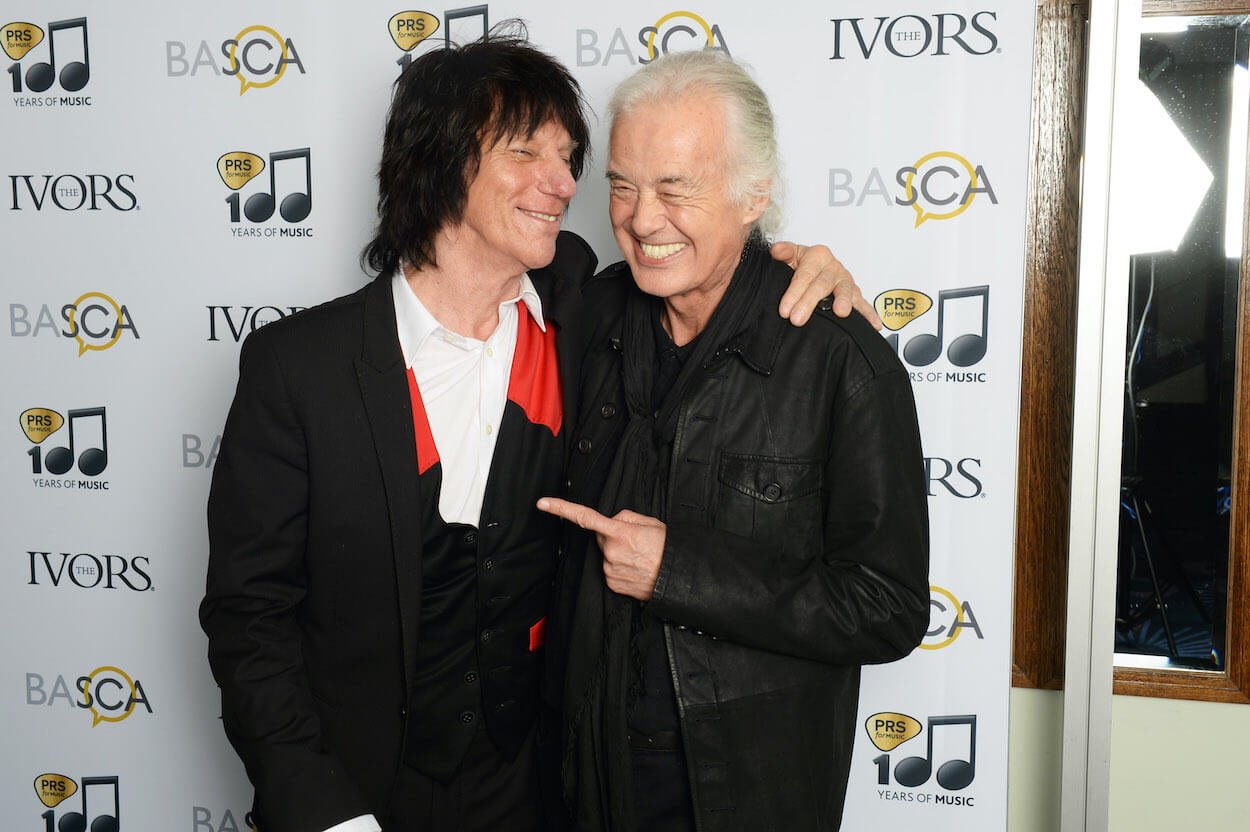
The story begins with The Yardbirds, a band that would become a breeding ground for legends. Eric Clapton had already passed through its ranks, and when he left, Jimmy Page stepped in—initially on bass. But it wasn’t long before Page brought in a young, fiercely talented guitarist named Jeff Beck. Suddenly, the band had two musical forces pulling it in different directions.
And that’s where the tension began.

Beck was raw, experimental, and unpredictable. He bent notes until they screamed, chased distortion before it was fashionable, and treated the guitar like a weapon. Page, by contrast, was precise, strategic, and deeply interested in structure—already thinking like a producer and architect of sound.
For a short time, the Yardbirds featured both Page and Beck onstage together, a rare and volatile combination. Fans were stunned. Critics were divided. Behind the scenes, creative differences simmered. Who would take the lead? Which direction would the band follow? Blues purity—or sonic experimentation?
The competition was never openly hostile, but it was undeniable.

Beck’s mercurial personality and tendency to clash with bandmates soon took its toll. After less than two years, he was gone. Page remained—and the Yardbirds’ final chapter would soon transform into something much bigger: Led Zeppelin.
But the rivalry didn’t end there.
As Page ascended to global superstardom with Zeppelin, Beck carved out his own legacy—earning respect not through chart dominance, but through innovation. His solo work blurred the lines between rock, jazz, and fusion, influencing generations of musicians who valued feel over fame.

Over the years, fans endlessly debated the question: Who was better?
Page, the master builder of riffs and anthems?
Or Beck, the fearless sonic explorer?
The truth is, their brief competition may have been exactly what rock music needed. Each pushed the other—directly or indirectly—to define their own identity. Without Beck, Page may never have fully embraced his vision. Without Page, Beck may never have leaned so hard into musical freedom.
Friends. Rivals. Legends.
Their time together was short—but the echo of that rivalry still rings every time a guitar howls through an amplifier.