
24 December 2025
The San Antonio Spurs have officially put the NBA on alert, showcasing their potential as title contenders after a commanding 130-110 victory over the Oklahoma City Thunder. With this win marking their seventh consecutive…
24 December 2025
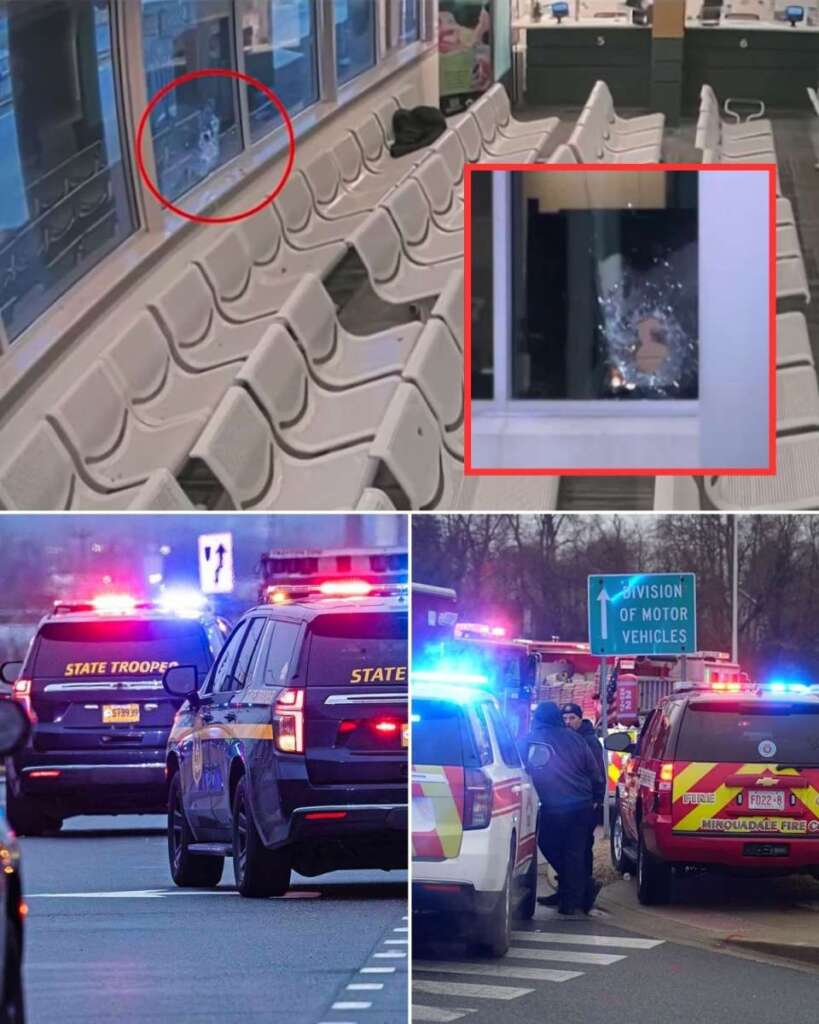
A Delaware state trooper was killed along with the suspected gunman Tuesday during a shooting at a motor vehicle agency near Wilmington, authorities said. Neither Gov. Matt Meyer’s office nor state and local police…
24 December 2025
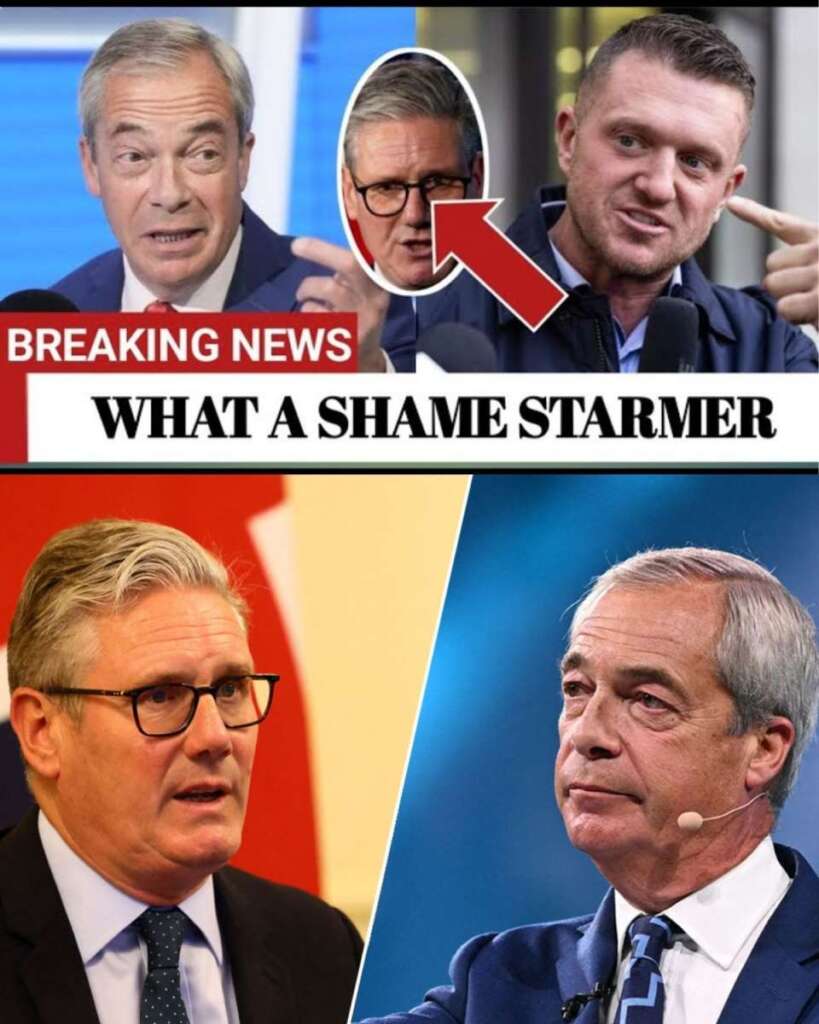
In a fiery clash echoing beyond Westminster’s walls, Tommy Robinson erupted in response to Keir Starmer’s sharp mockery of Nigel Farage during a tense parliamentary session, igniting a political firestorm that exposes raw fractures in UK politics, public trust, and the growing chasm between politicians and citizens. The fallout is swift and intense. The confrontation unfolded amidst a stormy exchange in Parliament where Prime Minister Keir Starmer appeared to dismiss Nigel Farage’s influence with a cutting smirk and sarcastic tone. Though brief, this moment snapped taut nerves as cameras captured the simmering tension, sparking immediate reactions from political observers and the public alike. Starmer’s jest wasn’t directed merely at Farage as an individual but seemed to undermine the sentiments fueling Farage’s rise: widespread voter discontent, mistrust of mainstream politics, and anxieties over immigration and national identity. This subtle but potent dismissal struck a nerve far beyond the Commons chamber. Tommy Robinson’s rapid-fire rebuttal came not from within Parliament but from the street sidelines where his voice resonates loudly. In an impassioned video unleashed across social media, Robinson condemned Starmer’s attitude as elitist, accusing the Prime Minister of belittling millions who feel disenfranchised and alienated by the political establishment. Robinson’s criticism hit home for many, sparking a fierce debate online. Supporters applauded his call-out of perceived government arrogance; detractors warned against glorifying a figure known for controversy. Nevertheless, the incident underscored a growing divide between Britain’s ruling class and its populace. This episode lays bare the political posture at stake: Starmer’s challenge to appear composed and unflappable while countering opponents who thrive on spectacle, versus Farage and Robinson’s visceral appeal to frustration and outsider status. Their collision exposes the volatile undercurrents shaping current UK politics. Political analysts stress that this incident’s significance lies not in policy but posture. Starmer’s brief jab now serves as a symbol of disconnect that threatens voter trust, as political gestures ripple quickly across an electorate already wary and engaged with every recorded word and gesture. Social media erupted with polarized reactions. Some hailed Starmer’s confident handling of disruption; others decried what they saw as mocking voters through Farage. This split mirrors the overwhelming public sensation that political elites laugh at ordinary people rather than listen and address their concerns. Behind the scenes, former advisors caution that Parliament’s tone risks alienating voters. Each dismissive comment chips away at fragile trust, feeding narratives of exclusion that figures like Robinson harness with precision and emotional impact, doing so outside official channels but commanding growing influence. Farage’s allies seized on the occasion to depict the political establishment as tone-deaf and condescending, intensifying the storyline that mainstream politicians fail to grasp grassroots realities. Meanwhile, Labour supporters insist Starmer was simply maintaining decorum, refusing to escalate routine parliamentary theatrics. This clash illustrates a power transformation in UK politics where influence no longer solely resides in parliamentary chambers but increasingly in public reactions, 𝓿𝒾𝓇𝒶𝓁 moments, and the battles waged beyond official institutions. Figures like Robinson channel outsider energy into political fires the establishment struggles to contain. For Keir Starmer, the stakes are mounting. His every utterance is magnified instantly, demanding precision and sensitivity to perception. As political discourse fragments further, even seemingly minor quips risk triggering profound backlash, reshaping public debate and reshuffling alliances in a fast-moving media environment. The aftermath signals a new era of political engagement marked by relentless scrutiny and swift public judgment. What began as a fleeting parliamentary jibe has morphed into a potent flashpoint, challenging the Prime Minister’s authority and spotlighting deep societal rifts that threaten to widen in coming months. As politicians weigh their next moves, the public watches intently—no longer passive consumers but active participants interpreting every nuance. This incident is not just about Starmer or Farage; it’s about Britain’s fractured political landscape and the urgent demand for genuine dialogue. The big question remains: how much louder will this growing dissonance become? Mockery mingled with mistrust risks inflaming sentiments long suppressed. Robinson’s intervention proves that outside voices possess the power to disrupt and redefine narratives more forcefully than ever before. In this hyper-connected age, clipped moments and 𝓿𝒾𝓇𝒶𝓁 responses carry enormous weight. Starmer’s leadership will be tested not only by policies but by his ability to bridge gaps widened by words and gestures now immortalized and dissected endlessly across countless platforms. Whether this sparks sustained political upheaval or fades into the relentless news cycle is uncertain, but the warning is unmistakable. The elite’s tone and posture increasingly shape public faith or doubt, making every political encounter a high-stakes contest beyond parliamentary walls. For voters disillusioned by conventional politics, this confrontation encapsulates their frustrations—a reminder that many feel spoken about rather than spoken to. The evolving story will be a barometer of how Britain’s leaders engage a restless and unforgiving electorate.…
24 December 2025
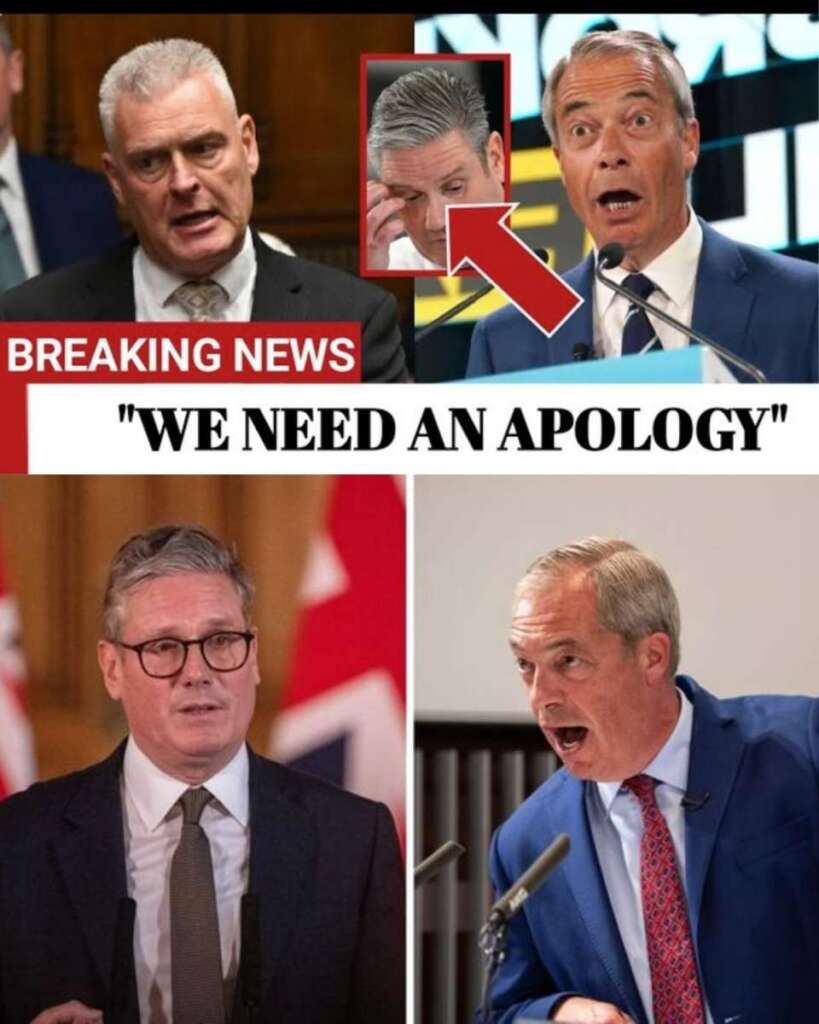
In a dramatic political showdown, Lee Anderson publicly forced Labour leader Keir Starmer to apologize for remarks made about Nigel Farage, igniting a rapid-fire debate across media and social platforms. This unprecedented confrontation 𝓮𝔁𝓹𝓸𝓼𝓮𝓭 raw tensions and underscored the brutal stakes of accountability in modern British politics. The explosive incident erupted when clips of Starmer’s contentious comments about Farage circulated widely, sparking outrage among Farage’s supporters and political opponents alike. What initially seemed a momentary flashpoint quickly escalated as Lee Anderson intervened, demanding an unambiguous public apology. Anderson’s approach was unrelenting, his call direct and uncompromising, rejecting any behind-the-scenes softening or obfuscation. His message was clear: political leaders must own their words publicly if they claim moral authority—a challenge that forced Starmer into a defensive posture under intense scrutiny. As journalists swarmed and studio panels polarized, the pressure mounted relentlessly. Anderson’s critics accused him of grandstanding, while supporters hailed his courage to hold power accountable without subterfuge. Social media thrummed with heated debates, with commentaries dissecting Starmer’s every word and silence. Labour sources attempted damage control, describing the remarks as misunderstood or taken out of context, but the outcry intensified. The public’s insistence for clarity and respect in political discourse heightened alongside mounting calls for greater message discipline within Labour’s ranks. Starmer’s eventual acknowledgment teetered on apology, a tacit concession that his remarks had struck a sensitive chord. Yet Anderson framed this as a decisive victory for open political pressure, demonstrating that relentless public challenge compels leaders to respond swiftly and unequivocally. Nigel Farage, though absent from the podium, remained at the center of this political vortex, a symbol of unresolved divisions and volatile narratives. This confrontation was less about Farage himself than about how power dynamics unfold in the hyper-visible arena of contemporary politics. Political analysts underscore this moment’s significance—not for the argument’s outcome but for who controlled the narrative at a critical juncture. The clash laid bare the increasingly performative nature of political accountability amid the relentless news cycle and digital scrutiny. For Keir Starmer, the episode called into question his ability to maintain message discipline while navigating contentious criticism. For Lee Anderson, it reinforced his image as a defiant enforcer of political transparency, wielding public pressure as a tool of influence. This confrontation has reignited familiar debates about the growing spectacle of British politics, where moments of conflict overshadow substantive policy discussions. The 𝓿𝒾𝓇𝒶𝓁 nature of such incidents reveals the shift toward 𝒹𝓇𝒶𝓂𝒶 as a currency of power and public attention. The wider implications of this incident resonate beyond a single apology or political skirmish. It offers a window into the fragile balance leaders must strike between responsiveness and control in an era when every word is dissected and every silence amplified. Supporters of Anderson emphasize the triumph of accountability—public, persistent pressure that demands clarity and humility from those in power. Skeptics warn this trend risks reducing political dialogue to life-or-death soundbites, eclipsing nuanced debate and long-term policymaking. Questions about leadership and communication loom large. Starmer strives to project steadiness and readiness for power, while Anderson embodies directness and confrontation. Meanwhile, Farage’s outsized influence showcases the potency of visibility over formal authority. As the public watches, absorbing tone and timing, this incident sets a precedent. Today it is an apology; tomorrow it could be any word or act that redefines the political landscape. The stakes of each encounter have never been higher in this accelerated, scrutinized environment. This saga is far from over. It will be dissected and replayed, a reference point in ongoing battles over message control, leadership judgment, and political strategy. The question now is how future moments of pressure will be navigated and whether lessons will be learned. Ultimately, this explosive exchange signals a new intensity in British politics, where every interaction carries outsized consequences. The next headline-grabbing confrontation will demand fresh tactics and sharper responses as the contest for power intensifies beyond traditional boundaries. The political arena continues to tighten, with public patience waning and expectations rising. In this charged atmosphere, the capacity to command moments and manage fallout becomes crucial, shaping leaders’ fortunes and the country’s direction in unpredictable ways. This confrontation serves as a stark reminder: in today’s politics, words can ignite storms overnight, and silence rarely soothes. Leaders must navigate this high-stakes terrain carefully, where accountability is immediate and the court of public opinion unyielding. …

24 December 2025
Tempers flared in the NBA last night as Draymond Green and Steve Kerr engaged in a heated exchange during the Golden State Warriors’ victory over the Orlando Magic. The incident, which occurred in the…

24 December 2025
In a thrilling sit-down with Shams Charania on NBA Today, Anthony Edwards opened up about his impressive season and the lessons learned from playing alongside NBA legends. With a fiery determination, he prepares to…